


The government is scapegoating the LGBTQ+ community and should instead focus on politicians who take bribes, said PSM central committee member Chong Yee Shan.
Commenting on the Nov 28 police raid on a health centre in Kuala Lumpur, she argued that the real social ill lies with corrupt politicians.
“For us, it seems as if the LGBTQ+ community has been scapegoated. Their issues have been scapegoated.
“It seems as if our government has no other issues that are more important,” she said.
She further called for the establishment of an Independent Police Complaints and Misconduct Commission (IPCMC) over the police’s handling of the raid.
Chong was speaking at a press conference at the Kuala Lumpur and Selangor Chinese Assembly Hall (KLSCAH) this morning regarding alleged human rights violations during the raid. It was held by a collective of civil society organisations.
Criminal lawyer Goh Cia Yee, who was present, explained that homosexuality is not criminalised under Malaysian law.
"What you are criminalising is specific conduct: carnal intercourse against the order of nature.
"This can be oral sex between a man and a woman. It can be anal sex between a man and a woman, also," he pointed out.
‘Immoral activities’
According to news reports, the raid at the Jalan Raja Laut premises followed public tip-offs and a two-week surveillance. About 201 men between 19 and 60 years old were arrested.
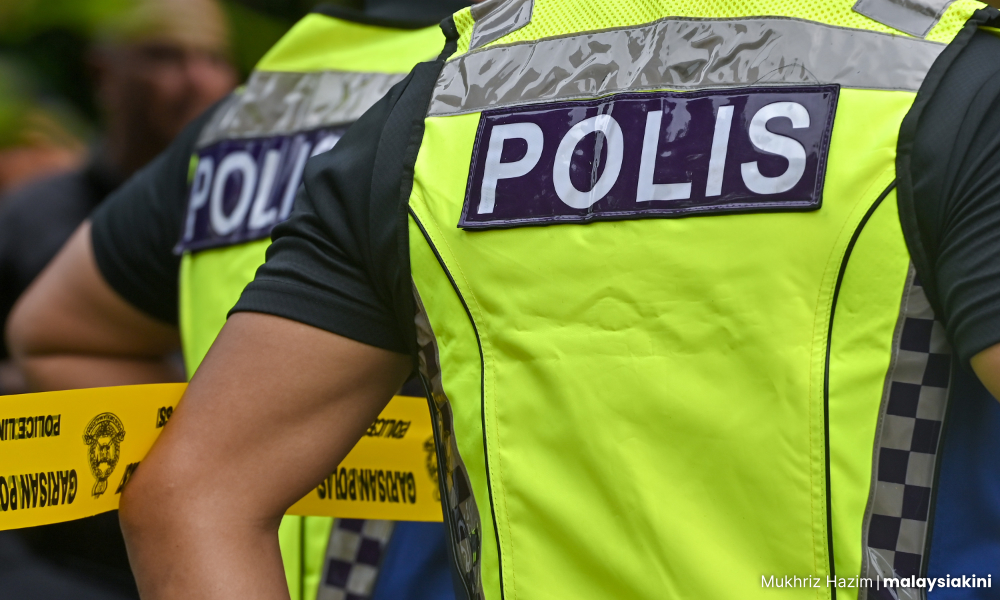
Kuala Lumpur deputy police chief Azani Omar was quoted as saying that intelligence gathered showed there were “immoral activities” at the premises involving gay men.
Those arrested included 80 Muslims and foreigners from South Korea, Indonesia, Germany, and China, he said.
Kuala Lumpur police chief Fadil Marsus had also said that the authorities could not charge any of the detainees, as none of them claimed to be victims of exploitation, prostitution, or unnatural sex.
Systemic abuses
A statement endorsed by over 50 local NGOs and 12 international organisations said that groups who mobilised to help the detainees gathered testimonies that point to systemic abuses ranging from denial of due process to degrading treatment while in custody.
The statement alleged that the authorities had committed 11 major human rights violations.
It said those arrested were not informed of the charges against them, their right to legal representation, or their remand status. Several were told to leave key sections of legal documents blank - including charges, health conditions and next-of-kin details - and were allegedly threatened with “obstruction” if they refused to sign.
Detainees were also denied phone access for up to eight hours or longer, while foreigners were allegedly denied translators and barred from contacting their embassies, it added.
It said detainees were questioned without being told what offences they were being investigated for. Instead, interrogations allegedly centred on intrusive questions about sexual orientation and sexual practices.

"Detainees faced intimidation for requesting corrections, including yelling and being charged with obstruction of police duty. The questions appeared to presume guilt of the detainees," it noted.
It also alleged that the detainees were managed poorly, as they were made to sit, stand, or queue without explanation.
Transport conditions were described as unsafe and overcrowded, with 30 to 40 people placed into trucks designed for 20 to 25, it added.
No access to toilets
The statement went on to detail how detainees held at the Kuala Lumpur contingent police headquarters were allegedly denied access to toilets and told to urinate into bottles that were thrown at them. Some were instructed to tie their genitals with rubber bands as a “solution”. One detainee was allegedly refused toilet access despite vomiting.
It claimed that those held at the Dang Wangi station were placed in overcrowded, poorly ventilated rooms and allowed to use only an overflowing toilet with no toilet paper or functioning flush.
In general, detainees were allegedly prohibited from sleeping and ordered to sit upright or “massage” the person in front of them to stay awake, it said.

Besides that, detainees were provided with little food, with accounts claiming that one slice of bread was shared between three to five men.
"Many drank toilet tap water to avoid dehydration. The food was only provided after a person had fainted.
"Many complain of gastric pains, digestive issues, and health problems following the detention," it said.
The statement claimed that at least three medical emergencies occurred, which the police were unprepared and unequipped to handle.
"One seizure and two cases of severe panic attacks; officers laughed instead of assisting," it said.
Detainees were forced to disclose their HIV status, while those with chronic conditions were denied access to their medication.
Unnecessary aggression
The statement alleged that detainees experienced unnecessary physical force, aggression, and violence.
"During the statement-taking process, officers banged tables, slapped the detainee’s face with paper.
"Detainees reported witnessing physical violence against other detainees during the raid and at the Kuala Lumpur contingent police headquarters," it said.
They were also subject to verbal and psychological abuse as well as shaming, it commented.
It said detainees were called by derogatory terms such as “bangang” (foolish), “barua” (lackey for dirty or malicious work), “beruk” (monkey), “bodoh” (stupid), “lancau” (penis), and “pekak” (deaf).
"Following the detentions, the psychological toll is severe and immediate. An alarmingly high number of individuals reported debilitating symptoms of severe psychological distress, such as insomnia, heart palpitations, hyper-vigilance, and suicidal ideation. Furthermore, some have entirely lost their ability to work, socialise, or leave home," it said.
It further alleged that the police officers subjected the detainees to sexual harassment and degrading treatment.
"Officers made explicit comments about genitals. Flashlights pointed at a detainee’s crotch, (which was) mocked by officers," it added.
The statement claimed that the police unnecessarily inspected phones belonging to the detainees by forcing them to unlock the devices using facial recognition.
Finally, it alleged corrupt behaviour among the police officers.
"Officers allegedly asked, 'What can you give me since I helped you?'
"Several detainees were asked to pay RM300, (and were) told they could 'collect it back in three days'," it said.
Alleged police brutality
On Dec 1, PSM Youth deputy chairperson Aiman Sees claimed they were informed of alleged police brutality during the raid and that the suspects’ basic and legal rights were ignored.
However, Dang Wangi police chief Sazalee Adam denied this.
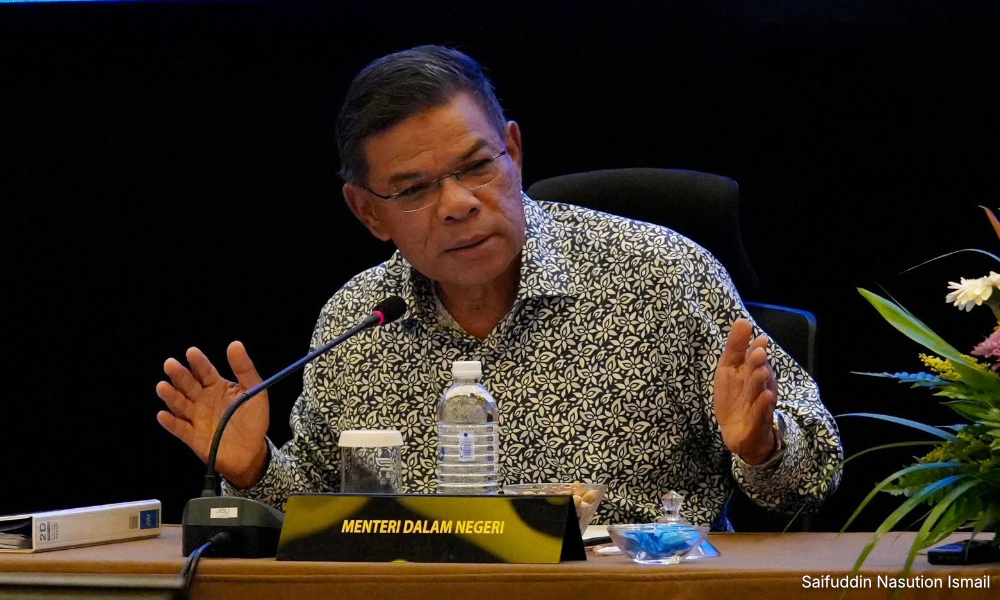
Last week, Home Minister Saifuddin Nasution Ismail defended the raid by claiming that it did not violate the privacy of the men arrested.
He was commenting on criticism that the raid violated the privacy of the individuals involved, leading to the dissemination of their personal information.
One political activist is believed to have spread personal information, including the names, occupations, and photographs of some of the individuals arrested in the operation.
A detainee told Malaysiakini that he is haunted by the possibility of being identified in the leaked videos, admitting that he has avoided seeking mental health support for fear of further exposure.
With 17 civil servants among the detainees, the Public Service Department (PSD) later stated that Integrity Units are empowered to investigate public officers for alleged immoral or unethical behaviour.
Those found guilty under the Public Officers (Conduct and Discipline) Regulations 1993 [PU(A) 395/1993] may face firm action, including demotion or dismissal, PSD director-general Wan Ahmad Dahlan Abdul Aziz warned. - Mkini

No comments:
Post a Comment
Note: Only a member of this blog may post a comment.