


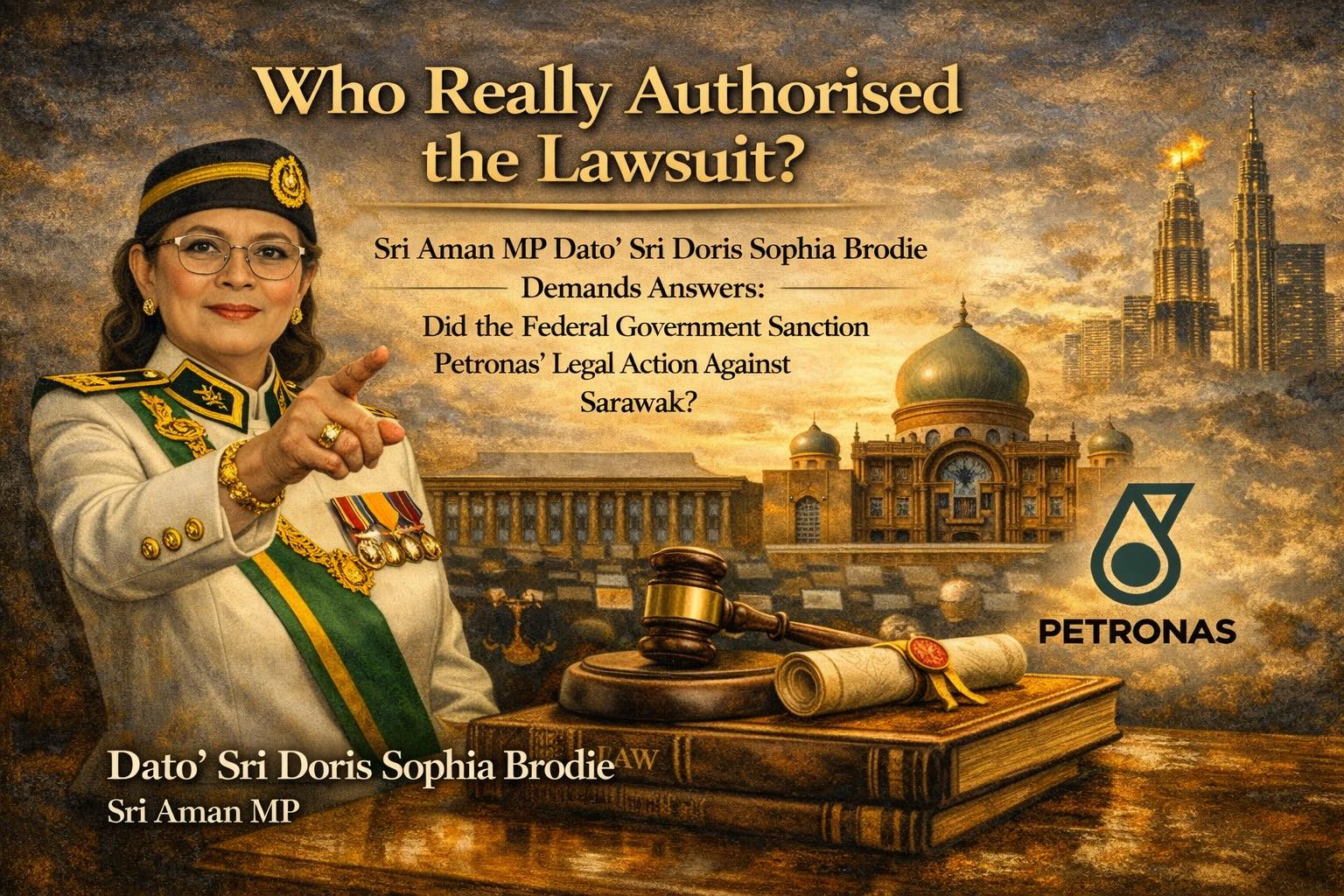
THE question raised in Parliament by Sri Aman MP Datuk Seri Doris Sophia Brodie as to whether Putrajaya sanctioned PETRONAS’ latest legal action against Sarawak is not a minor procedural query.
It is the central issue. Because in Malaysia’s institutional reality, the national oil corporation does not act independently of the federal executive. It answers to one office and one office only: the Prime Minister (PM).
PETRONAS is not a private multinational. It is a creature of statute, established by an Act of Parliament with its board and direction ultimately answerable to the Prime Minister’s Office (PMO).
There is no corporate firewall between PETRONAS and federal policy. When PETRONAS or its subsidiaries go to court on matters of national strategic interest, it is politically incoherent to pretend this is merely a commercial decision taken in isolation.
Is PMX behind legal action?
This is why the focus on subsidiaries is misleading. Whether the legal action is filed by PETRONAS itself or by five of its subsidiaries is legally cosmetic.
Substantively, they are instruments of the same authority. Their litigation posture reflects federal intent – not corporate autonomy.
To argue otherwise is to suggest that the federal government has lost control of its own national oil company – an argument no administration is prepared to make publicly.
Hence the real question is unavoidable: did PMX (Datuk Seri Anwar Ibrahim) approve this legal strategy or did it proceed without his knowledge? Both answers are politically damaging.
If the move was sanctioned, then the Federal government has consciously chosen litigation over negotiation despite public commitments to resolve Malaysia Agreement 1963 (MA63)-related disputes through political dialogue.
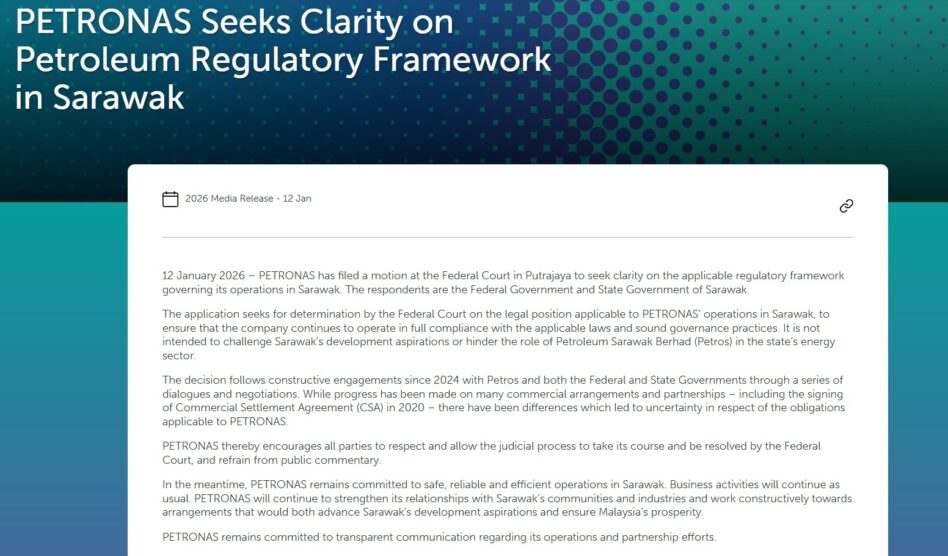
It means Putrajaya is prepared to test the limits of the founding constitutional settlement in court while still speaking the language of partnership in Parliament. That is not ambiguity; it is duplicity by design.
‘Still seen as a Federal lawsuit’
If the move was not sanctioned, the implications are even worse. It would mean that a strategic national entity – controlling the country’s most sensitive economic sector – is pursuing constitutional litigation against a state government without federal political oversight.
That would signal a breakdown of executive control over the very instrument created to safeguard national interests.
Either way, the federal government cannot hide behind corporate form. PETRONAS does not have a foreign board, independent shareholders or market discipline. It has one shareholder: the Malaysian state. And that state is represented by one authority: the PM.

This is why the King’s warning about actions that divide the nation cuts so sharply. The divisive element is not Sarawak asserting its rights.
It is the centre speaking of honour while authorising – or tolerating – legal strategies that undermine trust and reframe political agreements into judicial contests.
The federal government must answer plainly. Not with statements about “corporate governance” or “legal housekeeping” but with a simple political truth: did Putrajaya instruct or approve this litigation – a yes or no?
Because in a system where PETRONAS answers only to PMX, every lawsuit it files on constitutional matters is, in effect, a federal lawsuit – whether the government chooses to admit it or not.
Michael Chan is the Sarawak United Peoples’ Party (SUPP) Nangka branch publicity secretary. This opinion editorial is a rehash from his recent Facebook post entitled “Who Really Authorised the Lawsuit?” that appears in the Sarawak Awareness Group Facebook page.
The views expressed are solely of the author and do not necessarily reflect those of MMKtT.
- Focus Malaysia.

No comments:
Post a Comment
Note: Only a member of this blog may post a comment.