


Hulu Selangor Pakatan Harapan chairperson Dr Sathia Prakash Nadarajan has urged the Selangor government to reconsider the centralised pig farming project in Bukit Tagar.
He voiced deep concerns regarding the project's location near a large landfill.
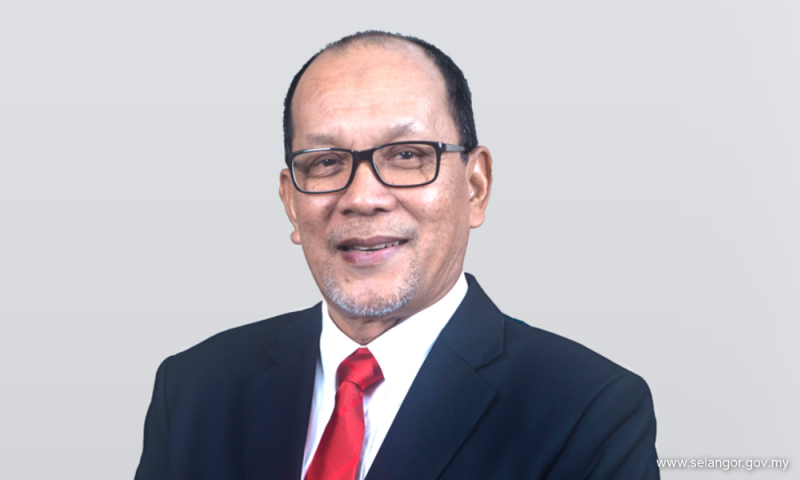
“I recently visited the area prepared for pig farming. I believe the place is unsuitable as a pig farm, and I urge that the proposal be reconsidered,” Sathia (above) told Malaysiakini.
He expressed concern that the close proximity between large-scale livestock farming and a landfill is a recipe for an ecological and health disaster.
“Biosecurity is difficult to guarantee when two entities with high pollution loads are placed side by side.
“The main impact is the risk to consumers. Flies, rats, and scavenger birds would often travel back and forth between the landfill and the livestock area. These vectors can carry germs, bacteria such as Salmonella or E coli, and dangerous viruses from garbage directly into the farm.
“If meat quality is affected due to a dirty environment, it not only incurs losses for farmers but also endangers the health of consumers who buy those products in the market,” he said.
Previously, state executive councillor Izham Hashim said the new site would be located near a landfill.
“Not only the Malays, but even other creatures could not bear to live in that area. It is there that the state government proposes to build a modern, high-tech, and environmentally friendly pig farming centre.
“The issue of it being a Malay area or an area for other races does not arise, as there are no settlements in that area.
“I have also informed the Selangor sultan regarding this matter, and His Majesty is very understanding of it,” said Izham.
Several risks
Commenting further, Sathia, who is also Hulu Selangor PKR branch chief, said the landfill also produces toxic liquid that can seep into underground water sources.
“If the pig farm uses the same water source or if there is an overflow of farm waste into nearby rivers, it will result in multi-level pollution that is very difficult to restore,” he said.
It should be noted that the landfill in Bukit Tagar is a Level 4 sanitary landfill. Its design includes a lining to prevent leachate from contaminating groundwater, and an on-site treatment facility to process and clean the leachate.
The landfill’s official website states that while effluents from the leachate treatment plant meet environmental standards to be discharged into open water courses, it is used to irrigate a field instead.

Sathia also drew attention to the risk of zoonotic diseases – diseases that jump from animals to humans.
“Unsanitary areas are hotspots for virus mutations. Taking lessons from past health crises, placing a livestock area next to a waste disposal area is a very high-risk move for the emergence of new outbreaks.
“I am not rejecting the development of the pig farming industry, but the location must be strategic and comply with strict agro-based industrial zoning guidelines.
“In my view, Bukit Tagar already carries a heavy environmental burden with the existing landfill."
In his request, he asked for a more comprehensive and transparent Environmental Impact Assessment and Social Health Impact Assessment to be conducted.
He said he hopes the state government prioritises long-term sustainability over short-term profit. - Mkini

No comments:
Post a Comment
Note: Only a member of this blog may post a comment.