


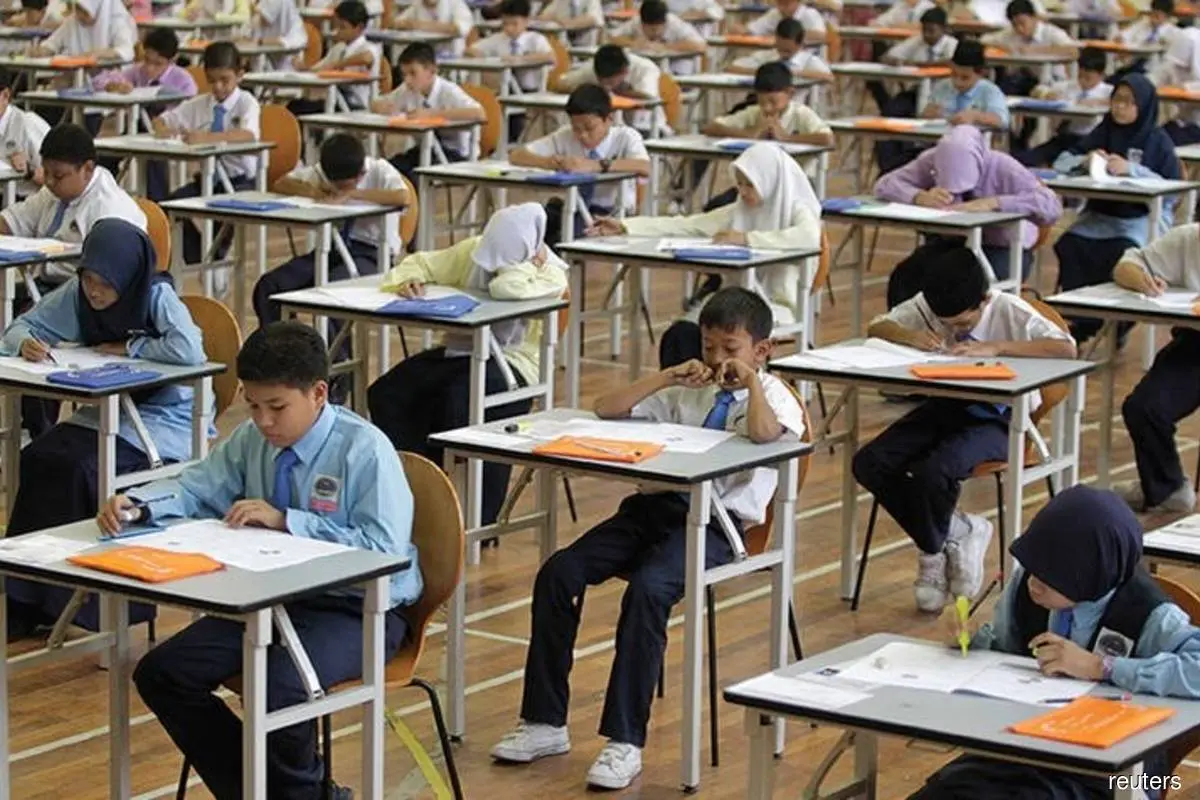
MALAYSIA’S plan to introduce a learning metrics assessment for students from Year 4 to Form 3 reflects a welcome shift away from an over-reliance on high-stakes exams.
Announced as part of the Education Blueprint 2026–2035, this approach recognises that education should uncover potential, not just rank students.
Education Minister Fadhlina Sidek has emphasised that the metrics is meant to be a diagnostic tool—a way to identify strengths and weaknesses early so support can be provided well before upper secondary school.
In theory, this aligns with global best practices, like that in Finland where standardised testing is delayed in favour of ongoing, teacher-led assessments that guide learning.
The idea is sound, early intervention can prevent learning gaps from growing, reduce the need for last-minute catch-up, and encourage teaching that goes beyond rote memorisation. Done well, it could help create more confident learners.
However, the real challenge lies in implementation. In Malaysia’s competitive education culture, any national assessment risks becoming another source of pressure.
Data intended for diagnosis can easily turn into school rankings or performance metrics. Teachers, already stretched, may see this as another administrative task rather than a meaningful tool.
Identifying learning gaps becomes pointless without the resources—like remedial classes or learning specialists—to address them.
There are also fairness concerns. Early assessments can reflect disparities in language exposure or home support, potentially widening inequality if not carefully managed.
The rollout timing—set for October, near the year-end—raises practical questions about readiness and impact.
In the end, the metric’s success won’t depend on the tool itself, but on a deeper change in mindset. If results are used to support students, not label them, and if teachers are trusted as professionals, this could be a positive step.
If not, it may simply become another well-meaning reform that changes how we talk about assessment, without easing the pressure on schools and students.
KT Maran is a Focus Malaysia viewer.
The views expressed are solely of the author and do not necessarily reflect those of MMKtT.
- Focus Malaysia.

No comments:
Post a Comment
Note: Only a member of this blog may post a comment.