


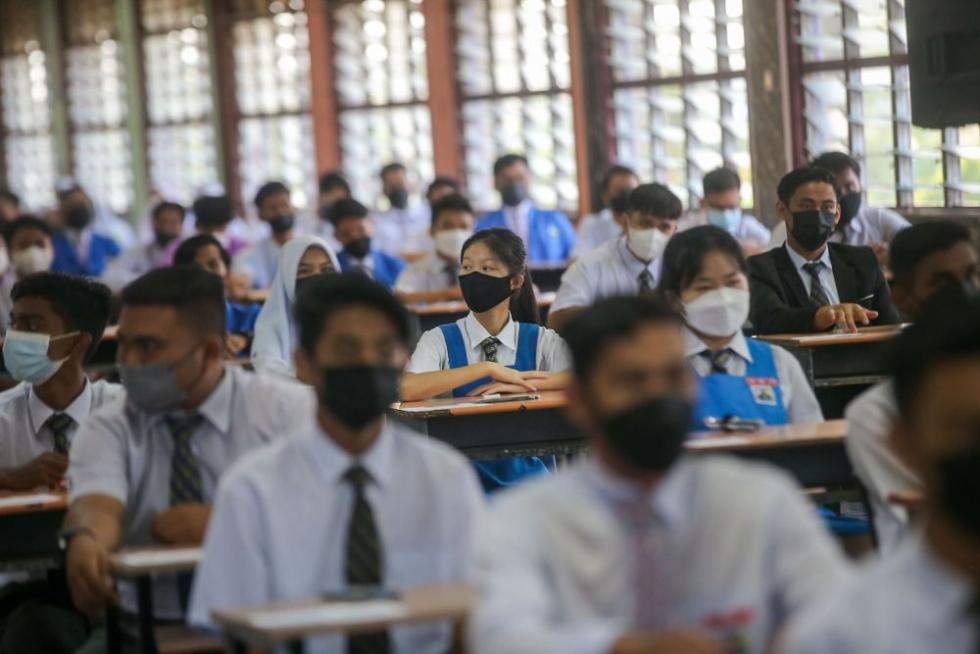
AN MCA leader has criticised the recent announcement by Prime Minister Datuk Seri Anwar Ibrahim that the country will introduce assessment examinations for Year 4 and Form 3 students, saying this move does not address the core issues facing Malaysia’s education system.
Its youth wing’s secretary general Saw Yee Fung said on the contrary, such assessments risk masking deeper systemic problems and do not constitute genuine education reform.
“We must reject the notion that examinations alone can resolve educational shortcomings, as this fails to confront the root causes of long-standing weaknesses,” she stressed.
“Malaysia’s education system is currently facing serious challenges, including declining basic learning competencies, long-standing teacher shortages, and gaps in curriculum continuity.”
Saw said these structural problems have accumulated over many years and cannot be resolved simply by reinstating exams.
“While exams may appear to be a direct solution, they are not true reform. Furthermore, education cannot rely on examinations as an answer,” she continued.
“Although the government claims that reinstating exams is meant to ‘assess learning standards’, in practice exams often become tools for ranking, streaming, and even school key performance indicators (KPI).
“What is framed as assessment inevitably increases competition and pressure within the system. Once exams become the main criterion, students risk being labelled at a much earlier age. This is especially unfair to children who learn at a slower pace and undermines the inclusive spirit education should uphold.”
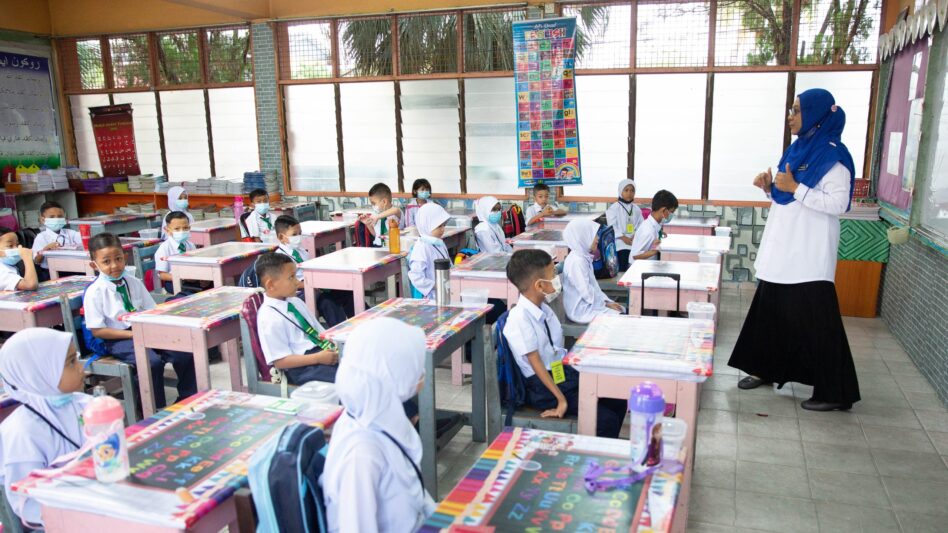
Saw went on to express concern that reinstating these exams will push the system back towards a single standard where results determine everything, ignoring the diversity of students’ abilities and strengths. At the same time, inquiry-based and project-based learning may be squeezed out.
“Reading, discussion, group work, and collaborative learning could be reduced, while non-examination subjects such as physical education, music, and art risk being marginalised,” she said.
“Classrooms may revert to exam-focused teaching. Education should not merely train students to memorise answers, but to think critically, learn meaningfully, and develop values.
“The problems exposed after the previous abolition of examinations should be addressed through systematic solutions, not by reverting to old systems whenever difficulties arise.”
According to Saw, strengthening teacher training, updating curricula, and allocating resources more effectively require time and consistency, not “hasty reversals”.
The real issue, she added, has never been whether examinations exist, but whether teaching quality is sufficient, teachers are properly supported, and schools have adequate resources.
“Shifting a major assessment from Year 6 to Year 4 does not amount to reform. It is merely a change in form and, in essence, a step backwards,” she continued.
“It also remains unclear whether sufficient research and consultation were conducted before deciding to reinstate these assessments.
“Education Minister Fadhlina Sidek had previously stated that such measures required further study, yet the policy was suddenly announced. This raises concerns about whether schools, teachers, parents, and education stakeholders were adequately consulted.”
As education policy concerns the future of the nation, Saw said it must not be reduced to a political tool or used as a short-term response to systemic problems.
“Any major change must be grounded in thorough evaluation and broad consultation, with the long-term development of children as the priority,” she elaborated.
“Otherwise, rushed and short-sighted decisions will ultimately leave students and the rakyat to bear the consequences.”
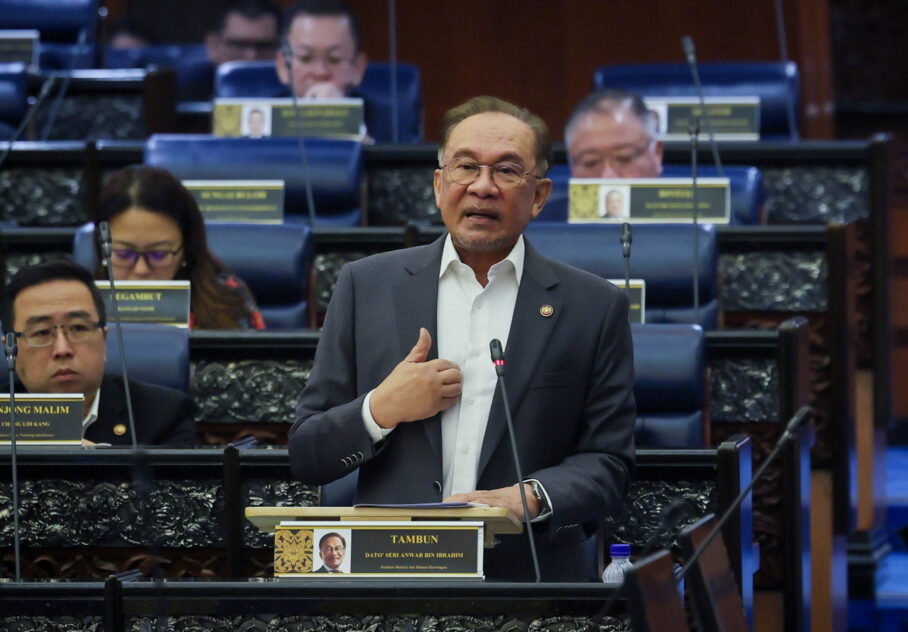
On Tuesday (Jan 20), Anwar said the government will introduce a new approach to learning assessment in primary and secondary schools through the implementation of the Malaysia Learning Matrix starting with the Year Four Learning Measurement in 2026 and the Form Three Learning Measurement in 2027.
He said that at the primary school level, the Year Four Learning Measurement will be implemented from 2026, covering four core subjects: Bahasa Melayu, English, Mathematics and Science.
The Form Three Learning Measurement will be introduced from 2027, covering five main subjects: Bahasa Melayu, English, Mathematics, Science and History. ‒ Focus Malaysia

No comments:
Post a Comment
Note: Only a member of this blog may post a comment.