


By 2026, the global security environment has entered a phase defined less by isolated crises than by systemic instability.
Risks no longer emerge in linear or predictable ways; instead, they compound across domains - geopolitical, technological, economic, and societal - creating cascading effects that overwhelm traditional policy responses.
The distinction between domestic and external threats has eroded, replaced by a security landscape where shocks propagate rapidly through global networks.
For Malaysia, a middle power whose prosperity rests on openness, stability, and regional equilibrium, this transformation presents not only external dangers but also internal strategic stress tests.
At the geopolitical level, instability has become both persistent and diffuse. Rather than a single dominant conflict shaping global order, multiple flashpoints interact simultaneously, intensifying volatility across regions.
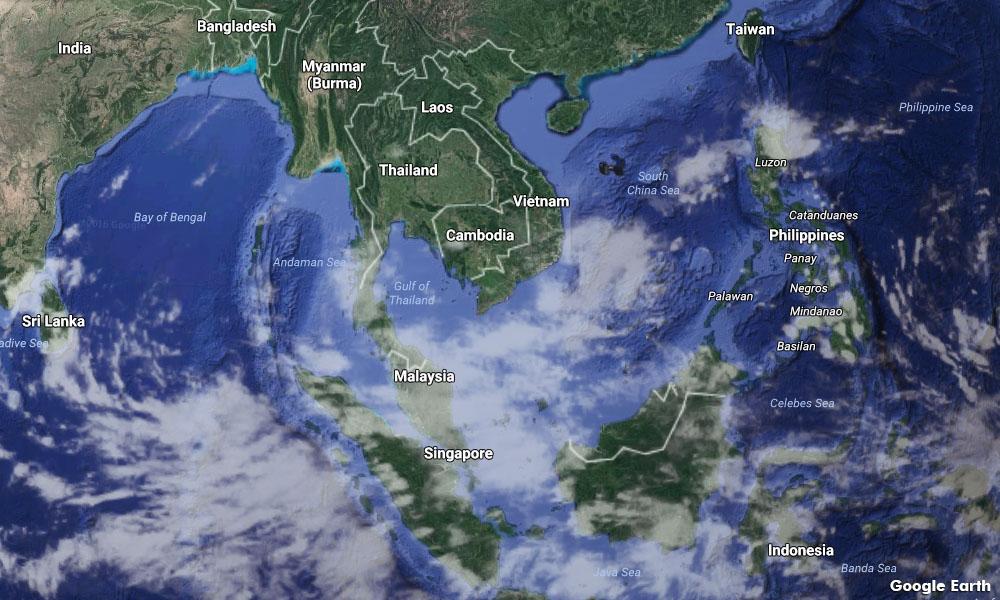
Escalating rivalries in Asia, prolonged conflict in Europe, and political fragmentation in other regions collectively strain the global system.
In Asia specifically, intensified great-power competition has injected uncertainty into economic relations, supply chains, and regional institutions.
Strategic rivalry now manifests not only through military signalling, but through trade restrictions, technology controls, financial leverage, and competing regulatory regimes. These tools of pressure are often deployed below the threshold of armed conflict, yet their cumulative impact can be as disruptive as war.
For Malaysia, this environment undermines long-standing assumptions about strategic insulation.
Economic lifelines such as maritime trade routes, energy flows, and investment networks are increasingly exposed to geopolitical disruption.
Even without direct involvement in conflict, Malaysia faces heightened vulnerability to secondary effects - trade realignments, sanctions spillovers, currency volatility, and declining investor confidence.
More critically, intensifying rivalry risks weakening regional multilateralism, reducing the capacity of collective mechanisms to manage crises. In such a context, reliance on established diplomatic balances alone is insufficient; strategic adaptability becomes essential.
Security threats
Beyond geopolitics, the nature of security threats themselves has evolved. Terrorism, while no longer concentrated in clearly defined theatres, has adapted to new technological and social conditions. Contemporary extremist violence is increasingly decentralised, ideologically fluid, and digitally mediated.

Radicalisation pathways now traverse online spaces, encrypted networks, and transnational narratives, enabling individuals or small cells to act with limited logistical support. This diffusion complicates detection and prevention, particularly in plural societies where social cohesion is both a strength and a potential fault line.
For Malaysia, the challenge lies not merely in preventing attacks, but in safeguarding social trust.
Counter-terrorism in this era must operate on multiple levels: intelligence and law enforcement remain critical, but they must be complemented by community engagement, early intervention, and narrative resilience.
Over-securitised responses risk alienating communities and inadvertently amplifying grievances, while under-resourced approaches leave gaps exploitable by extremist actors. The balance between security and cohesion is therefore a central strategic concern.
Yet the most transformative risk confronting Malaysia in 2026 lies in the technological domain.
Cyberspace has become a primary arena of strategic competition, with digital threats evolving faster than institutional responses.
The integration of artificial intelligence into cyber operations has fundamentally altered the threat landscape. Malicious activity is increasingly automated, adaptive, and scalable, allowing adversaries to conduct persistent operations against critical systems with minimal human oversight.
These threats target not only data integrity, but the functional reliability of essential services - energy, healthcare, finance, transportation, and governance itself.

The interconnected nature of digital infrastructure means that failures rarely remain localised. A disruption in one sector can cascade rapidly, generating economic loss, public anxiety, and political pressure.
Moreover, cyber operations increasingly blur the line between crime, espionage, and coercion.
State-linked actors exploit ambiguity and deniability, leveraging cyber disruption as a tool of influence without triggering conventional retaliation. For Malaysia, this reality demands a reconceptualisation of cybersecurity as a national security imperative rather than a technical afterthought.
Compounding these external pressures are internal structural vulnerabilities, particularly in governance. Security responsibilities remain distributed across multiple institutions with overlapping mandates and limited integration.
Non-traditional threats
In a relatively stable environment, such fragmentation may be manageable. In a high-velocity risk environment, however, it produces delayed responses, inconsistent messaging, and inefficient allocation of resources.
Without a unified strategic framework, policy tends to become reactive - responding to crises after they emerge rather than shaping conditions to prevent them.
Furthermore, non-traditional threats increasingly intersect with core security concerns. Health system resilience, infrastructure durability, climate stress, and economic continuity now function as determinants of national stability.

Shocks in these domains can amplify political tensions, strain public trust, and expose institutional weaknesses. Security, therefore, can no longer be confined to defence establishments; it must encompass the full spectrum of state capacity and societal resilience.
The central lesson of this environment is clear: strategic complacency is no longer viable. Malaysia faces a future in which risks are simultaneous, ambiguous, and fast-moving. Without a coherent vision that integrates external defence, internal governance, technological resilience, and social stability, the country risks being perpetually one crisis behind.
Hitherto, within this challenge lies opportunity. If Malaysia can recognise the structural nature of these threats and respond with strategic modernisation, it can convert vulnerability into resilience and uncertainty into strategic advantage. - Mkini
R PANEIR SELVAM is the principal consultant of Arunachala Research and Consultancy Sdn Bhd, a think tank specialising in strategic national and geopolitical matters.
The views expressed here are those of the author/contributor and do not necessarily represent the views of MMKtT.

No comments:
Post a Comment
Note: Only a member of this blog may post a comment.