


Malaysia’s current “catch of the week” is defined not by volatility, but by a widening gap between intent and execution.
While macroeconomic anchors remain broadly intact, markets are increasingly pricing institutional credibility and delivery capacity as Malaysia enters 2026.
Stability is no longer in doubt; execution has become the decisive test shaping confidence, capital allocation, and policy credibility.
The most visible anchor continues to be monetary policy. The latest confirmed stance from Bank Negara Malaysia’s September 2025 Monetary Policy Committee meeting kept the overnight policy rate unchanged at 2.75 percent, following the July reduction from three percent.
Market coverage characterised the tone as steady rather than overtly dovish, with domestic demand supporting growth while external risks were flagged around global trade conditions and sentiment.
The signal was clear: monetary calm remains necessary, but it is no longer sufficient. With interest rates functioning as a credibility floor, Malaysia’s upside is now being priced through non-monetary channels.
Bank Negara can buy time, but growth must be earned through investment conversion, productivity gains, and disciplined execution across the real economy.
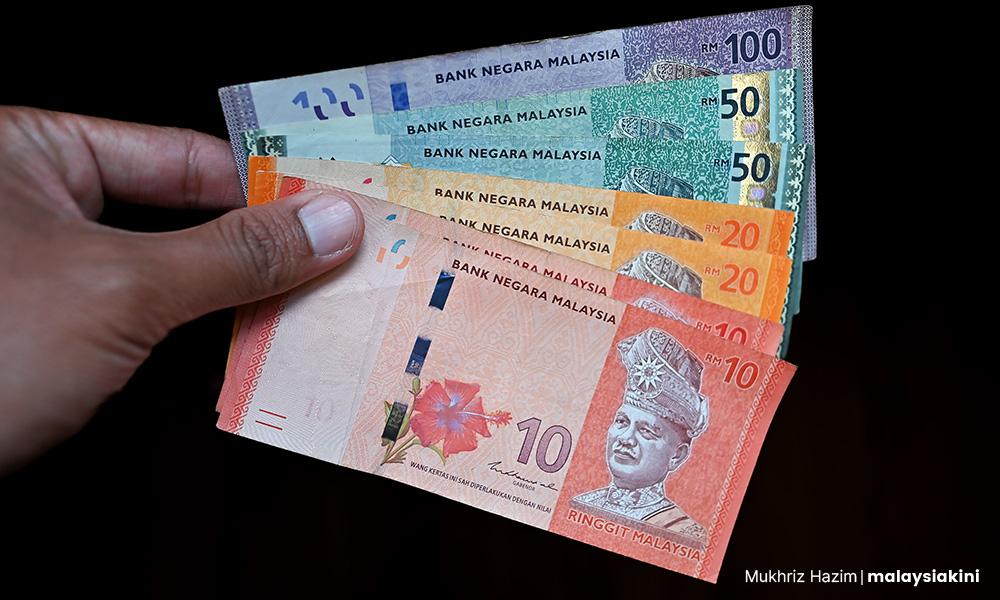
Financial conditions reinforce this message. In late January 2026, the ringgit strengthened to levels described as the firmest since 2018, trading roughly between 3.92 and 3.96 against the US dollar.
The currency briefly reached near 3.9200 and hovered around 3.9525 by Jan 27, reflecting improved sentiment, stronger risk appetite, and confidence in local policy credibility.
Official reserves continue to provide an important macro backstop. A firmer ringgit eases imported inflation and reduces foreign-currency debt servicing pressures, but it also removes the long-standing cheap-foreign exchange market (FX) cushion for exporters.
Competitiveness must therefore shift decisively from currency advantage to capability, including operational reliability, automation, higher-value electrical and electronics activities, and more efficient logistics.
This adjustment is healthy, but unforgiving, because it exposes structural bottlenecks quickly.
The Myanmar issue
Regional diplomacy has also moved into sharper focus. On Jan 20, Foreign Minister Mohamad Hasan told Parliament that Asean would not endorse Myanmar’s junta-led election, including by declining to send observers.
This was an explicit signal on legitimacy optics and Asean’s institutional positioning. For investors, diplomacy and supply-chain risk are no longer separable.

Malaysia’s stance positions it as a rules-and-legitimacy advocate, but it also raises expectations that Asean diplomacy will be matched by consistent follow-through.
Regional credibility feeds directly into capital allocation decisions, particularly for long-horizon manufacturing and logistics investments that assume political-risk containment.
Trade data offer a mixed but instructive pulse. According to the Department of Statistics Malaysia’s December 2025 External Trade Statistics released on Jan 28, exports rose to RM131.19 billion, up 2.9 percent year on year, while imports climbed to RM116.22 billion, up 11.9 percent.
Intermediate and capital goods featured prominently on the import side. The macro floor remains supportive, but composition now matters more than headline growth.
Strong capital-goods imports are strategically positive only if they translate into timely commissioning and productivity gains. Without that conversion, higher imports risk becoming leakage through delays, cost overruns, and weak multipliers. This is where execution becomes measurable rather than rhetorical.
Structural delivery vs macro firefighting
Broader macro indicators continue to underline a stable but tested environment. The latest “Malaysia at a Glance” snapshot shows inflation around 1.4 percent in November 2025 and unemployment near 2.9 percent.
Contained price pressures and a relatively tight labour market give policymakers room to focus on structural delivery rather than macro firefighting.
However, tighter labour conditions also sharpen skills constraints, particularly in electrical and electronics (E&E) ecosystems, data infrastructure, and higher-value services.

The policy challenge has shifted decisively from stimulus toward capacity building, including technical and vocational throughput, targeted talent measures, and faster firm-level upgrading.
Capital-market signals reinforce a theme of selective confidence rather than indiscriminate risk appetite. As of Jan 29, the FBM KLCI has recorded a wide range of reference points, including a 52-week low of 1,386.63, an intraday low of 1,719.52 on Jan 29, and a recent monthly low of about 1,665.94 on Jan 7.
After rallying to a 52-week high of 1,771.25 on Jan 27, the index consolidated in late-January trading, reflecting a more discerning risk posture rather than broad-based aversion.
The subsequent pullback was largely attributed to profit-taking and softer global sentiment following the US Federal Reserve’s decision to keep interest rates unchanged, widely characterised as a healthy correction rather than a loss of conviction.
Taken together, these movements suggest that when headline indices pause, the more important signal lies beneath the surface: investors are rotating toward governance clarity, balance-sheet resilience, and sectors with visible and sustainable cash flows, consistent with an execution-premium environment.
Transparency matters
Foreign direct investment debates now revolve around realisation discipline. Parliamentary and policy discussions increasingly highlight the gap between approvals and on-the-ground execution, focusing on delivery constraints and governance of project implementation.
Malaysia’s competitive edge is no longer defined by approved numbers, but by time to commissioning. Familiar bottlenecks persist, including land readiness, utilities provisioning, permitting timelines, and specialised labour availability.
A transparent public investment-realisation dashboard tracking milestones, delays, and escalation channels would now be a market-moving governance reform rather than a minor administrative tweak.
Looking ahead, the ringgit’s trajectory will be shaped less by any single factor than by stacked credibility signals. Markets will watch fiscal execution against targets, integrity premiums tied to rule-of-law handling, trade quality through E&E resilience and capital-goods conversion, and global dollar conditions.
Malaysia’s near-term advantage lies in improving sentiment and visible macro supports. The risk is that execution slippage, opaque sequencing, or inconsistent governance will be priced quickly, because Malaysia increasingly trades on credibility differentials rather than growth differentials. - Mkini
AZAM MOHD is an independent political and economic analyst.
The views expressed here are those of the author/contributor and do not necessarily represent the views of MMKtT

No comments:
Post a Comment
Note: Only a member of this blog may post a comment.