


I have read “Finding Academic Freedom Reform in Malaysia’s Higher Education Plan (RPTM) 2026-2035”, written by former education minister Maszlee Malik, and I found that the intervention is both timely and welcome.
His reflections on academic freedom, governance, and student agency contribute meaningfully to an ongoing national conversation that Malaysia’s higher education sector must continue to have, openly, critically, and in good faith.
Malaysia’s higher education reform agenda will indeed be judged not by the ambition of its language, but by the depth and durability of its reforms.
On this fundamental point, Maszlee is correct. His insistence that academic freedom must be protected structurally rather than rhetorically reflects a long-standing and legitimate concern within local academia, shaped by decades of uneven reform and personality-driven policy shifts.
However, his critique of the education plan ultimately rests on a partial reading of the plan’s design, intent, and implementation trajectory.

Contrary to the assertion that the plan merely repackages old assumptions under new slogans, the plan represents a deliberate departure from personality-driven reform towards institutionalised, law-based, and system-wide transformation.
It does not deny the structural weaknesses Maszlee identifies. Rather, it explicitly acknowledges them and proposes remedies that go beyond managerial tinkering.
Crucially, the education plan is explicitly conceived as a dynamic or “living” document rather than a static blueprint frozen at the point of publication.
This design choice directly addresses the very concern Maszlee raises about reform agendas becoming obsolete, symbolic, or trapped within administrative language.
By positioning the plan as an evolving framework, the ministry recognises that higher education governance must continuously adapt to emerging challenges, shifting political contexts, technological disruption, and global academic norms, rather than relying on once-off legislative or policy interventions.
As a living document, the education plan is structured to evolve in response to implementation feedback, institutional readiness, and emerging global trends, including changes in academic freedom norms, governance practices, and student participation models.
This means that the plan does not claim finality or perfection at inception, but instead embeds reflexivity into its reform logic.
Such an approach stands in contrast to earlier higher education plans that were often treated as static policy artefacts, evaluated only at the end of their lifespan rather than refined throughout their implementation.
This dynamic orientation is especially significant in responding to concerns about academic freedom.

Rather than assuming that complex issues of governance, autonomy, and participation can be resolved through a single legislative act or structural overhaul, the plan acknowledges that these reforms require sequencing, institutional learning, and iterative adjustment.
In doing so, the plan reframes reform not as a one-off rupture, but as a sustained process of system redesign, precisely the kind of structural seriousness that critics of symbolic reform have long demanded.
Anchored in law, not ministerial discretion
One of the strongest critiques raised by Maszlee is that previous reform attempts failed because they were not anchored in legislation.
Academic freedom, he argues, remained vulnerable because it depended on the disposition of individual ministers or vice-chancellors rather than on durable legal guarantees.
This diagnosis, however, is precisely what the newly-launched education plan seeks to address.
Under “Shift 5: Agile and resilient governance”, the plan openly recognises that Malaysia’s higher education governance has long been weakened by fragmented legal regimes.
Public universities, private higher education institutions, and technical and vocational education and training (TVET) providers operate under separate Acts with different regulatory philosophies, producing uneven standards of autonomy, accountability and student rights.
This fragmentation has not only complicated policy implementation but has also entrenched structural inequities within the system.
The plan’s proposal to develop a One Higher Education Act directly confronts this problem.
The intention is not administrative consolidation for its own sake, but legal harmonisation that embeds shared principles of governance, academic freedom, and institutional accountability across the entire higher education ecosystem.
By doing so, autonomy ceases to be a discretionary privilege and becomes a system-wide norm supported by law. This is a significant structural intervention, not a cosmetic one.
Comparatively, this approach aligns closely with findings by the Organisation for Economic Co-operation and Development (OECD) in OECD Reviews of Tertiary Education, which consistently note that jurisdictions with unified higher education legal frameworks - such as Finland, Ireland, and New Zealand - demonstrate greater policy coherence, stronger institutional trust, and more resilient academic freedom protections than systems governed by fragmented or sector-specific legislation.
OECD reviews emphasise that autonomy becomes meaningful only when it is legally standardised rather than selectively granted.
Rebalancing governance without destabilising institutions
Maszlee rightly highlights the risks of executive-dominated governance, particularly the concentration of authority in the office of the vice-chancellor.
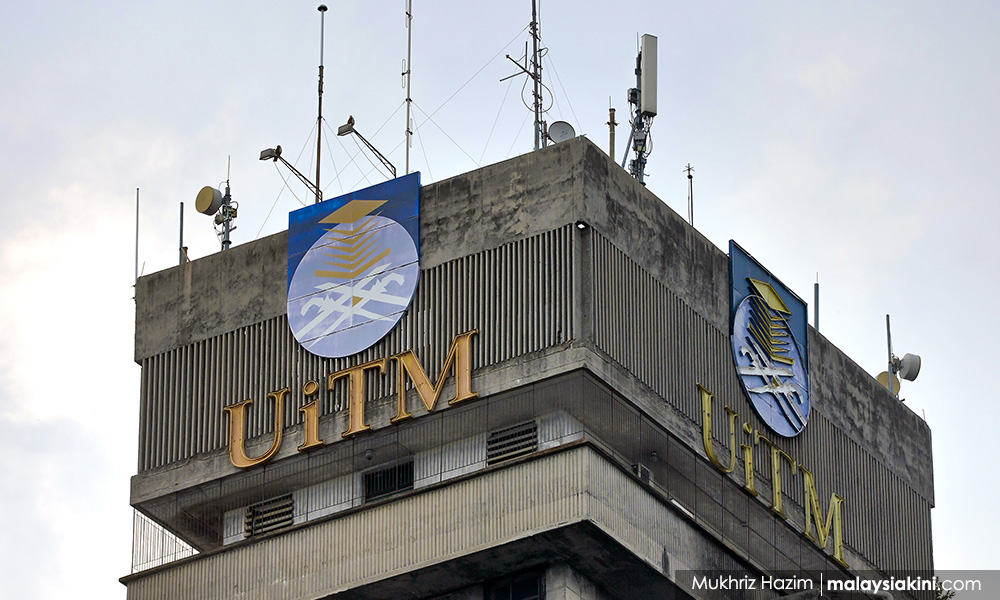
He uses Universiti Teknologi Mara’s (UiTM) governance structure as an example of how excessive executive power can weaken collegial decision-making and academic self-governance.
Yet, while the diagnosis is valid, the implied remedy of an abrupt legislative overhaul risks overlooking the complexity and scale of public universities.
The education plan adopts a more calibrated approach. Rather than dismantling existing structures overnight, it seeks to rebalance governance through phased institutional reform.
This includes strengthening university boards through capability-based appointments, introducing formal Board Effectiveness Assessments and clarifying the separation between strategic oversight and executive management.
These measures are designed to reduce unchecked discretion while preserving institutional stability.
This gradualist approach mirrors international best practice, which cautions that abrupt governance ruptures in large public university systems often generate administrative paralysis and institutional resistance rather than genuine academic empowerment.
As Clark Kerr, former president of the University of California, observed in his influential 1963 Godkin Lectures at Harvard University, universities are among the most conservative of institutions, changing slowly and primarily under external pressure rather than through sudden internal overhaul.
Accordingly, comparative governance scholarship shows that sustainable academic freedom is more effectively secured through incremental rebalancing of authority combined with strong accountability mechanisms, rather than through wholesale dismantling of executive structures, which often destabilises institutions without embedding lasting norms of freedom or responsibility.
Crucially, the plan introduces the Inclusive Governance Framework, which formalises stakeholder participation in university governance.
Academics, students, industry representatives and community partners are not treated as consultative add-ons but as integral components of decision-making structures.

This represents a shift from hierarchical command to participatory governance, achieved through institutional design rather than episodic reform experiments.
From rhetorical freedom to legal autonomy
Perhaps the most pointed aspect of Maszlee’s critique concerns student participation.
He argues that universities continue to treat students as regulated subjects rather than rights-bearing stakeholders, thereby undermining claims of empowerment.
While this critique reflects past realities, it does not adequately account for recent legal and policy developments.
Under the leadership of Higher Education Minister Zambry Abdul Kadir, student empowerment has been advanced through concrete legal amendments rather than symbolic gestures.
The 2023–2024 amendments to the Universities and University Colleges Act represent a substantial redistribution of authority to students.
Student representative councils are now legally permitted to raise and manage funds, open and administer bank accounts, and conduct elections independently without administrative interference.
Most significantly, disciplinary authority has been removed from vice-chancellors and transferred to independent student disciplinary committees.

These reforms directly address the structural deficits Maszlee identifies, particularly the lack of financial and organisational autonomy. They demonstrate a shift from conditional freedom towards institutionalised student self-governance.
Student agency is no longer framed as tolerated expression but as a legally recognised responsibility.
OECD comparative studies on student governance also indicate that financial and organisational autonomy - rather than unrestricted protest rights alone - is the strongest predictor of responsible student participation.
Systems in Germany, Australia, and the Netherlands demonstrate that when students are entrusted with budgets, institutional roles, and disciplinary responsibility, political maturity increases while disorder decreases.
So, the education plan approach aligns with this evidence-based understanding of student agency.
Student empowerment, therefore, is no longer framed as tolerated dissent but as a legally recognised responsibility embedded within governance structures.
Empowerment beyond speech
A recurring limitation in academic freedom discourse is its tendency to equate freedom solely with the absence of restrictions.
The plan adopts a broader and more realistic understanding. Freedom without material security, institutional capacity, and leadership development risks becoming performative rather than substantive.
Initiatives such as the Yayasan Perkasa Siswa reflect an understanding that student agency cannot flourish when basic welfare needs are unmet.
By institutionalising welfare support mechanisms, the education plan creates the conditions under which students can realistically engage in governance, activism, and leadership.

Unesco has repeatedly highlighted that student participation is structurally weakest in systems where welfare insecurity is high.
Its global education monitoring reports demonstrate that universities with integrated welfare-governance models, particularly in Nordic and East Asian systems, produce higher levels of civic engagement, student trust, and institutional legitimacy.
And the education plan’s integration of welfare into empowerment policy mirrors this global evidence.
Similarly, leadership development programmes such as iFuture and Sasar KPT are grounded in a well-established understanding within political and civic education scholarship, which is that democratic participation is not instinctive, but learned through practice.
Rather than assuming that students will automatically become critical, responsible, and engaged citizens once formal restrictions are loosened, these programmes intentionally expose students to the realities of leadership and governance.
Participants are required to navigate collective decision-making, manage competing interests, weigh ethical considerations, and take responsibility for the consequences of their choices.
Through this process, students encounter democracy not as abstract rhetoric, but as a lived experience that demands discipline, compromise, and accountability.
More importantly, this approach addresses a recurring weakness in many higher-education reform agendas, namely the belief that deregulation alone is sufficient to produce empowered citizens.
Experience shows that freedom without institutional scaffolding often results in disengagement, elite capture, or symbolic activism rather than sustained civic participation.
By embedding leadership training within community projects, social entrepreneurship initiatives, and university-community partnerships, programmes like iFuture and Sasar KPT cultivate what might be described as practical democratic capacity.

Through these programmes, students learn to translate voice into action, ideals into organisation, and protest into policy-relevant engagement.
In this sense, empowerment is treated not as the mere absence of control, but as the presence of capability, reinforcing the idea that mature democratic participation emerges when autonomy is paired with guidance, exposure and responsibility.
System design, not moral appeal
Maszlee is correct in asserting that academic freedom is the operating system of a serious university.
Where the education plan diverges is in its understanding of why academic freedom has historically remained fragile in Malaysia.
The plan recognises that freedom erodes not only through repression, but through weak institutional design, fragmented laws and inadequate accountability mechanisms.
By proposing legal harmonisation, governance recalibration, inclusive participation, and welfare-supported empowerment, the plan treats academic freedom as a system design challenge rather than a moral appeal.
This represents a maturation of reform thinking, informed by the limitations of earlier reform cycles.
Both OECD and Unesco converge on a key conclusion that academic freedom is most durable when embedded within governance architecture, legal harmonisation, and stakeholder participation, rather than defended through episodic political intervention.
The education plan’s design philosophy reflects this international consensus by treating academic freedom as a system design challenge rather than a moral appeal.
Reform is already structural and ongoing
Of course, the education plan is neither perfect nor complete, but it cannot be dismissed as another exercise in administrative rhetoric.

It embeds reform in law, restructures governance incrementally but deliberately, transfers real authority to students and recognises that freedom must be sustained by institutional capacity and social support.
The more pertinent question, therefore, is not whether the plan articulates reform ideals convincingly, but whether the academic and student communities are prepared to utilise, contest and strengthen the expanded space now available.
Structural reform has begun. Its success will depend not only on policy design, but on the maturity with which those reforms are implemented and defended. - Mkini
FOAD SAKDAN is the former vice-chancellor of Universiti Utara Malaysia.
The views expressed here are those of the author/contributor and do not necessarily represent the views of MMKtT.

No comments:
Post a Comment
Note: Only a member of this blog may post a comment.