


Umno’s victories last week in Kinabatangan and Lamag were among the strongest for the party in Sabah in the last half-decade, far surpassing the results in the 2025 Sabah state elections.
In fact, when one looks at Umno’s national performance since the watershed year of 2018, these sorts of results are only echoed in the September 2024 by-election in Mahkota. They raise the question of whether Umno’s electoral trajectory is improving.
While it is important not to overinterpret by-election results, as the circumstances in these sorts of contests are distinct, with the sympathy factor after the death of the incumbent prominent, the Kinabatangan and Lamag results do showcase important lessons for electoral gains.
Using an analysis of the polling station results, this piece argues that the recent Sabah by-election results for Umno show that cooperation, cooptation, campaign coordination and candidate renewal contributed to the victories, with an essential factor in these remote constituencies arguably “being in government”.
Warisan, as opposition, came into the contest with an interior weakness (developed in my earlier piece), and was not able to significantly challenge Umno’s rejuvenated electoral machine and core base of support in this incumbent seat.
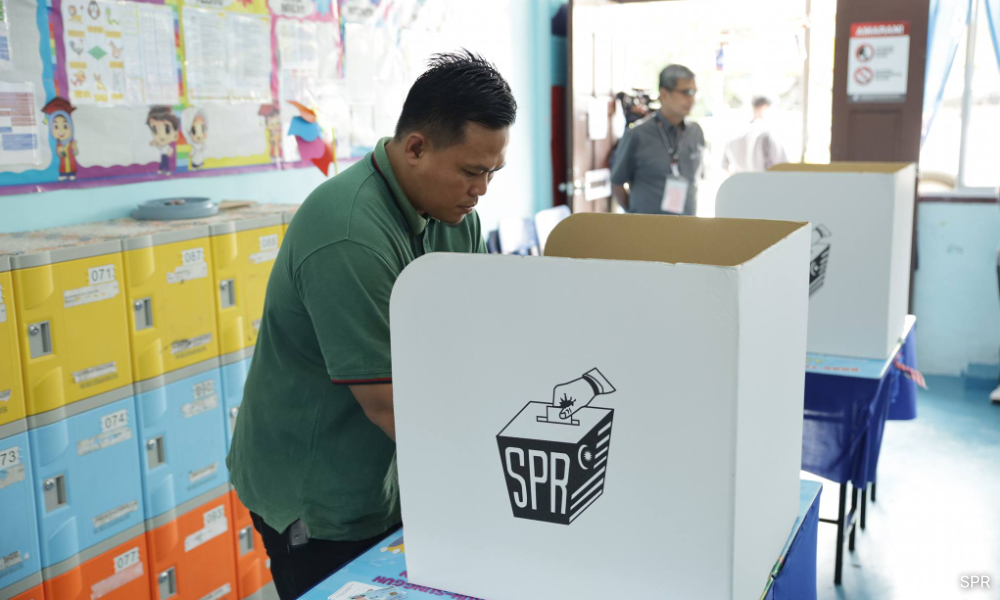
Warisan’s strategy of using “established” political families as candidates was not enough to offset the realities of being an opposition party in an area where access to the resources of government is critical for vulnerable voters.
Ethnic voting swings
Let’s start by looking at the results. Across the board, Umno won the majority of voters in all of the polling streams. Within this pattern, there are two others: gains across different ethnic communities and a youth boost.
In Kinabatangan, the gains were marked among Dusun voters (grouped under KDMR) and Sungai communities, a 39 percent and 23 percent estimated shares in gains, respectively.
In Lamag, the notable gains were also among Sungai, an estimated 34 percent vote share, but also among Malays and others, estimated 79 percent and 93 percent respectively.
Keep in mind that the number of voters in these communities is low, so even small shifts in voting can yield higher vote share swings. What the results show, however, is that Umno has surpassed its support in 2022 and has restored cross-ethnic support in these constituencies.
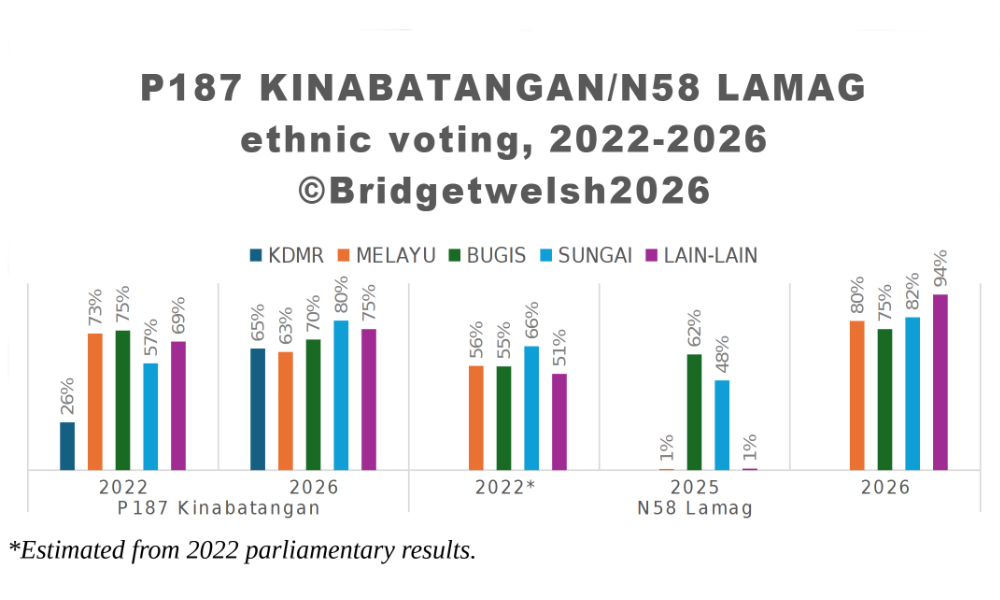
Three factors account for these changes in ethnic support. One is the reality that the main competition of Umno, Gabungan Rakyat Sabah (GRS), did not challenge the party. In fact, with the incorporation of Ismail Ayob as the candidate, formerly linked to GRS and before that to Warisan, the vote swing worked in Umno’s favour.
Ismail’s links to both GRS and Warisan were able to bring support with him. Frogging did not matter to these voters.
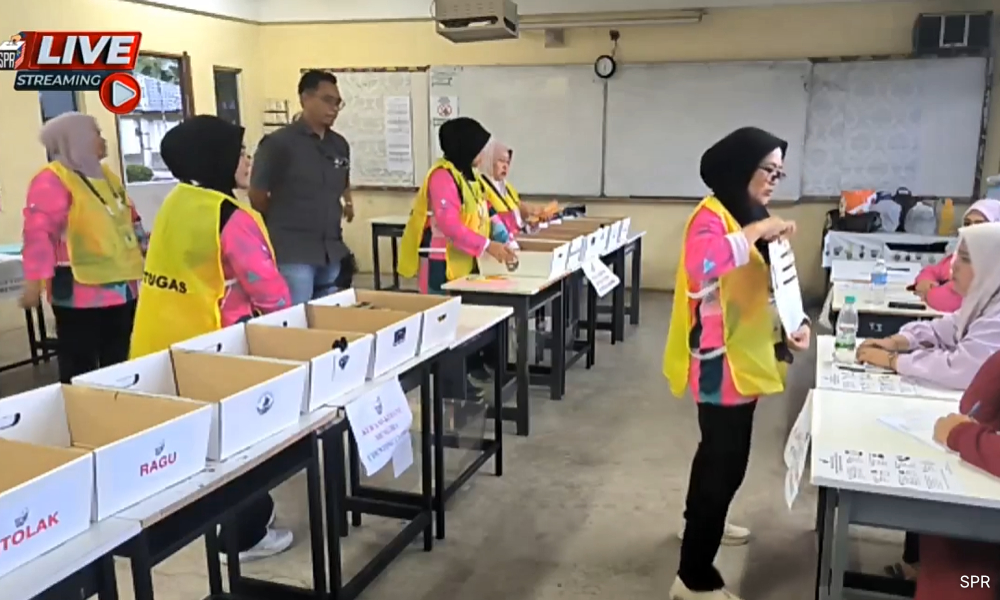
Second is the “in the government” factor, which was especially salient in Kuamut, where the majority of Dusun voters live and where there is the highest concentration of poverty.
Third is the ability of Umno to concentrate its efforts around political mobilisation in a more coordinated voter-centred campaign.
Comparatively, less money was spent in this campaign compared to 2025 and 2022, allowing for a more “personal” rather than “transactional” dynamic with voters. There was also more meaningful engagement with voters in the field.
Youth boost
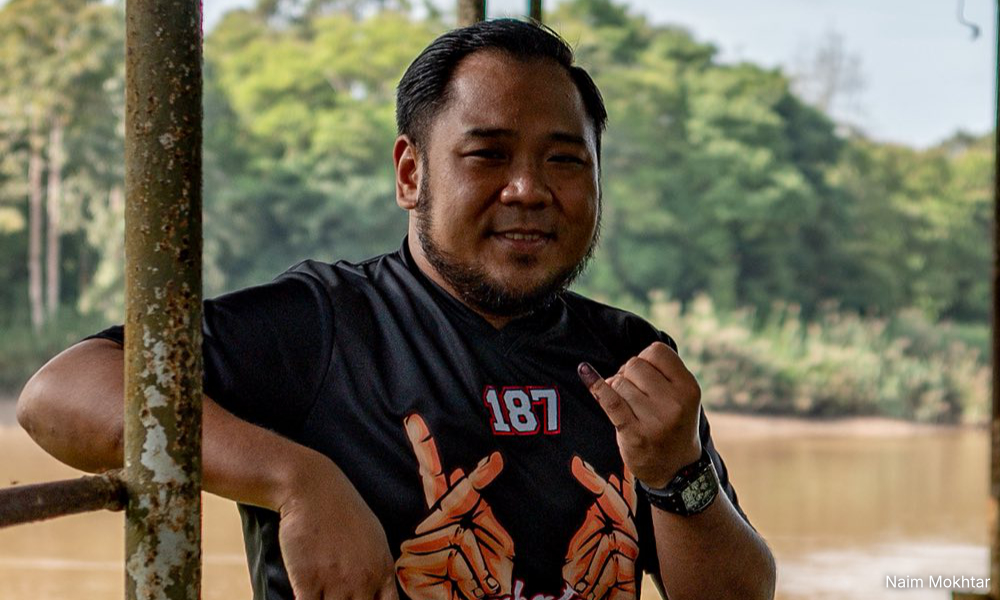
A final factor contributing to the swings involves candidate renewal, the selection of younger candidates. The 31-year-old Naim Kurniawan Moktar was able to tap into loyalties to his father, Bung Moktar Radin, and gained a large majority of 14,214, winning 75 percent of the vote.
Umno gains in Kinabatangan were concentrated among younger voters, with an estimated 21 percent gain among voters under 30 – a core group of Sabah and Malaysia’s electorate.
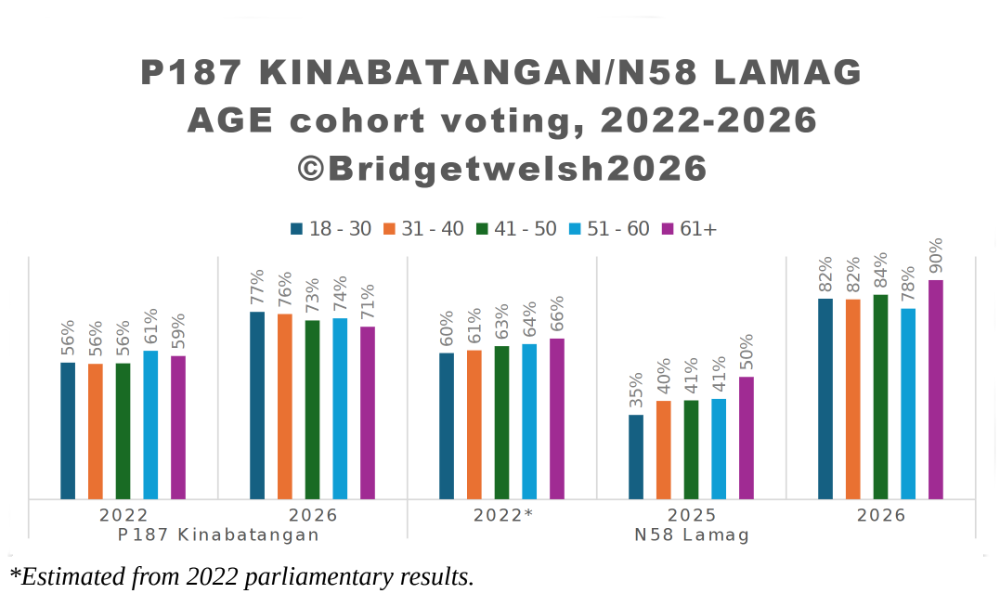
In Lamag, youth gains under 30 were even higher, an estimated vote gain of 47 percent from 2025, and 22 percent from 2022. It is important to appreciate that the success among younger voters was not just about the placement of young candidates, but also greater outreach and resources to support youth candidates in the campaign.
The age cohort voting patterns also show that older voters – especially those over 60 years old remain the strongest supporters of Umno, but the party won over new voters.
Warisan’s interior weakness persists
For Warisan, the results were a disappointment. The party only managed to win over 21 percent and 18 percent of the vote in Kinabatangan and Lamag, respectively.
The highest vote share among communities was among Bugis, an estimated 30 percent and 25 percebt respectively in the two constituencies. Among age cohorts, Warisan won its highest share of support among voters in their 50s in Lamag – an estimated 22 percent - and among voters in their 40s in Kinabatangan – an estimated 24 percent.
Warisan faces serious challenges in winning support in the interior and rural areas as an opposition party. Relying on politically connected candidates locally – “the family factor” – has fallen short in building appeal, especially among younger voters, many of whom are looking for new candidates rather than established local elites.
The need for candidate renewal and a new candidate strategy for Warisan is clear.
This constituency, however, did not play to the party’s narrative strengths. The Kinabatangan campaign showcased less Sabah state nationalism, a message that has benefited Warisan electorally.
Compared to the state polls last November, this campaign centred around candidates, party positions in government and party brand rather than federal-state relations – a not unexpected dynamic in a by-election.
Lesson transferability
These factors – being in government, cooperation, cooptation, campaign coordination and candidate renewal – offer insights into winning elections more broadly at a time of heightened electoral volatility. Learning lessons matter.
Modestly, Umno results do point to a turnaround for the party electorally in Sabah, one tied to pragmatic and “out of the box” decisions. For the party, the choice of Ismail as a candidate in Lamag, for example, was new, as usually Umno chooses from within. Umno is adapting to new political realities. Warisan less so.
The hard question arises over whether these factors are transferable to other contests. In rural Sabah, being “the government” matters more than in the peninsular Malay heartland or in urban constituencies.
The “personal” touch is harder to emulate in constituencies with a large number of voters, where information is gleaned from social media rather than social ties.
Perhaps the most transferable lesson is candidate choice – voters are looking toward the future and want a representative they can relate to and trust. Candidate selection is gaining traction in shaping voting.

Malaysia is still far from letting the best candidate be slated in a constituency. Current political realities make it harder to bring in new candidates, especially outsiders, as the competition to be fielded within parties is more intense and alliance relationships/ competition will inevitably limit choices.
Umno will face challenges replicating these various strategic decisions elsewhere, notably cooperation, especially where the call to “go it alone” or to cooperate with PAS is strong.
The Kinabatangan/Lamag contests highlight that while electoral victories and a turnaround are possible, there is no standard formula for success. In fact, this campaign shows that to win contests and win back support, campaign decisions need to vary and be adjusted to local conditions.
In this regard, Umno proved to be the most politically adaptable and better learn lessons from its earlier defeats. In doing so, this is, in fact, a turnaround for the party. - Mkini
BRIDGET WELSH is an honorary research associate of the University of Nottingham’s Asia Research Institute, a senior research associate at Hu Fu Centre for East Asia Democratic Studies, and a senior associate fellow at The Habibie Centre. Her writings can be found at bridgetwelsh.com.
The views expressed here are those of the author/contributor and do not necessarily represent the views of MMKtT.

No comments:
Post a Comment
Note: Only a member of this blog may post a comment.