


What our children are taught in schools today is not always grounded in evidence or truth – and the cost to national unity is far greater than we realise.
History education is not a neutral exercise; it shapes how young Malaysians understand who they are, where they come from, and how they relate to one another as citizens of a shared nation.
History taught in our schools should reflect what actually happened, not what we wish had happened. More fundamentally, history has the power to unite a nation, but only when it is narrated truthfully and inclusively.
We would do well to heed the most pertinent reminder by the late academic Zainal Abidin Abdul Wahid, who warned that “Unpleasant facts or events must not be brushed aside” and that “Students in schools must be nurtured and educated with history grounded in truth.” These words ring with particular urgency today.
Unfortunately, since 1996, young Malaysians have been primarily learning a form of “government-sanctioned history” – one largely viewed through the lens of a single ethnic group and skewed towards promoting an ethnocentric ideology premised on Malay-Islamic dominance, or the divisive concept of “ketuanan Melayu” (Malay supremacy).
This selective narrative has not only distorted the past but has also undermined the very purpose of history as a disciplined study grounded in evidence.
The problem of historical distortion extends beyond school textbooks.
It began with the Form One volume introduced in 2016 and the Form Five volume in 2020, and has since been compounded by the conduct of several historians who are arguably guilty of committing what can only be described as “intellectual crimes” – distorting history and making baseless claims that contradict clear-cut evidence, including official statistics.
One striking example concerns Parameswara, the founder of Malacca. The Form Two school history textbook (2017, page 82) perpetuates the myth that Parameswara converted to Islam in 1414. Several ethno-nationalist historians go further by asserting that he adopted the name Megat Iskandar Shah upon conversion.
This claim collapses under the weight of historical evidence. As stated by the late Khoo Kay Kim in his book “Malay Society: Transformation and Democratisation” (page 8), “It is almost certain that his [Parameswara’s] son succeeded him in 1414, assuming the title of Megat Iskandar Shah”.
This conclusion is corroborated by the Ming Shih-lu, reliable Ming records, which state explicitly that Megat Iskandar Shah went to Emperor Yung-lo’s court on Oct 5, 1414, and declared that his father, Parameswara, had died.
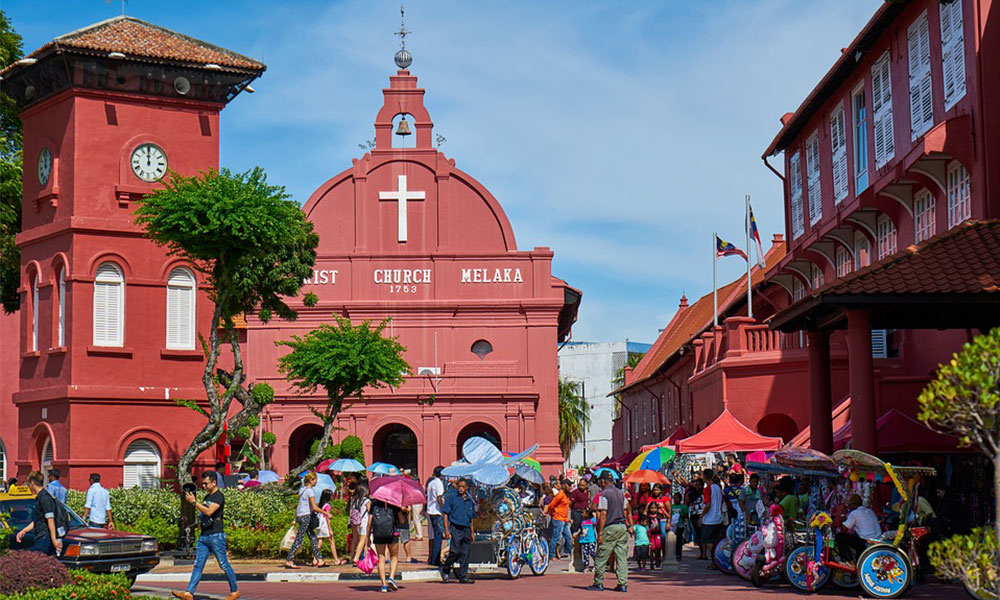
Leading scholars - including OW Wolters, CH Wake, Mary Turnbull, and BW and LY Andaya, as well as Sejarah Melayu - concur that the first Malacca ruler to embrace Islam in the 1430s was Seri Maharaja, who assumed the name Muhammad Shah. Yet these well-established findings are conspicuously absent from our textbooks.
Development of KL
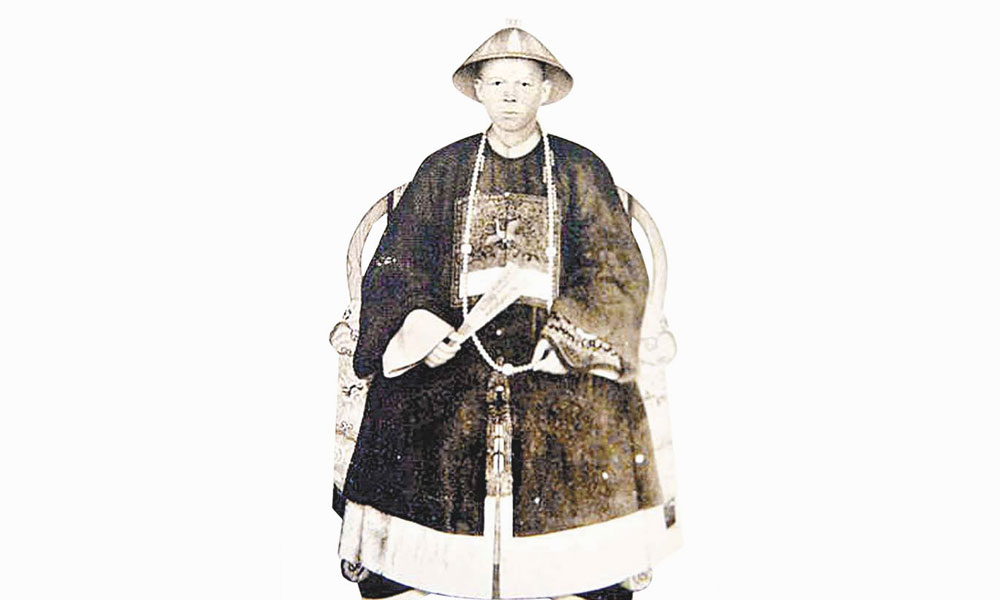
Equally troubling is the silencing of the phenomenal role played by Yap Ah Loy in the development of Kuala Lumpur. Worse still, two historians have claimed, despite clear-cut and contradictory evidence, that Raja Abdullah was the founder of Kuala Lumpur and that the town originated and developed as a Malay settlement.
Contemporary “people on the spot” – including Frank Swettenham, who later became the resident of Selangor in 1882, and William Hornaday, an American zoologist who visited Kuala Lumpur in 1878 – tell a very different story.
So do earlier history textbooks, such as the Form Four history textbook published by Dewan Bahasa dan Pustaka in 1979 and the Standard Four History textbook published in 1981.
Official records, including the 1879 Police Census of Kuala Lumpur and the 1959 Kuala Lumpur Municipal Council publication, together with the works of leading authorities on Kuala Lumpur’s early history such as JM Gullick and SM Middlebrook, all converge on two critical and indisputable facts: Kuala Lumpur originated and developed primarily as a Chinese township, and Yap Ah Loy, the third Kapitan Cina (1868–1885), was primarily responsible for its development.
According to Swettenham, Kuala Lumpur in 1872 was “a purely Chinese village, consisting of two rows of adobe-built dwellings thatched with palm leaves”.
In a similar vein, the 1879 Police Census of Selangor reveals that Kuala Lumpur’s population stood at 2,330, of whom 82 percent were Chinese.

Raja Abdullah’s only claim to being the founder of Kuala Lumpur rests on the minor and incidental fact that he sent 87 Chinese miners in 1857 to mine tin ore in Ampang – an area that was a different district altogether from Kuala Lumpur.
As noted by JM Gullick, Kuala Lumpur grew from the settlement established in 1859 by the first Kapitan Cina of Kuala Lumpur, Hiu Siew, and his business partner Ah Sze, near the confluence of the Klang and Gombak rivers, formerly Old Market Square and now Medan Pasar.
Significantly, the Kuala Lumpur Municipal Council celebrated Kuala Lumpur’s 100th anniversary in 1959, not in 1957 – an official acknowledgement of the city’s true origins.
Orang Asli and produce
Perhaps, one of the most serious shortcomings of our school history textbooks, however, is their denial of the historical role and significance of the Orang Asli. There is no acknowledgement of them as the original inhabitants or “sons of the soil” of Peninsular Malaysia.
Nor is there mention of their crucial role in early international trade as collectors of forest produce, their service as porters and guides, their appointment as “penghulus” (leaders), their role as the fighting force during the Malacca sultanate, or the historical fact that Minangkabau immigrants in Negeri Sembilan married Orang Asli women to establish land rights.
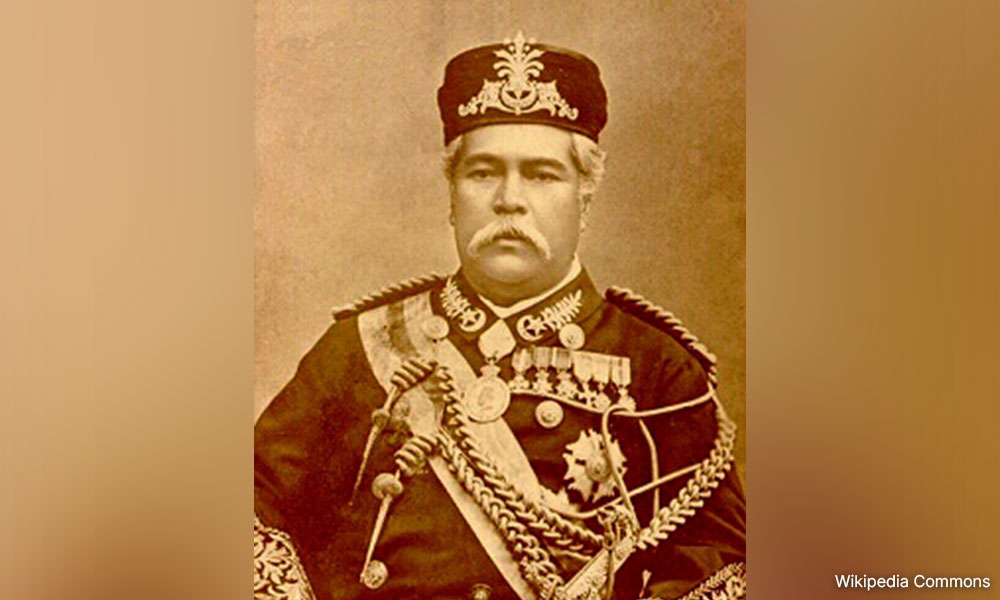
Our history textbooks must tell the truth, as powerfully expressed by Abdul Rahman Andak, secretary to Sultan Abu Bakar of Johor in 1894: “The aborigines were the proprietors of the soil, and we, the Malays, came there (Malay Peninsula) from a place in the Island of Sumatra.”
This truth is further reinforced by demographic evidence. Malaya’s Indonesian population – mainly Javanese, Banjarese, Sumatrans, Bugis, and Boyanese or Baweanese – increased from approximately 30,000 in 1901 to about 240,000 in 1931.
As stated by renowned academic Tunku Shamsul Bahrin, numerically, “the migration of the Indonesians into Malaya is a recent phenomenon.”
Yet “government-sanctioned history” also downplays the profound and enduring impact of Hindu-Buddhist influence on Malay statecraft, coronation ceremonies of Malay rulers, language, literature, and customs.
As stated by Ismail Hamid in “Masyarakat dan Budaya Melayu” (1988, page 55), “… kebudayaan Hindu telah meninggalkan beberapa kesan dalam setiap bidang kehidupan orang Melayu hingga dewasa ini (The Hindu culture has left several impacts on every aspect of Malay life to this day).”
The distortions continue in the economic narrative. Our textbooks have omitted the pioneering role of the Chinese in the 19th century commercial agriculture and have minimised their central contribution to the development of Malaya’s tin mining industry.
More marginalisation
A glaring and misleading error appears in the Form Three history textbook (2018, page 140), which states that the British cultivated various commercial crops, including pepper and gambier. In reality, pepper and gambier were cultivated largely by the Chinese in Johor in the mid-19th century.
Equally alarming is the assertion in the Form Three history textbook (2018, page 212) that Long Jaafar, the territorial chief of Larut, was primarily responsible for the Federated Malay States (FMS) becoming the largest tin producer in the world.
The undeniable truth is that Long Jaafar died in 1857, whereas the FMS became the world’s largest tin producer only towards the end of the 19th century, decades after his death.
The marginalisation does not end there. Our history textbooks have largely sidelined the pivotal role of South Indian labour in the development of the rubber industry, which became Malaya’s principal revenue earner from 1916 and remained so for several decades.
Even more glaring is the total absence of any acknowledgement of the indispensable contribution of South Indian workers to the construction of Malaya’s physical infrastructure – its roads, railways, bridges, ports, airports, and government buildings.
As noted by the late Kernial Singh Sandhu, a leading authority on Indians in Malaya, it is estimated that more than 750,000 Indians may have perished in the process of developing modern Malaya and opening up treacherous jungle tracts for rubber cultivation.

In the poignant words of a former Indian labour leader, “Every railway sleeper and rubber tree in Malaya marks the remains of an Indian.”
Historical omissions, distortions, and half-truths are not harmless mistakes; to my mind, they are ‘intellectual crimes’. Enough is enough. It is time for all right-thinking Malaysians, regardless of ethnicity or background, to stand united and demand better.
Our children deserve an education grounded in truth, evidence, and inclusivity. Only by teaching an honest and inclusive history can we build a shared national identity, restore trust in our institutions, and secure a just and united future for our beloved nation. - Mkini
RANJIT SINGH MALHI is an independent historian who has written 19 books on Malaysian, Asian, and world history. He is highly committed to writing an inclusive and truthful history of Malaysia based upon authoritative sources.
The views expressed here are those of the author/contributor and do not necessarily represent the views of MMKtT

No comments:
Post a Comment
Note: Only a member of this blog may post a comment.