


YOU know, back in the early ’70s, when I was slogging through Additional Mathematics and Form Six Maths, I remember sitting there thinking… what on earth is cosine for?
Sine, integrals, derivatives—they all felt like abstract hoops to jump through, completely disconnected from anything real.
It’s a strange paradox: we spend years learning these beautiful ideas, but no one ever shows us why they matter. And honestly, if we want kids to actually like maths, we’ve got to fix that disconnect.
For years, we’ve been quietly celebrating how almost every Malaysian child has a seat in a classroom. But here’s the uncomfortable question we keep avoiding—are they actually learning? In mathematics, the answer is often no.
When international reports show Vietnam outperforming Malaysia in maths, despite spending less per student, we tend to shrug it off. But we can’t afford to anymore. Vietnam’s success isn’t a fluke. It’s a quiet revolution we would be foolish to ignore.
Here’s the thing: our maths curriculum has been shaped by exams—high-stakes ones like SPM. And that has changed what “success” means.
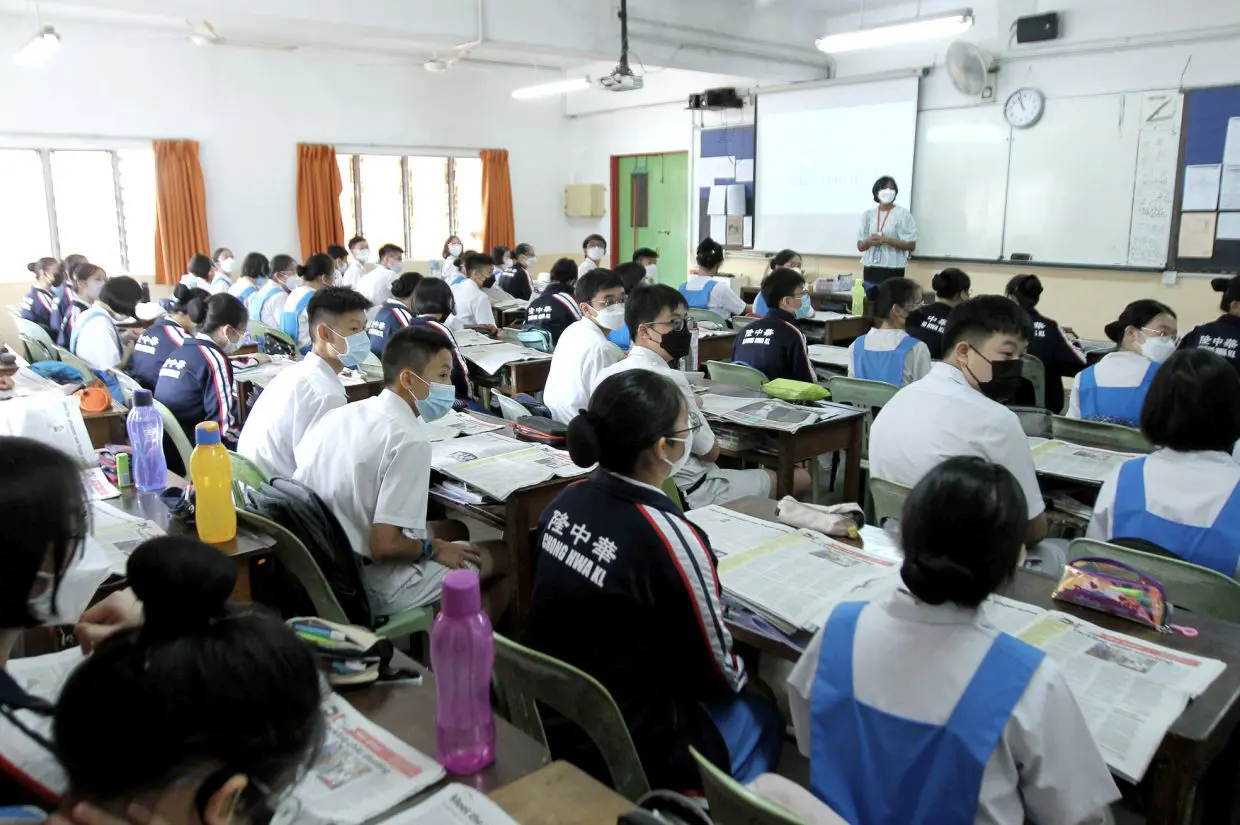
Instead of understanding why a formula works, students are trained to spot patterns, memorise steps, and produce answers under time pressure. They may pass, but do they truly understand? Often, no.
This creates another paradox. A student can spend eleven years in school yet still struggle with basic numeracy or simple algebra. And it’s not just about test scores—it affects everything.
Without solid mathematical foundations, how can we expect students to thrive in STEM? How can we build a workforce ready to innovate?
Now look at Vietnam. They do not have cutting-edge technology or limitless budgets. What they have is discipline and coherence. They teach fewer topics, but in greater depth. Students do not rush from one chapter to the next; they master concepts before moving on.
Teachers are rigorously trained, and lessons are structured step by step. The result is consistently strong performance in global assessments such as PISA.
Malaysia, on the other hand, struggles with an overcrowded syllabus. Topics are layered on top of one another. Teachers, under pressure and pressed for time, often end up teaching to the test. That may boost exam results in the short term, but it undermines genuine learning. Worse, it makes students dislike maths. They begin to see it as a collection of arbitrary rules rather than something logical and even elegant.
So yes, reform is not optional. It is urgent. But tweaking the syllabus every few years will not be enough. We need a fundamental rethink.
First, slim down the curriculum. Teach less, but teach it well. Focus on number sense, fractions, algebra, and logical reasoning. Prioritise mastery over exposure.
Second, change how we assess. As long as exams dominate, teaching will remain narrow. We need projects, open-ended problems, and real-world applications. This is not about lowering standards, but redefining what success looks like.
Third, invest in teachers. A strong curriculum means little without capable educators. Provide ongoing training, support, and trust—not just more pressure.
Fourth, do not leave rural schools behind. Any reform must include additional support for under-resourced schools. Otherwise, inequality will only deepen.
And here’s a critical point: we should not copy Vietnam blindly. Malaysia has its own culture, language, and challenges. But the underlying principles—clarity, consistency, and depth—are universal.
Change will not be easy. People resist, and old habits are hard to break. But doing nothing is far more dangerous. A generation of students unprepared for the future is a risk we cannot afford.
Let’s stop celebrating small wins and isolated success stories. What we need is a bold, honest vision—one that places real understanding at the centre of learning. Malaysia has no shortage of capable students. What we lack is a system that develops them fully.
Vietnam has shown what is possible. Now it is time for Malaysia to listen, learn, and act—not out of panic, but with purpose.
KT Maran is a Focus Malaysia viewer.
The views expressed are solely of the author and do not necessarily reflect those of MMKtT.
- Focus Malaysia.

No comments:
Post a Comment
Note: Only a member of this blog may post a comment.