


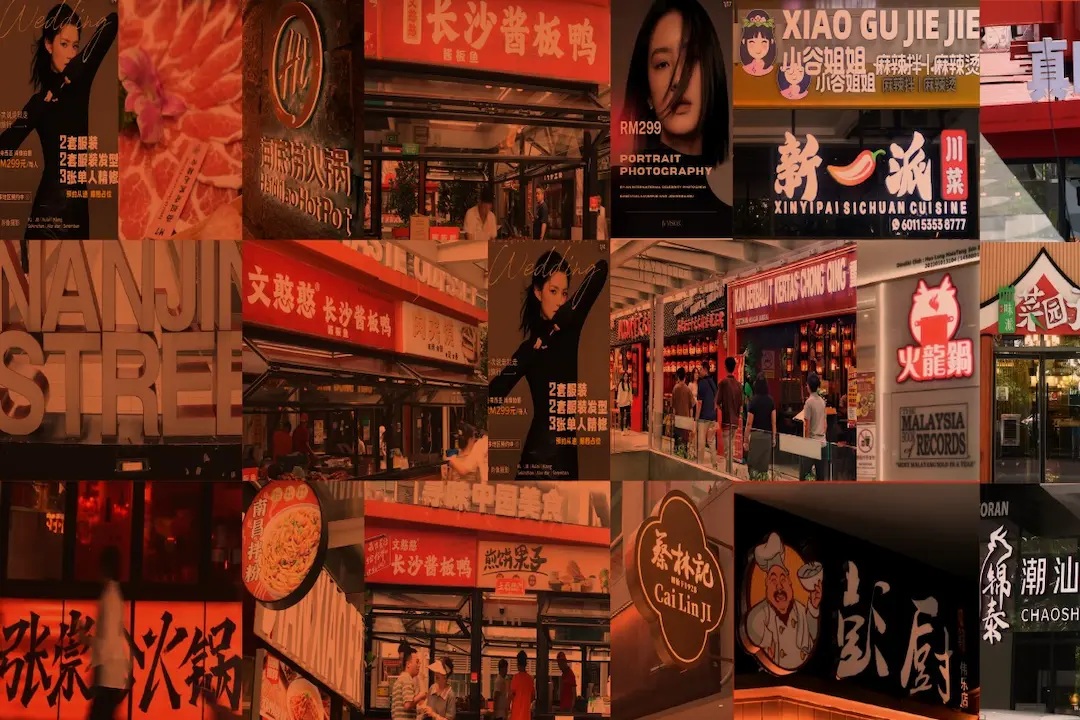
THE phrase “stranger in a strange land” means finding oneself completely out of place, alienate or feeling like an outsider in an unfamiliar environment or culture. But what if that environment is one’s very own place of birth?
That’s the loaded observation made by Threader feuu.m3 (@feuu.m3) who grumbled that the proliferation of signboards in Chinese was a sign of increased presence of Mainlanders here – be it at pasar malam (night market) or shopping malls.
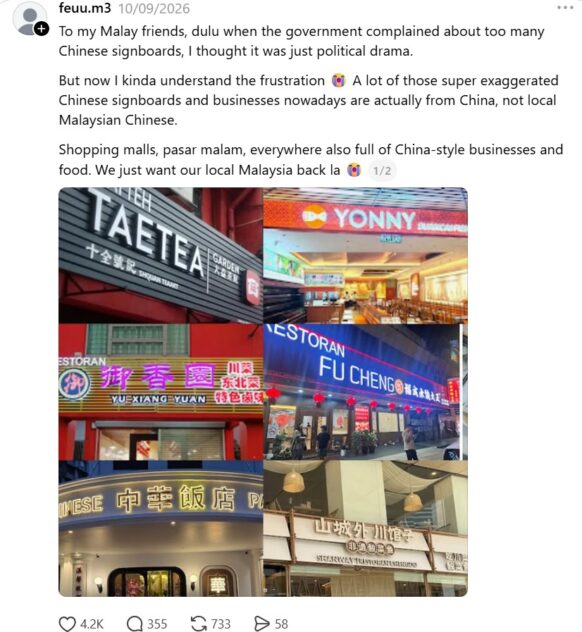
Explaining that he once thought the issue was being played up for political brownie points, he now feels differently.
Reaching out to his Malay friends, he now says he understands the frustration of being a stranger in her own home land, proclaiming that “we just want our local Malaysia back la.”
It was also added that many local Chinese have vented similar frustrations on social media that Mainlanders are “taking over the market”.
It was also clarified that the post was about too many China citizens setting up shop here rather than the signs they put in front of their stores.
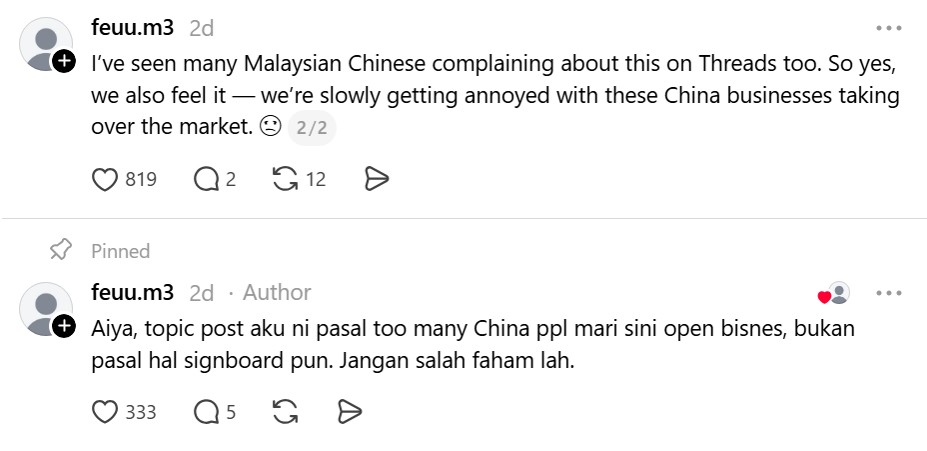
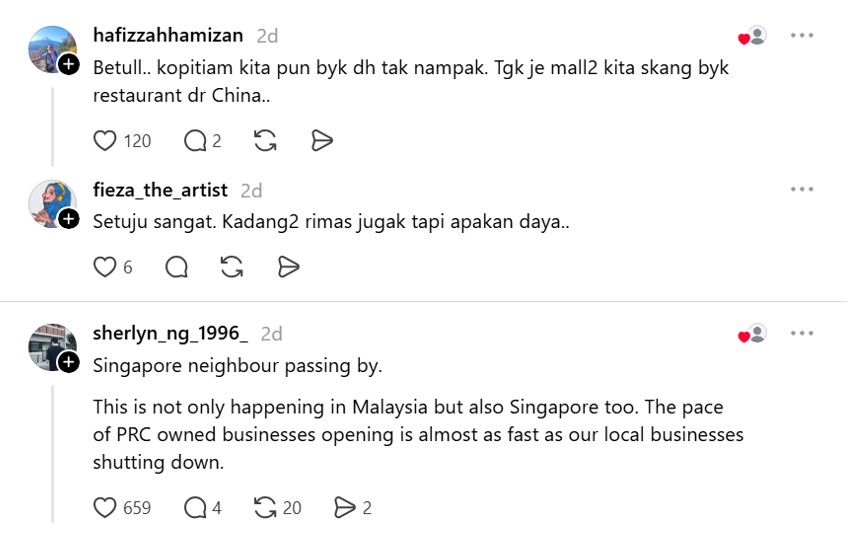
This concern was openly shared by quite a few netizens who noted the slow disappearance of local businesses such as their beloved kopitiam.
In their places are China-style restaurants or businesses with gaudy signboards written in Mandarin. A resident from across the Causeway noted similar phenome in Singapore where local businesses just could not compete with those with roots in China.
Things get serious when Malaysians start seeing their culinary identity slowly being wiped out.
One disappointed foodie noted that Kuala Lumpur and Petaling Jaya culinary scene was dominated by China, Middle East, Mamak and Ayam Gepuk eateries to the detriment of local Malay nasi campur (mixed rice) shops that seem to have gone extinct.

Some local Chinese just got straight to the point and called a spade for what it was. They, too, did not like the increasing presence of China-owned businesses here.
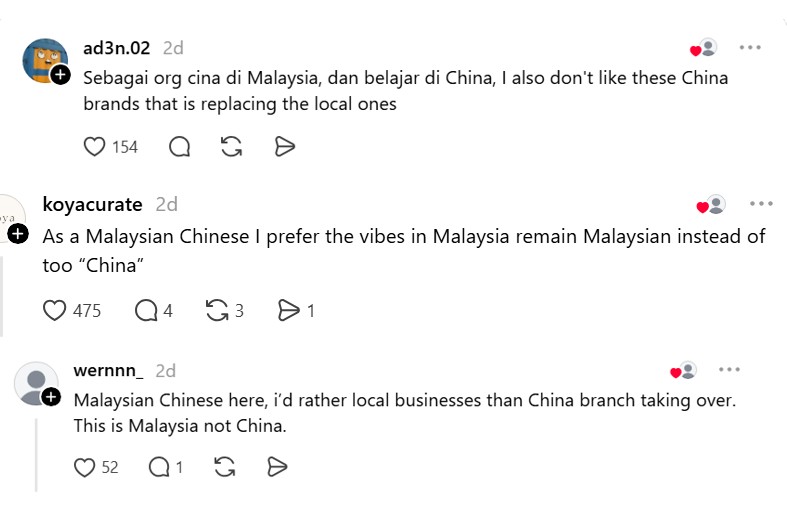
The very real threat of being priced out of the market was highlighted by a concerned citizen who claimed that Taiwan and China-owned businesses were willing to pay premium rental rates.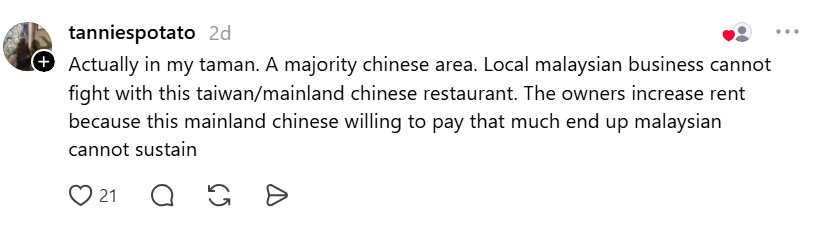
Some Malay commenters, meanwhile, groused that the Malays were unable to voice their displeasure at the state of affairs for fear of being labelled “racist”. In the end, local Chinese businesses suffered when foreigners are allowed too much leeway it was argued.
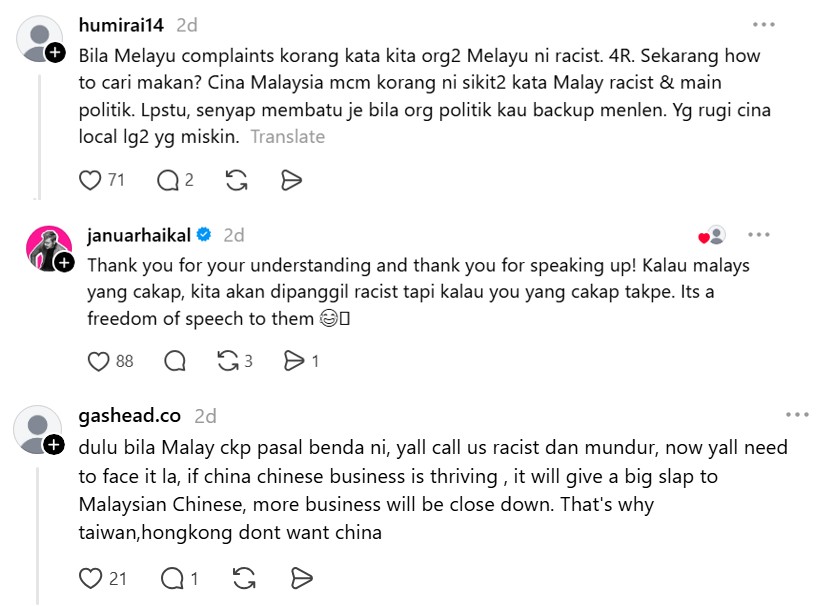
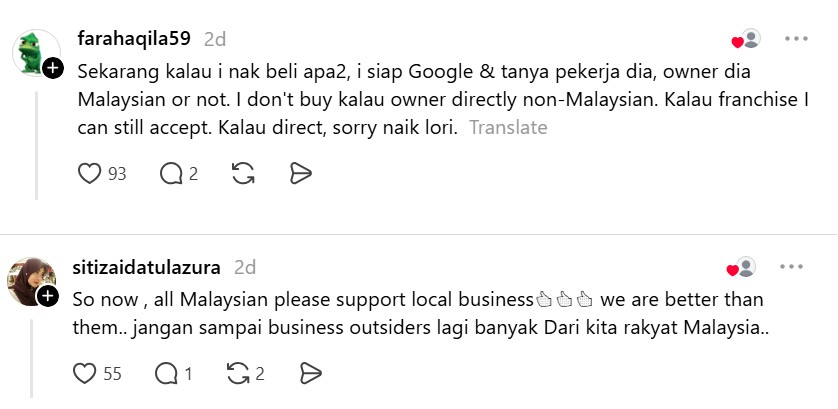
This led to some commenters suggesting a more pro-active approach towards supporting local enterprises. One claimed that she would search for the business’s info to ensure she did not buy directly from a non-Malaysian owned business.
The sense of resentment was clear in the comment who demanded to know “who the hell are this people really”. It was claimed that these second home seekers were changing street names and insisting that cabin crew speak their language.
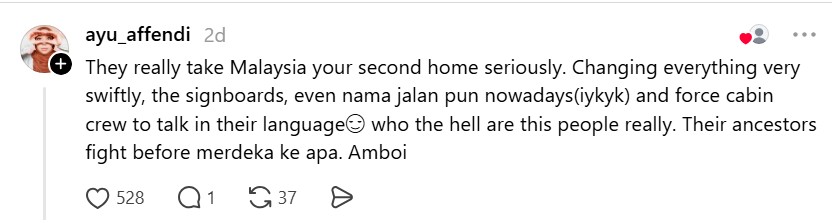
Editor’s Note: The commenter is referring to China citizens applying for the Malaysia My Second Home (MM2H) programme.
Summing up the mood was this local artisan who blamed certain politicians for framing local Chinese as a threat when it was more important to unite to support local businesses. “The real threat was China, not local Chinese” it was surmised.
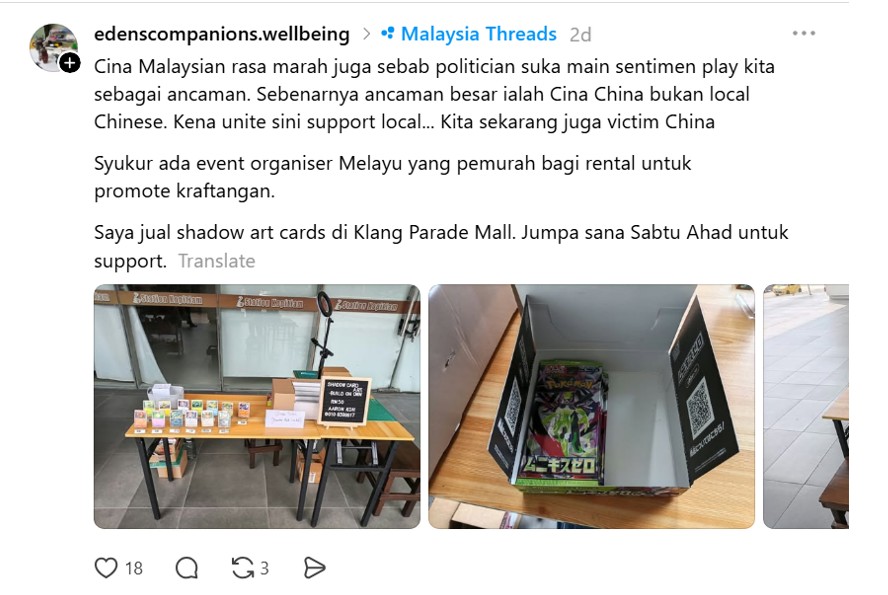
As can be seen from the many comments above, a siege mentality seems to be forming with Malaysians from various backgrounds grousing about invading foreign businesses that are muscling locals out of the market.
Is it racist to voice concern about the shifting identity of commercial landscape? That is open to debate.
But one thing is clear, Malaysians need to realise that serious foreign competition is here and falling for local politician’s tired 3R (race, royalty and religion) shtick only deepens the schisms.
That is unhelpful when it’s all hands to the pump to help local businesses stave off fierce outside competition. – Focus Malaysia

No comments:
Post a Comment
Note: Only a member of this blog may post a comment.