


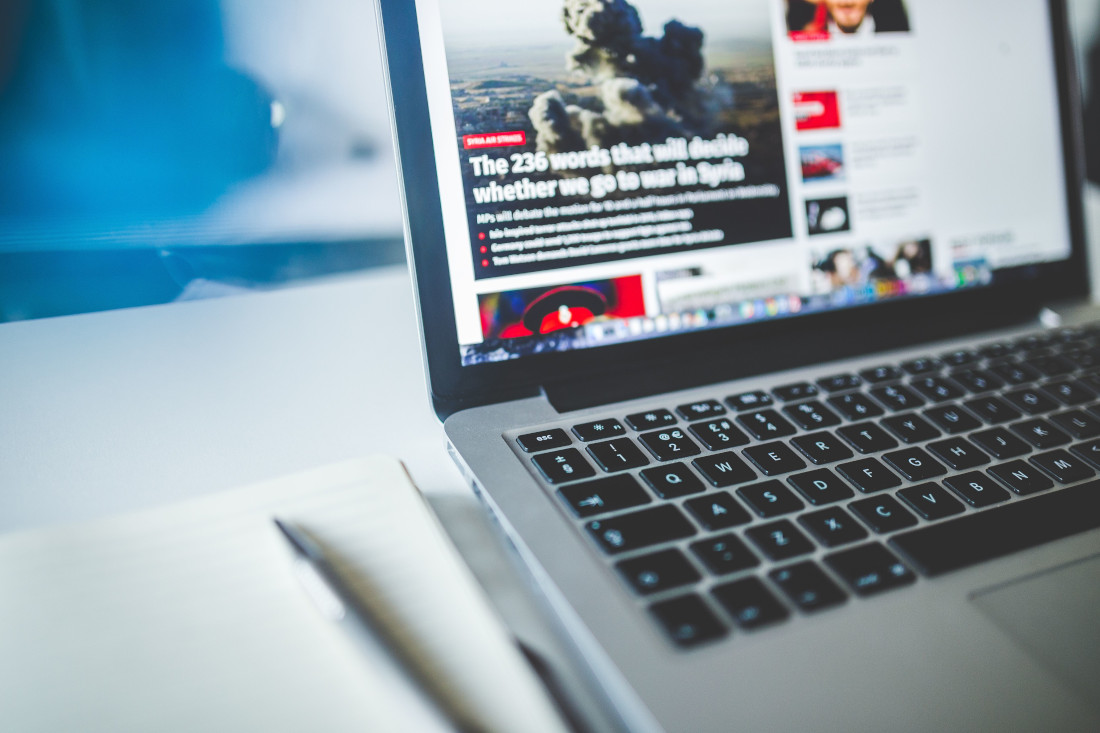
TECHNOLOGY has changed not only how we consume media, but also how information reaches us.
In the past, most people relied on newspapers, television and radio to understand events at home and abroad.
Today, smartphones and social media allow information to spread almost instantly. Videos, photographs and eyewitness accounts can be shared by anyone, sometimes while an event is still unfolding.
The result is a media environment that feels more immediate and less filtered. During wars, protests or natural disasters, people can upload footage directly from the scene.
Some of these images are powerful, while others are violent or deeply distressing. The sheer volume of content can also become overwhelming when hundreds of videos and opinions about the same event appear within hours.
Greater access to raw information is not necessarily a bad thing.
Traditional media has long served as a gatekeeper. Editors and journalists decide which stories deserve coverage, which sources should be interviewed, and which images should be published.
That process matters because journalism depends on verification and professional standards.
At the same time, no news organisation is completely neutral. Editorial decisions can be influenced by institutional priorities, commercial pressures, political considerations or organisational values.
Digital media has reduced the influence of those traditional gatekeepers. Someone who witnesses an important event no longer needs a newspaper or television station to tell the story. They can publish it directly to thousands, or even millions, of people.
That has clear benefits. It gives the public access to perspectives that might never appear in mainstream coverage, and it makes it harder for governments or powerful organisations to completely control information about an event.
Yet openness comes with its own risks.
If everyone can publish information, then people without expertise or evidence can reach the same audience as those with genuine knowledge.
An expert’s carefully researched post can appear beside an unsupported claim, and both can spread rapidly if they attract enough attention.
Artificial intelligence has made this challenge even more complicated.
Images, audio recordings and videos can now be generated or manipulated to depict events that never happened. A photograph or video was once widely treated as strong evidence that something had occurred. Today, even convincing visual evidence sometimes requires verification.
Ironically, the same technology that has expanded access to information has also made it easier to manufacture falsehoods.
This is why it would be a mistake to assume that unfiltered media is automatically more truthful.
Even a genuine video captures only what happens within its frame. The person recording it decides where to point the camera, when to start recording and when to stop.
The person uploading it may add a misleading caption. Social media platforms then use algorithms to determine which posts reach wider audiences.
The filters, in other words, have not disappeared. They have simply changed.
That shift places greater responsibility on media users themselves.
In the traditional media environment, audiences relied heavily on journalists and editors to verify information before publication. Today, individuals must increasingly perform part of that work themselves.
That means checking the original source, comparing reports across multiple outlets, considering whether a person making a claim has relevant expertise, and resisting the urge to share information before it has been verified.
Technology has given society access to more information and more perspectives than previous generations could easily imagine. It can expose realities that traditional media may overlook, and it can amplify voices that once struggled to be heard.
But access to more information does not automatically mean access to more truth.
As the media environment becomes more open and less controlled, media literacy is no longer an optional skill. It is an essential one.
The challenge today is not simply learning how to find information. It is learning how to judge what deserves to be believed.
The author, Raditya Alwyn Suwarto is an undergraduate student of Universiti Malaya, taking an elective university course entitled “Introduction to Journalism and Storytelling in Digital Age”.
The views expressed are solely of the author and do not necessarily reflect those of MMKtT.
- Focus Malaysia.

No comments:
Post a Comment
Note: Only a member of this blog may post a comment.