


HISTORY | History records how a society understands itself, whom it chooses to remember and whom it allows to disappear.
When an official document rewrites the origins of the nation’s capital, factual accuracy is not optional; it is a public duty. As French military officer and explorer Pierre Le Moyne reminds us, “Truth is the very soul of history.”
The Kuala Lumpur Structure Plan 2040 (KLSP 2040), prepared under the authority of Dewan Bandaraya Kuala Lumpur (DBKL), contains an account of the city’s beginnings that is incomplete and historically contentious.
Its timeline on page 2-4 states that the “Development of Kuala Lumpur [was] initiated by Sutan Puasa”, principally through the construction of irrigation canals and other amenities.
It added that Sutan Puasa cleared the jungle upstream and prepared irrigated paddy fields, particularly in Setapak.
Under the 1857 entry in its timeline, the plan states that “Kuala Lumpur was formerly a tin mining centre pioneered by Raja Abdullah”, who was the district chief of Klang, and that it was “continue developed [sic] by Yap Ah Loy”.
On the same page, it says that “The growth of Kuala Lumpur began in the 1850s”, with development “concentrated in the downtown area between the Klang River and the Gombak River which is now known as the Medan Pasar”.
Read together, these statements conflate four distinct historical developments: agricultural activity in Setapak, tin mining in Ampang, the establishment of a trading settlement near Medan Pasar, and its subsequent rebuilding and transformation.
At the outset, let us get one historical fact straight: Kuala Lumpur did not originate in the paddy fields of Setapak or the tin mines of Ampang.
It grew from the trading post established by Hiu Siew and Ah Sze (also known as Ah Sze Keledek) near the confluence of the Klang and Gombak rivers. Ampang and Setapak were distinct settlements serving different economic functions.
A contradiction on the same page
The contradiction becomes clearer when the plan’s statements are considered together. After attributing the initiation of Kuala Lumpur’s development to Sutan Puasa’s agricultural work in Setapak, the same page locates the city’s growth in the downtown area between the Klang and Gombak rivers.
The location is unmistakable, but the plan does not explain how the opening of agricultural land in Setapak could constitute the founding act of a commercial settlement at Medan Pasar.
The places were distinct, as were the activities. Irrigation works outside the town were not the same as establishing the riverside settlement from which Kuala Lumpur grew.
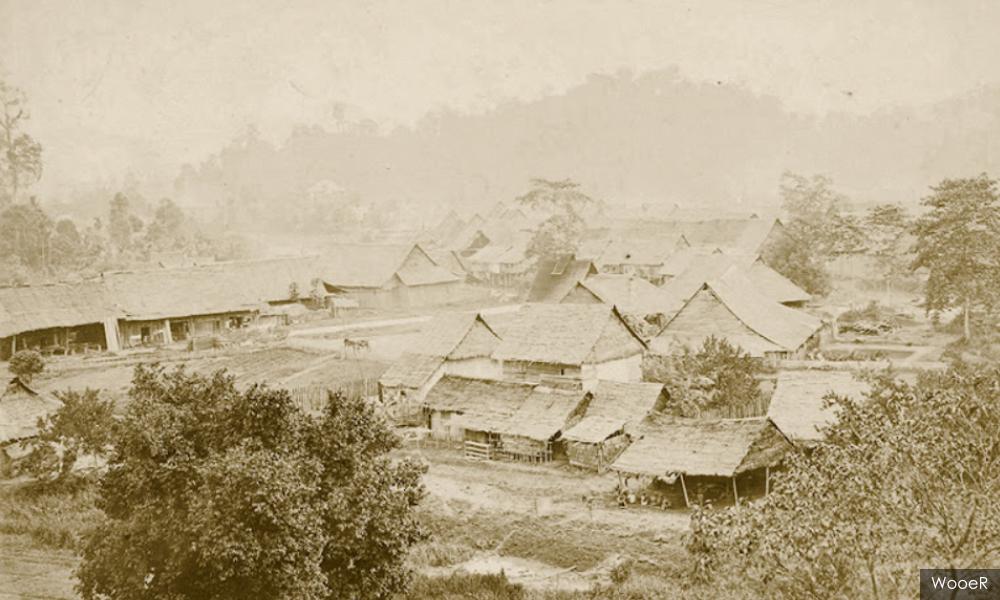
If DBKL accepts that the city’s growth began around Medan Pasar, it must answer the obvious question: who established the settlement there? That is precisely where Hiu Siew and Ah Sze enter the long-established historical account - and precisely where KLSP 2040 falls silent.
There is another troubling omission. The relevant page contains no footnotes, endnotes or source citations for its historical claims.
Elsewhere, KLSP 2040 gives sources beneath some tables, maps and figures. For this disputed account of Kuala Lumpur’s origins, however, readers are given neither a citation nor an explanation of the evidence relied upon.
What the historical record says
The long-established account appears in SM Middlebrook’s biographical study, “Yap Ah Loy (1837–1885)”, first published in the Journal of the Malayan Branch of the Royal Asiatic Society in 1951.
After Middlebrook’s death, JM Gullick, a pre-eminent scholar of Malayan history, completed the unfinished manuscript, contributing the introduction and final three chapters. CA Gibson-Hill edited the completed manuscript and added the notes on the text and sources.
Middlebrook’s narrative distinguishes two connected but separate developments. First came the tin-mining venture at Ampang.
Raja Abdullah played a significant role in promoting that venture. The miners he sponsored travelled by way of the confluence of the Klang and Gombak rivers before proceeding to Ampang.
The fact that they passed through the confluence on their way to Ampang did not mean that the confluence was itself the site of the Ampang mines or that Ampang and Kuala Lumpur were the same settlement.
The success of mining at Ampang then created a need for a landing, supply and trading point as far upstream on the Klang River as boats could conveniently travel.
According to that account, Hiu Siew and Ah Sze, two traders from Lukut, opened a shop and established a trading post near the river confluence, in association with Sutan Puasa, a Mandailing trader connected with the Ampang mining community.
That commercial settlement - not the mine at Ampang or the paddy fields at Setapak - was the nucleus from which Kuala Lumpur originated and developed.
Gullick later described the settlement established by Hiu Siew and Ah Sze in his book titled “The Story of Kuala Lumpur (1857–1939)” as marking “the origin of Kuala Lumpur itself”.
This account is consistent with the observations of Frank Swettenham, a British colonial official who later served as resident of Selangor and became the first resident-general of the Federated Malay States.

Recalling Kuala Lumpur as he saw it in 1872, Swettenham described it as “a purely Chinese village, consisting of two rows of adobe-built dwellings, thatched with palm leaves …”
The 1879 Police Census of Selangor enumerated Kuala Lumpur separately from neighbouring localities, including Ampang.
Kuala Lumpur had a population of 2,330, of whom 1,906 (81.8 percent) were Chinese. The census therefore provides strong contemporary evidence that Kuala Lumpur was both a distinct settlement and a predominantly Chinese township.
Sutan Puasa’s role deserves proper recognition. In the Middlebrook–Gullick account, his business relationship and local connections helped bring Hiu Siew and Ah Sze from Lukut and enabled them to establish themselves in the area.
He was not a marginal figure. But facilitation, agriculture, mining and settlement formation were different contributions. An inclusive history should distinguish them rather than merge them into a single founding claim.
This trading-post account was once recognised by DBKL’s own institutional predecessor. To mark Kuala Lumpur’s centenary in 1959, the Kuala Lumpur Municipal Council published “Kuala Lumpur: 100 Years”. The dates chosen were themselves significant: 1859-1959, not 1857-1957.
In his message marking Kuala Lumpur’s centenary, the sultan of Selangor observed that its earliest pioneers could scarcely have imagined that the small trading post they established near the confluence of the Gombak and Klang rivers would, within a century, grow into a capital city.
The centenary celebrations in June 1959 attracted attention well beyond Malaya. The New York Times reported the occasion under the headline “MALAYA CAPITAL HAILS 100TH YEAR; Kuala Lumpur Is Celebrating Its Founding as Village to Serve Tin Mines.”
A competing interpretation must be explained
There is now a competing interpretation. In his 2018 book titled “Sutan Puasa: Founder of Kuala Lumpur”, Abdur-Razzaq Lubis argues that Sutan Puasa and members of the Mandailing community were present before Hiu Siew and Ah Sze arrived and that Sutan Puasa should be recognised as Kuala Lumpur’s founder.
Earlier presence in the wider area, however, does not by itself establish who founded the particular settlement from which Kuala Lumpur grew.
The evidence cited above does not justify portraying Sutan Puasa as the “originator” or “prime mover” of the city’s founding and development.
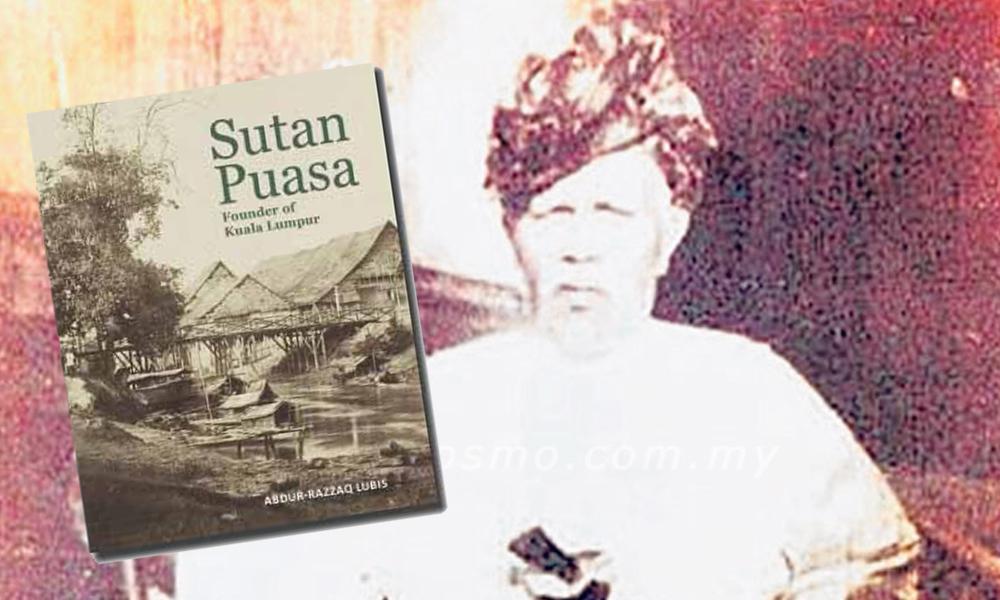
The agricultural activity attributed to him was in Setapak, while his commercial connections were with the Ampang mining community; neither fact makes Setapak or Ampang the birthplace of Kuala Lumpur. The city grew from the trading post established by Hiu Siew and Ah Sze at the river confluence.
KLSP 2040 may have adopted Lubis’ newer interpretation. If so, DBKL should say so plainly, cite the work, identify the evidence it finds persuasive and explain why it rejects or revises both the Middlebrook-Gullick account and the municipal council’s 1959 centenary history.
Historical interpretation can change when new or stronger evidence emerges. What is unacceptable is to present a contested interpretation as settled fact in an official document without disclosure or explanation.
Yap Ah Loy reduced to a passing phrase
The treatment of Yap Ah Loy is scarcely better. KLSP 2040 says only that the tin-mining centre was “continue developed by Yap Ah Loy”. The wording is ungrammatical and, more importantly, grossly understates his role.
Yap did not establish Kuala Lumpur’s original trading settlement. He arrived after it had been founded and later became the town’s third Kapitan Cina.
Nevertheless, Yap did more than any other individual to ensure Kuala Lumpur’s survival and transform it into Selangor’s leading commercial centre. As Gullick aptly observed, “Down to 1879, Yap Ah Loy was Mr Kuala Lumpur.”
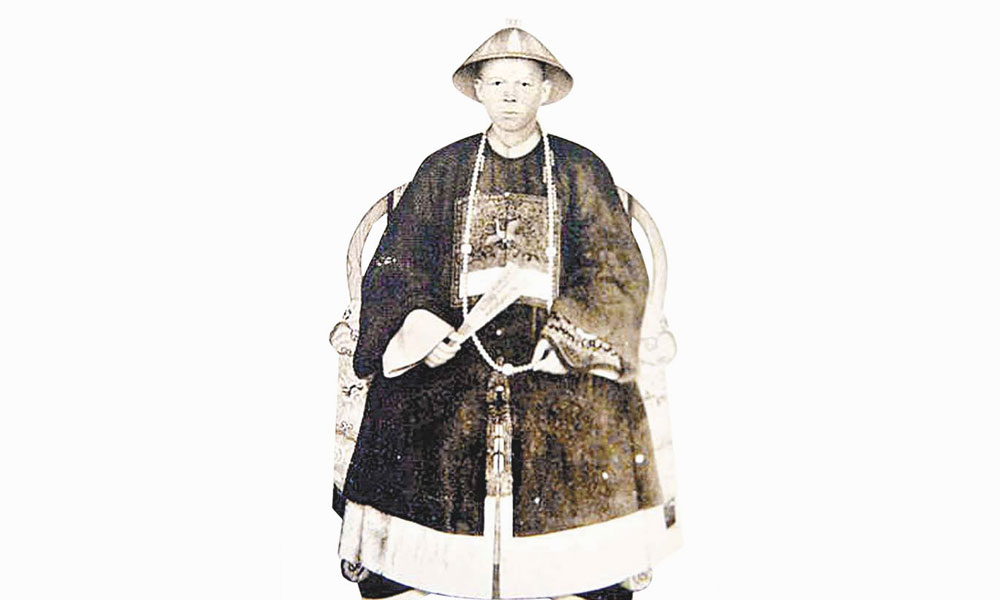
During the Selangor Civil War of 1866–1873, Kuala Lumpur was captured and largely destroyed. Allied with Tengku Kudin, Yap helped recapture the town in 1873 and then undertook the formidable work of reconstruction.
He revived mining, encouraged workers and traders to return, restored commercial confidence and borrowed heavily to rebuild the economy.
Yap administered a growing population, maintained order, settled disputes, built roads to the surrounding mines and encouraged the construction of more durable buildings.
He promoted agriculture, supported community institutions and helped make Kuala Lumpur viable as an administrative centre. When the British administration moved to the town in 1880, Kuala Lumpur’s survival and importance owed much to his leadership.
Founding and development must be distinguished
Much of the confusion arises from the indiscriminate use of the word “founder”. Cities rarely emerge from a single ceremonial act.
One person may initiate mining in a neighbouring district, another may facilitate trade and migration, traders may establish a permanent commercial settlement, and a later leader may rebuild and transform that settlement into a major town.
These contributions can all be recognised without treating them as interchangeable.
A truthful account of Kuala Lumpur should therefore separate three principal phases.
First, Raja Abdullah promoted the Ampang tin-mining venture that created demand for a supply and trading centre.
Second, Sutan Puasa facilitated the arrival of Hiu Siew and Ah Sze, who, according to the long-standing account, established the trading settlement near the Klang-Gombak confluence around 1859. That settlement was the origin of Kuala Lumpur.
Third, Yap rebuilt, governed and developed it on a scale that justifies describing him as the principal builder of modern Kuala Lumpur.
Setapak and Ampang formed part of this wider historical setting, but neither was the settlement from which Kuala Lumpur originated. Their historical and economic links with Kuala Lumpur should not be confused with the town’s actual origins.
None of this means that Kuala Lumpur was the achievement of one man or one ethnic community. Malay rulers and chiefs, Mandailing traders, Chinese miners and merchants, Indian labourers and traders, and later British officials all contributed.
The city emerged through a complex interaction of authority, capital, labour, enterprise and migration. But complexity must not become an excuse for erasing the identifiable settlement from which the city began or the people who established and rebuilt it.
History should reflect the truth
The problem with KLSP 2040 is therefore larger than a missing name or an imprecise date. It concerns the standards by which public history is written.
Teachers, students, journalists, tour guides and citizens may reasonably assume that an account published by DBKL has been researched, sourced and verified. Once an unsupported narrative enters an official plan, repetition can gradually cause it to be accepted as fact.
DBKL should commission a genuinely independent panel of credible historians with demonstrated expertise in the primary records and the major competing interpretations of Kuala Lumpur’s history.
Its members should be selected solely for their scholarly competence and independence.
The panel should critically examine the respective roles of Hiu Siew and Ah Sze, Sutan Puasa, Raja Abdullah and Yap Ah Loy, while clearly distinguishing between Kuala Lumpur’s origins and its subsequent survival, rebuilding and development.
DBKL should then revise its official account transparently and in accordance with the panel’s findings.
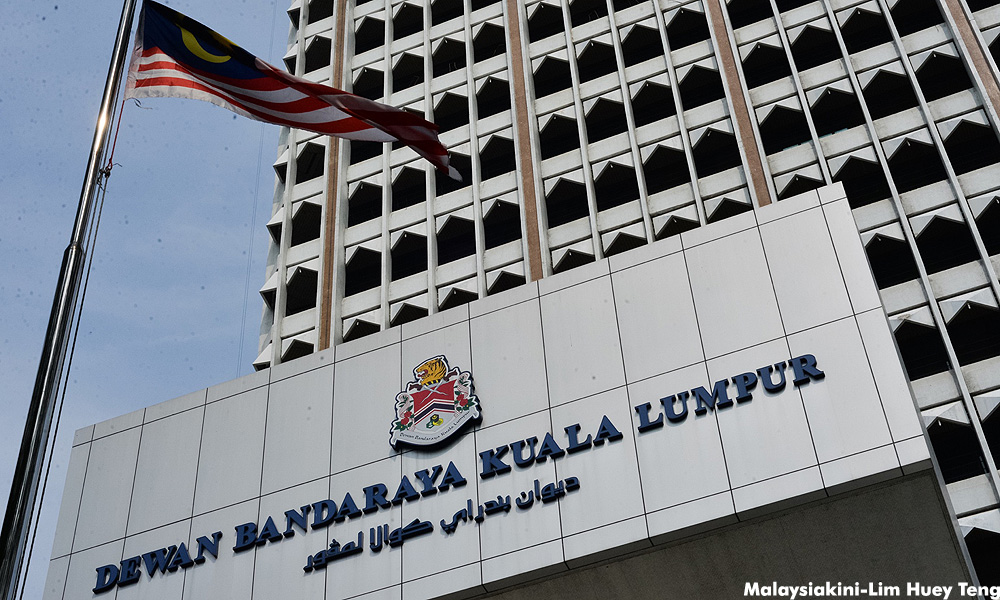
Kuala Lumpur deserves an account of its origins that is accurate, balanced and worthy of a great capital city. Until an independent review produces compelling evidence to the contrary, DBKL should not displace the long-established account that Kuala Lumpur originated in the trading post established by Hiu Siew and Ah Sze at the river confluence - not in the separate settlements of Ampang or Setapak - and that Yap later saved, rebuilt and transformed the town.
DBKL has a responsibility to review the record openly, professionally and without delay, and to correct it in accordance with the evidence.
A city that plans confidently for its future must first have the courage to tell the truth about its past. - Mkini
RANJIT SINGH MALHI is an independent historian who has written 19 books on Malaysian, Asian, and world history. He is highly committed to writing an inclusive and truthful history of Malaysia based upon authoritative sources.
The views expressed here are those of the author/contributor and do not necessarily represent the views of MMKtT

No comments:
Post a Comment
Note: Only a member of this blog may post a comment.