


Perhaps it had something to do with the weather. The past few weeks were blisteringly hot.
The plants in my garden were on the verge of passing out, while my ferns had already fainted. And the now brown grass had admitted to the whole world that the grass on the other side was indeed greener. But at 71, I ain’t moving anywhere.
Then came an invitation for a class lunch reunion with a much-loved teacher. Let’s call him Che’gu.
He taught us Biology in Form Five. I agreed almost immediately, despite some trouble with my eyes.
I wasn't seeing double. It was worse than that - my world was turning topsy-turvy, which by the way is the same as upside-down. Or if you prefer, downside-up.

Talking of trouble with my eyes, I watched the thermometer rise steadily the next few days as everyone in the country was getting hot under the collar. And it wasn’t the weather.
Of Kyoto and Tokyo
For some unknown reason, it made me remember an old Japanese tale from childhood about a frog in Kyoto who yearned to see Tokyo on the other side of the mountain.
Something in my topsy-turvy world tells me I have written about this frog before. But just like in our country, things and stories repeat endlessly in my head. But at least my story has a resolution of sorts.
It has something to do with frog biology, which Che’gu had taught us is similar to that of a toad, and that the differences between them are skin deep, give or take a few warts and blemishes.
Anyway, Kyoto frog set out for Tokyo, hopping along on a hot day, and before long, it reached the foothills of the mountain beyond which lay Tokyo.
Note that Kyoto is actually Tokyo said in reverse: Kyo-to, To-kyo. See, I told you that my world is topsy-turvy! Upside down!
But to continue… when the Kyoto frog reached the top of the mountain, it raised itself on its hind legs to see yonder at Tokyo.
I must now briefly explain frog biology. The eyes of frogs, like toads, are set well back and on top of their heads, unlike we humans, whose eyes allow us to look ahead, although we seldom do.
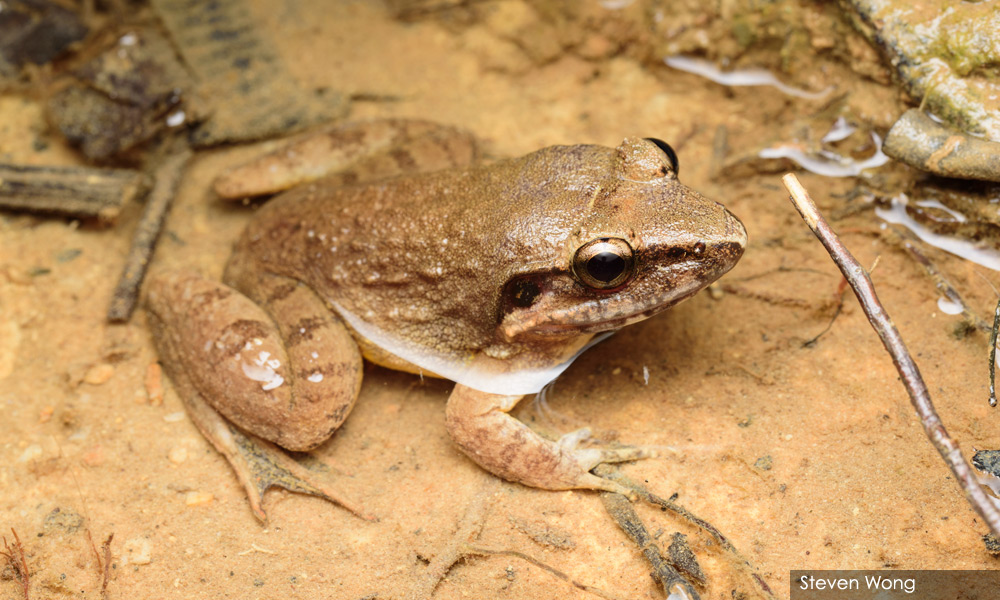
Anyway, the Kyoto frog stood tall on its hind legs and looked hard at the scene ahead of it, before crying out, “Tokyo is exactly like Kyoto!”
No, not at all! Given frog biology, it was looking back at Kyoto. It does happen to humans, too, when we cannot see beyond our noses, but that is another story.
The poor Kyoto frog shook its head before lowering itself. It made the return journey, croaking aloud that cities and people are all alike and that there was nothing wrong with its eyes or its head.
Image inversion
The days passed quickly, and before long, I found myself in a venerable golf club with a tree so huge in front of the foyer that it reminded me of strange trees growing on the island of Socotra, off the Arabian Peninsula.
These dragon trees have upturned, densely packed crowns. Despite their name, they don’t breathe fire. And the huge tree in front of me had its crown the right way.
All said, it was a lovely get-together. The fun and conversation were better than the food. Then, an afternoon beer jolted my memory: I began to remember Che’gu’s biology lessons, which ranged from how birds fly to how frogs hop and things like that.
But something was troubling me, and I couldn’t tell what. The harder I tried, the more I felt topsy-turvy. Was it a lesson I particularly liked?
I turned down a second beer, fearing turvy-turning-topsy. We said our goodbyes two hours later. I booked a Grab and headed home.
The weather suddenly changed for the worse, with lightning illuminating the cats and the dogs as the rain began to pour down. And the air, though cold, was feeling sticky and smoggy.

Yes, even the weather had flipped. A temperature inversion. Upside-down!
The sweet young thing at the wheel was now driving through blinding rain, unfazed and confident. Fatima oozed goodwill, cheer and forbearance.
And then it hit me. I knew what was troubling me all this while. My Che’gu’s lesson on how our eyes function came back to me like it was yesterday, and every detail and diagram stood out like a page out of a biology textbook.
“The image projected onto our retina is always inverted. Light rays from an object are refracted as they pass through the lens of our eyes, causing the image on the retina to be flipped upside down and reversed left to right. However, the brain processes and interprets this distorted image as upright by effectively flipping it the right way”.
How come they don’t teach this in our schools anymore, or worse still, in med schools? Or discuss these matters in the cabinet or in Parliament.
And to the lawyers out there, can retinal inversion be a valid defence against charges of flying the flag upside down, topsy-turvy? Surely our topsy-turvy, upside-down vision of the world came first, well before the law of the land!
I think you know where I’m going
In any case, if the reader has problems wondering where I am coming from or going to, and if you are reading this on your handphone, don’t bother to turn it upside down. Or turn your head to one side until your neck is about to snap. Your brain is as good as your camera.

Don’t bother at all because at the end of the day, you are clever enough to turn things around the right way in your head!
But be mindful of our beloved flag, though. Fly it big and fly it higher. For your own protection, line the bottom end with some weights lest the wind blow it downside-up.
There are some people out there who want to get you and put you down for just being the “other”. - Mkini
MURALE PILLAI is a former GLC employee. He runs a logistics company.
The views expressed here are those of the author/contributor and do not necessarily represent the views of MMKtT.

No comments:
Post a Comment
Note: Only a member of this blog may post a comment.