


Politicians and wannabes are always willing to add their voices to government announcements, sometimes deservedly, but most of the time to send messages that they want to be seen and heard.
After Prime Minister Anwar Ibrahim announced the RM100 aid and a cut in fuel prices, analysts, apologists, academics, and the man in the street were interviewed.
However, the one that took the cake was Communications Minister Fahmi Fadzil, who said the move “demonstrates the Madani government’s sensitivity to the pulse of the people” and its commitment to easing their burden with various forms of assistance.
“Highest appreciation and thanks to the prime minister for the announcement of the Madani government’s measures that provide relief to the people, as well as drive the country’s economic stability,” he said in a social media post.
“The steps taken are the result of careful consideration and are based on the principles of social justice and economic sustainability,” he said.
Social justice? You implied that the government is “listening to the people,” as suggested by the headlines in news portals. You must be joking, YB. Those words must be taken with more than a pinch of salt!
If the government does not even listen to its backbenchers who represent the people, then who is it listening to? Big businesses, cronies, or hangers-on?
Parking privatisation
On July 22, in Parliament, four Pakatan Harapan MPs called on the Selangor government to postpone its plan to privatise street parking operations.
They cautioned that dismissing public concerns over the issue could reflect poorly on the state administration.
The four were Lee Chean Chung (Petaling Jaya), William Leong (Selayang), Wong Chen (Subang), and Amanah’s Azli Yusof (Shah Alam)
Lee, who spoke, urged the state to disclose the commercial aspects of the scheme, including the expected profits for each party, including the private company appointed for the project, Menteri Besar Selangor Incorporated (MBI Selangor), and local councils.
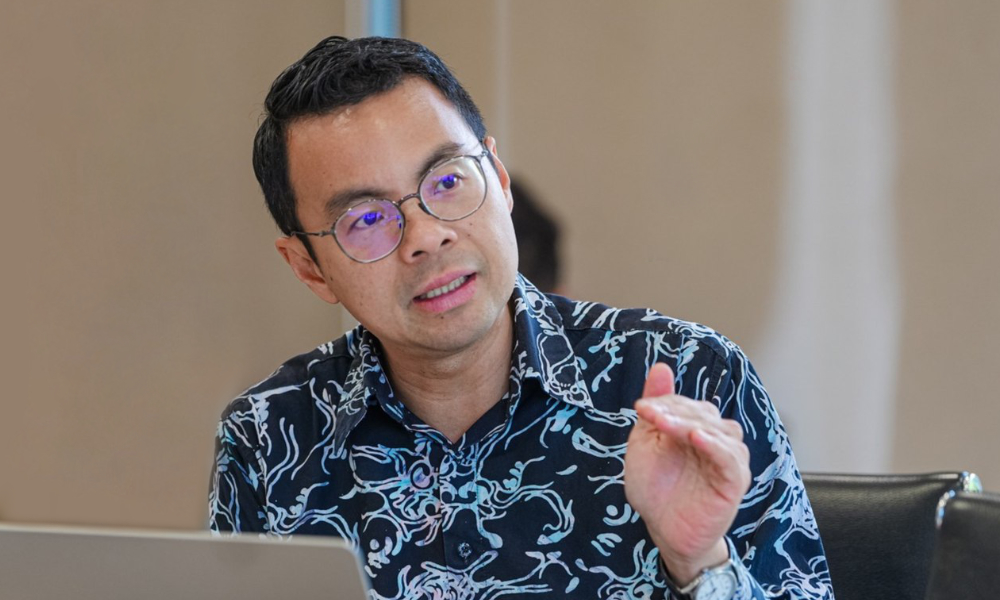
“The state government’s objective, to privatise public car parks to maximise revenue collection and make profits, appears to me to have missed the most important objective of the exercise, which is the wellbeing and vibrancy of the community,” Lee said.
The parking privatisation project involved the Petaling Jaya City Council (MBPJ), Subang Jaya City Council (MBSJ), Shah Alam City Council (MBSA), and Selayang Municipal Council (MPS).
However, MBPJ rejected the proposal and continues to operate street parking in the city.
Transparency
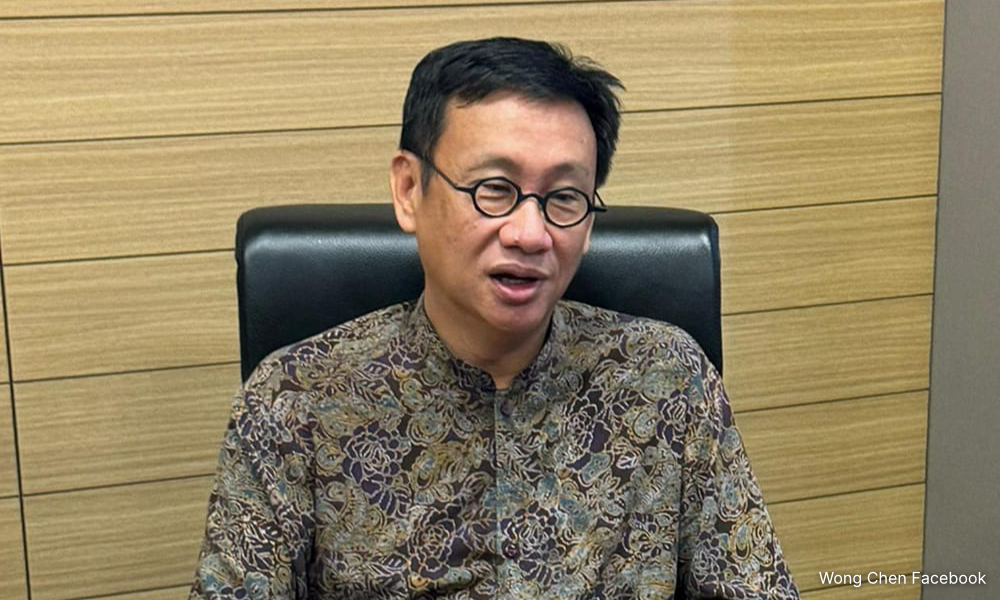
Wong said Harapan’s manifesto highlights the transparent conduct of business and policy matters through open tenders.
“Any terms that we sign must be displayed to the rakyat. We are confident that the government can defend the scheme, but when silence persists, the people will conclude that something is not right.
“The scheme must be sustainable and fair. If the private company is going to make a profit worth hundreds of thousands of ringgit, the state government might as well do so itself,” he said.
Under the arrangement, which came into effect on Friday, the concessionaire will receive 50 percent. At the same time, the remaining half will be allocated to the state, 40 percent to the councils, and 10 percent to MBI Selangor.
How would the loss in revenue affect the councils’ services? They will have to make a cutback in services as each council will lose about RM10 million annually.
The issue has been discussed and debated over the past weeks and the state has been unable to justify taking away half the revenue from parking.
Selangor executive councillor Ng Suee Lim’s key selling points included doubling the collection rate from 30 percent to 60 percent by utilising artificial intelligence and installing 1,900 CCTVs, which cost RM200 million.

I wrote: “Also, (Ng) should stop using the RM200 million investment in CCTVs’ ruse to hoodwink the people. At a whopping RM110,000 each, they must be the most expensive systems in the world!’”
Yet, there is no guarantee that revenue from parking would increase, as sources said no such pledge has been given.
Bumps in the road
Details of this privatisation, which I have referred to as “piratisation”, scheme have not been disclosed, but in the case of MBSJ, it is for 10 years with an option for an additional five-year extension.
What happens if the revenue does not increase as promised? Will it be reviewed? Are there clauses for non-performance?
Why should road users, who are stakeholders, be subjected to secretive deals and behind-the-scenes manoeuvres?
Ng could only muster “nothing has been finalised” at a media conference three weeks ago. Now that it has been implemented, why shouldn’t the terms of the contract be made public?
In 2008, Selangor joined Penang in creating a new policy – Competent, Accountable, and Transparent (CAT)- for their governance policies.
Like I asked in a previous commentary: “Has Selangor's CAT policy gone to the dogs?”
Understandably, state governments are autonomous, but if there are compelling reasons, the federal government can nudge or “give advice”.
Instead, both the federal and state governments have chosen to ignore the calls of the four lawmakers who represent the people in their respective constituencies.
Checks and balances
Harapan’s manifesto ahead of the 15th general election promised to govern with integrity – restoring confidence and fostering trust between the rakyat and the government.

It said: “Without a comprehensive check and balance process, the administrative process might be vulnerable to abuse of power and misappropriation.
“This opens the door for kleptocrats and power-hungry politicians to jostle over positions, accumulate influence, and accrue exorbitant wealth at the expense of the rakyat.
“Harapan will continue to protect the integrity of Malaysia’s administration by limiting the power of the executive, ensuring the freedom of our judiciary, and reorganising the political structures of the country.”
So, what happened to integrity and “balanced checks and balances”?
Yes, election promises are not enforceable, and Malaysians are known to be “mudah lupa” (forget easily). Still, when it comes to witnessing unethical practices bordering on illegality, it will certainly be a wake-up call.
Yes, Fahmi, it is okay, perfectly normal to echo and sing praises of the boss, but shouldn’t the government be listening to its own MPs?
What about the “people come first” cry as articulated in your social media post? Has the word “people” been replaced with “businessperson”? - Mkini
R NADESWARAN is a veteran journalist who tries to live up to the ethos of civil rights leader John Lewis: “When you see something that is not right, not fair, not just, you have to speak up. You have to say something; you have to do something.” Comments: citizen.nades22@gmail.com
The views expressed here are those of the author/contributor and do not necessarily represent the views of MMKtT.

No comments:
Post a Comment
Note: Only a member of this blog may post a comment.