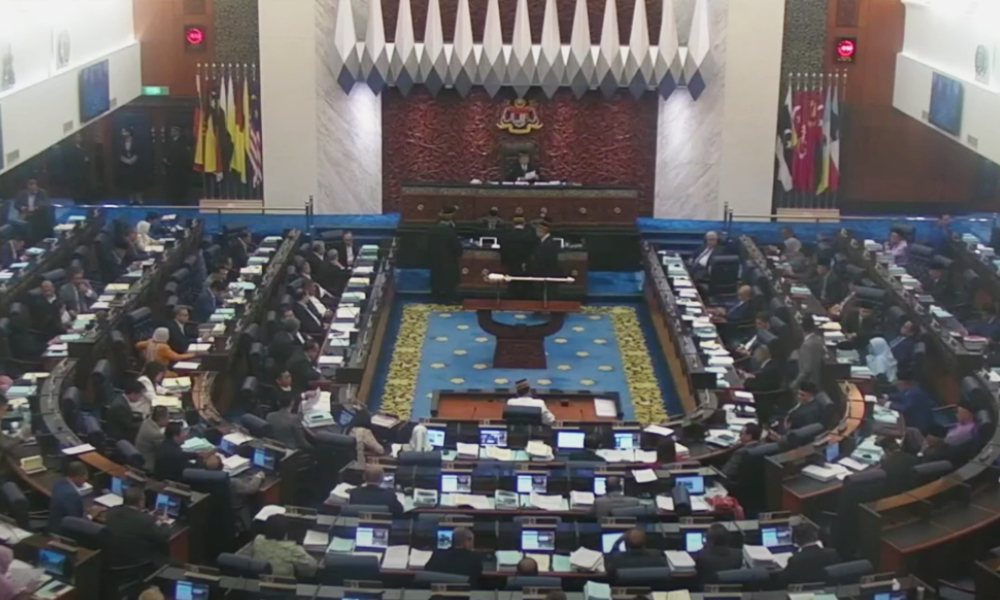
As Parliament prepares to debate amendments to the Security Offences (Special Measures) Act 2012 (Sosma), Malaysians must not be misled into believing that minor adjustments, such as altering bail provisions under Section 13, constitute meaningful reform.
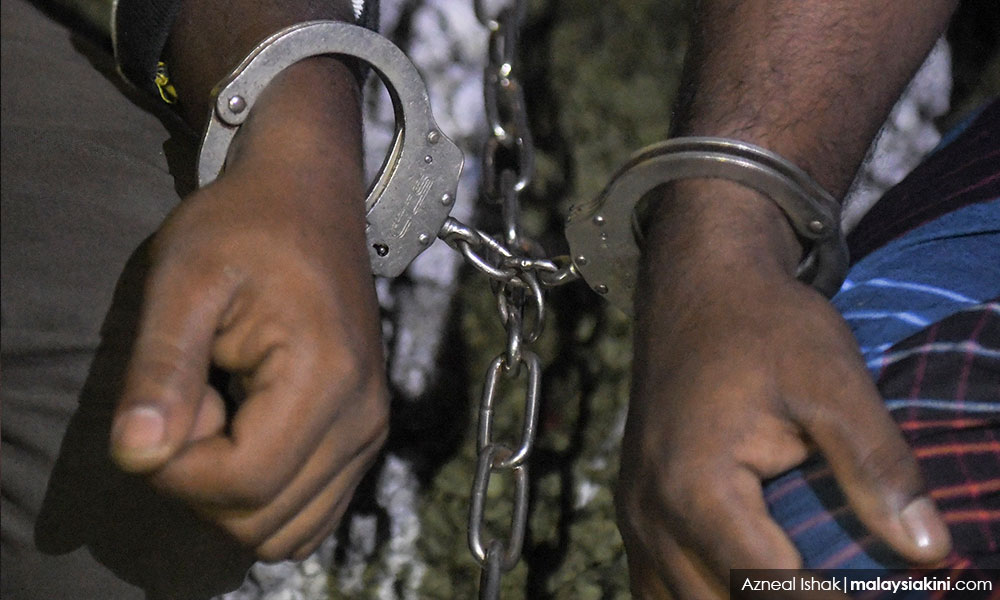
The reality is stark. Sosma remains a structurally unjust law that continues to violate fundamental rights, while the prison system is on the brink of collapse.
On July 4, the Federal Court granted bail in a Sosma case after acknowledging that prison authorities were unable to manage the inmate population, which exceeded 6,000 in facilities built for just 2,000. This figure includes detainees held under Sosma.
First step toward justice
The government must immediately implement a moratorium on new Sosma detentions, as was done in 2018 when the Pakatan Harapan government granted transitional relief by amending Sosma-linked charges to Section 43 of the Societies Act 1966.
In the present context, I call for a moratorium to be extended to those charged under Section 130V(1) of the Penal Code (being a member of an organised criminal group), as these cases often involve the same evidentiary and procedural issues that undermine fairness.
I acknowledge that Sosma’s original objective was to combat terrorism, and that for certain offences directly linked to terrorism, a moratorium may not be applicable.
However, this cannot be used as a blanket reason to deny relief to all accused persons, particularly in non-terrorism cases where constitutional safeguards have been bypassed.
A moratorium would prevent further injustice while reforms are debated, allow courts to reassess cases under fairer standards, and demonstrate a genuine commitment to human rights rather than political optics.
Without this step, any proposed reform will be cosmetic rather than corrective.
Core problem is not just bail
Focusing on Section 13 alone misses the bigger injustice. Sosma rewrites criminal procedure and evidence law to create a parallel system that strips away constitutional safeguards.
Section 18A: Convictions without proper trial
Sections 14-16: Anonymous witnesses
Sections 4 and 6: Detention and surveillance without oversight
Section 30: Detention after acquittal
Who is Parliament really consulting?
The ministry has stated that it consulted the Attorney-General’s Chambers, the judiciary, the Royal Malaysia Police, Suhakam, NGOs, and academics.
However, these are not the lawyers who fight Sosma cases daily in court. They do not witness the devastation faced by families of those detained post-acquittal. They do not cross-examine anonymous witnesses or challenge evidence obtained without safeguards.
As someone who has defended Sosma cases for years, I have seen the injustice firsthand. Yet neither I nor many other practitioners working at the frontline have been invited to provide input. This raises the question: why are the voices of those most familiar with the law’s real-world impact being excluded?
Don’t repackage injustice
In 2023, Parliament claimed to have abolished the death penalty. In reality, it simply reframed the punishment by giving judges discretion, while still allowing life imprisonment and the death penalty in certain cases.
Now, the proposal is to reclassify Sosma’s offences into bailable, non-bailable, and unbailable categories, again claiming that judges will have discretion. Discretion without structural reform is meaningless.
Sosma is a cruel law that denies justice and undermines constitutional protections. Any review that ignores its core structural defects and excludes the voices of those who fight these cases in court is a superficial exercise.
If Parliament is serious about reform, it must start with:
A moratorium on all new Sosma detentions.
Full engagement with frontline practitioners and affected families.
Overhaul of sections that erode fundamental rights.
Anything less is not reform but merely a repackaged injustice. - Mkini
T HARPAL SINGH is a criminal and immigration lawyer specialising in Sosma and Atipsom.
The views expressed here are those of the author/contributor and do not necessarily represent the views of MMKtT.



No comments:
Post a Comment
Note: Only a member of this blog may post a comment.