


Pressured by fear of liability and lacking expertise, councils rely on cheap contractors who mutilate mature trees instead of managing them as vital climate infrastructure.
From Boo Jia Cher
A few weeks ago, there was the sudden, relentless revving of chainsaws right outside my window. I rushed outside, trying to stop contractors from haphazardly chopping down the stems of mature trees in front of my home. I failed. What remains today are botak stems, mutilated trunks stripped of their branches and dignity.
The management’s justification was depressingly trivial: someone worried a branch might fall on his car. When I texted our local councillor, he insisted this was the “standard way” of cutting trees. “It will grow back anyway,” he said confidently, before challenging me: “Do you know a better way?” His indignation left me speechless.
What happened on my street is an epidemic across the Klang Valley.
The great urban tree panic
Speak to residents across KL, Petaling Jaya, Subang or Ampang, and the stories are identical. Many mature roadside trees are aggressively hacked back into bare poles. Recently, I’ve seen many videos circulated showing majestic rain trees brutally cut, whether it was in the rich Jalan U Thant neighbourhood or Subang Jaya.
In Ampang, residents and activists rallied to demand accountability when the local council, MPAJ, removed a century-old rain tree.
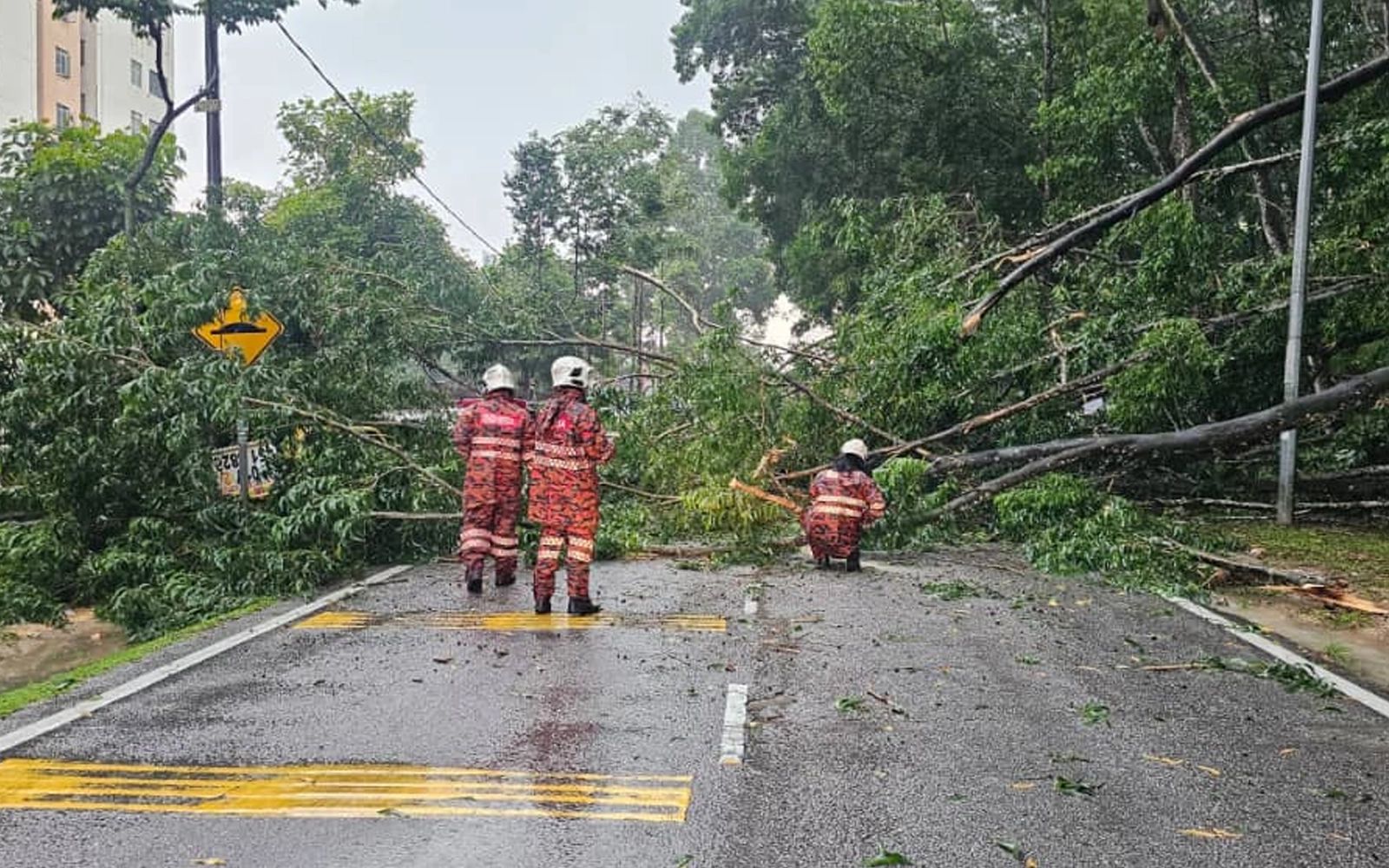
Following several high-profile incidents of falling trees during severe storms, local authorities have faced immense pressure. Understandably, no municipal council wants to be liable for property damage, injury or even death. But instead of responding with scientific tree management, councils are reacting with indiscriminate cutting. The result is a policy of fear.
We have an expertise problem
The fundamental issue is that we have too few arborists.
An arborist is a trained specialist who assesses tree health, structural stability and pruning requirements. Yet, arboriculture remains a critically under-recognised profession in Malaysia. Instead of hiring experts, councils routinely outsource tree maintenance to the cheapest contractors whose primary tools are lowly paid workers, speed and a chainsaw.
The outcome is “topping”, the practice of removing a tree’s entire crown. Internationally, topping is recognised as a harmful, destructive practice.
Why topping makes trees more dangerous
The irony is that topping creates greater long-term risks:
- Starvation: Removing the canopy strips the tree of its food-producing leaves.
- Decay: Large open wounds expose the trunk to wood rot and fungal infections.
- Weak regrowth: Surviving trees rapidly produce shoots called epicormic growth. These new branches grow fast but are weakly attached, making them far more likely to snap during the next storm than the original canopy.
This kind of short-termism, so typical in Malaysian society, results in even more problems in the future.
KL vs Singapore
We do not need to reinvent the wheel; we just need to look across the Causeway.
In Singapore, the island city has around 47% tree cover. Trees are managed as critical climate infrastructure, with mandatory certified arborist audits.
Here in KL’s urban core, that number is around 24%. We have reactive, contractor-led pruning and heavily fragmented maintenance.
Singapore treats its trees as vital infrastructure, investing heavily in diagnostic technology and crown thinning rather than clear-cutting. This isn’t just about aesthetics. Mature canopies drastically reduce the urban heat island effect, lowering ambient tropical temperatures by several degrees.
Instead of chopping trees down, independent arborists should be brought in to assess trees. They will diagnose its health, prune only the genuinely compromised limbs, and treat the root system. Such trees will stand structurally sound, continue to shade the neighbourhood, and serve as a proud precedent for community-driven conservation.
Trees are infrastructure
To answer my councillor’s question: yes, there is a better way. His shrugging acceptance of low standards is precisely why we need local elections: to keep the council accountable, rather than letting them shrug off responsibility. But that’s a debate for another day.
Local councils must pivot to a proactive strategy:
- Mandate arborist audits: Require certified arborist assessments before any major pruning or tree removal is approved.
- Revamp procurement: Stop awarding tree maintenance contracts to the lowest bidder. Prioritise technical expertise over cheap chainsaws.
- Routine health inspections: Establish a regular registry and audit system for mature trees, treating them with the same structural oversight we give to bridges and buildings.
- Plant native species: Ensure new plantings are trees native to this region, adapted to our climate and soil. They should thrive long-term, strengthen biodiversity, and reduce maintenance costs.
A mature tree is not a decorative mural; it is climate infrastructure we must protect as our cities grow hotter and flood more often. We would never demolish a bridge because maintenance felt inconvenient, yet we keep destroying our canopy for the same reason. Tragically, local councils remain stuck in outdated thinking, far behind the demands of our times.
Stop planting saplings while killing trees
There is a glaring contradiction in Malaysian urban planning: we celebrate corporate tree-planting campaigns while simultaneously allowing mature canopies to be destroyed overnight.
A newly planted sapling takes decades to provide the cooling, shade, and stormwater absorption of a mature tree. Ceremonial plantings cannot offset the immediate loss of a fifty-year-old canopy.
The measure of Malaysia’s green commitment is not how many saplings it plants. It is how well it cares for the giants already standing. When we allow unskilled contractors to mutilate our trees, we make our cities hotter, harsher and fundamentally less liveable. - FMT
Boo Jia Cher is an FMT reader.
The views expressed are those of the writer and do not necessarily reflect those of MMKtT.

No comments:
Post a Comment
Note: Only a member of this blog may post a comment.