


Part One of this series set out the civic failures that have led to Kuala Lumpur’s rising temperatures and falling standards: no science, no press, and no public voice.
The natural response for many of Kuala Lumpur’s inhabitants is passivity and resignation, especially when all the people in positions of authority who are responsible for the rising heat, the mismanaged flood control, the exploding pipeline, the sold-off green lungs have given a speech about making KL a world-class city.
The evidence is that they never meant it, don’t know what it is, or simply don’t know how to enact it.
But we must reject this inaction. The destruction is not an unfortunate byproduct of development. It is development, as this system defines it, and it pursues private gain extracted from public ecology by people who pay none of the cost yet profit from it.
This article, Part 2, calls out this system.
The accountability vacuum
Kuala Lumpur has the GDP of a small country and the complexity of a global city. It is unique in many ways, mainly because of its multicultural nature.
Yet the people who live in it hardly get a say in its management. The sheer lack of accountability and the levels of corruption and incompetence have resulted in ecocide and the resultant damage to KL’s residents - especially the less affluent.
For example, the Kuala Lumpur City Hall (DBKL) has no urban climate science body.
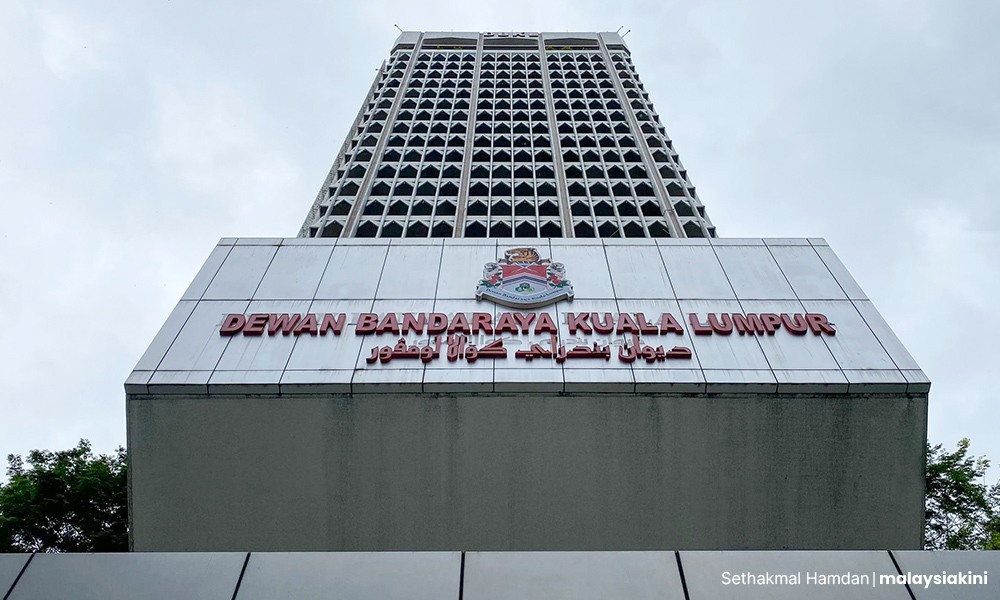
It has no published heat metrics by district. It conducts no mandatory ecological, geological, or hydrological impact assessments for major developments despite the rising tide of flooding.
It has no independent scientific advisory function on drainage, flood control, waste management, or food security for the city.
This is not a resource problem; it is a know-how problem.
Singapore conducted six years of environmental assessment and formally engaged nature groups before finalising the routing of its Cross Island MRT Line near the Central Catchment Nature Reserve.
Kuala Lumpur does not require any assessment before approving a tower block. It is still operating as if this is the 1970s, when the population was a third of what it is now.
The difference is not capacity - it is whether anyone in the decision-making chain is required to account for what they cost.
MACC’s own review found that DBKL failed to establish monitoring committees to oversee several high-value, long-term contracts awarded to private companies.
No system committed to fighting corruption would allow this. Payments were reportedly made without verified confirmation that services had been rendered.
MACC concluded that DBKL’s governance framework required a comprehensive overhaul. This is the finding of Malaysia’s own anti-corruption agency.
Yet, nothing changed - due to the fact that senior appointments are political and given political protection.
The absence of accountability and the absence of scientific accountability are not two separate problems. They are the same problem expressed differently.
A city authority that does not answer to residents has no incentive to measure the consequences of its decisions or inaction. A political appointee has no mandate and no independent set of priorities except that of their appointers.
One that does not measure consequences has no basis on which to be held to account. An organisation led by political appointees cannot be independent, irrespective of their personal integrity.
The developer-state complex
The lack of accountability has led to the developer-state complex thriving. It is the alignment of interests between political actors, statutory bodies, and the development industry.
Green spaces are treated as land banks. Ecological functions - flood buffering, air cooling, biodiversity - carry no balance-sheet value in ways that are actually appreciated, despite how essential they are to keeping Kuala Lumpur liveable and productive.
Nothing has value until it has been dug up and concrete put in place. Developers who destroy the ecosystem bear no cost, as efforts to provide cover change nothing.
The public bears all of it, in heat, in floods, loss of recreation spaces and green lungs, and in the degradation of a city that is becoming harder to live and work in, one that is rapidly losing its charm.
Green cover losses in Kuala Lumpur can be partly attributed to weak regulations and their poor enforcement - a finding from interviews across public, private, and civil society stakeholders.
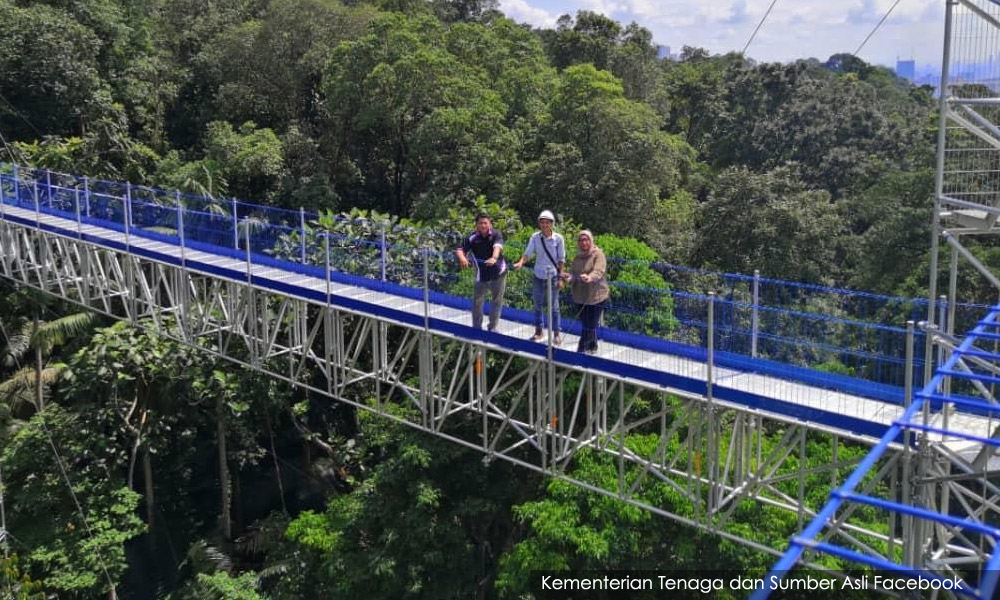
The weakness is not accidental; rather, regulations that are hardly enforced devolve into political theatre. And in this system, incompetence is tolerated and becomes the convenient norm.
Comparing DBKL’s management of landscaping with Singapore’s would starkly highlight these gaps. Weak assessments, unenforced planning conditions, and absent oversight are the mechanisms of wealth extraction and the socialisation of harm.
A developer cannot build on a gazetted green lung if requirements are actually enforced. Remove the requirements, and the green lung becomes available.
Thus, the incompetence helps entrench the vested interests and enables profit, which in turn slowly burns the city while it floods more frequently.
Every powerful economic actor has access to influence that allows them to run roughshod over rules which are easily ignored.
The enforcement of development decisions does not stop at bureaucracy. In the Kampung Sungai Baru redevelopment, DBKL used compulsory acquisition law - intended for public projects - to facilitate a private developer acquiring land where 75 residents formally objected to the compensation via the courts.
Utilities were cut to force compliance. Residents reported hired gangsters pressured them to vacate, with a WhatsApp message circulating offering payment to attendees at the eviction and warnings of hundreds of enforcers being gathered.
In Kampung Papan in Klang, during November 2025, activists and residents peacefully monitoring demolitions were arrested under the Penal Code for obstructing public servants, drawing condemnation from Amnesty International.
The system does not merely fail to protect residents from development, but is actively deployed against them when they resist it.
Change is a question of thresholds
In 2009, communities living alongside Thailand’s Map Ta Phut industrial estate - one of the world’s largest petrochemical complexes, with documented cancer clusters, toxic air, and contaminated water - pursued sustained legal action.
This resulted in Thailand’s Supreme Administrative Court suspending 65 of 76 industrial projects, exposing the state’s failure to issue proper operating licences.
Map Ta Phut was subsequently designated a Pollution Control Zone, requiring regular environmental quality measurement.
A court, responding to organised and sustained community pressure, changed industrial policy.
The question for Malaysia is whether that is even possible. Communities that organised, went to court, and won - Taman Rimba Kiara - found the same development model applied to the next hill the following year.
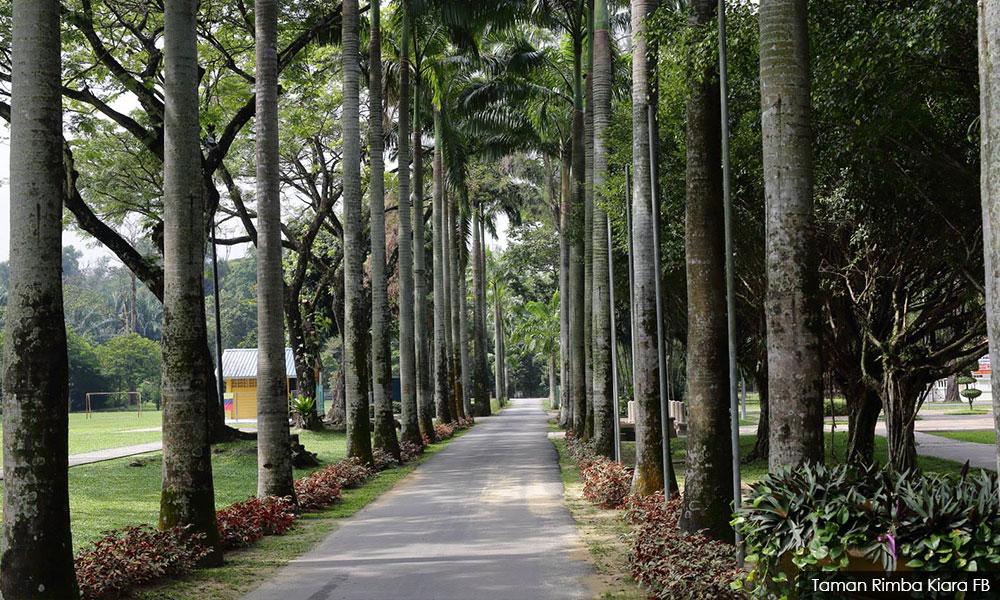
Activists who monitored demolitions peacefully were arrested. It will be interesting to see if growing public protest about the massive development along Bukit Pantai will mobilise large-scale protests or just silence.
This is a statement of what the problem actually is. The civic silence described in Part One and the governance failure described here are not parallel crises, as one enables the other.
The state requires the absence of independent knowledge, organised public voice, and a press that sustains accountability, because those are precisely the conditions under which the cost of destroying this city’s ecology would become visible and allow reckless profiteering and cronyism to thrive.
Only if it is called out will the system begin to change. Otherwise we will see more of the same, and worse.
What serious action looks like
The question is this: Does the state believe in science as a tool for decision-making and administration of public goods? This is not philosophical; it is practical and measurable.
Does DBKL have an urban climate advisory board? Has it commissioned any studies on the social and economic impact of climate change or flooding of the city?
Does it publish annual heat metrics by district? Are heat impact assessments required for major development approvals?
Are the findings of the Putra Heights environmental monitoring public? Are the at-risk pipeline segments in the Klang Valley being disclosed to residents?
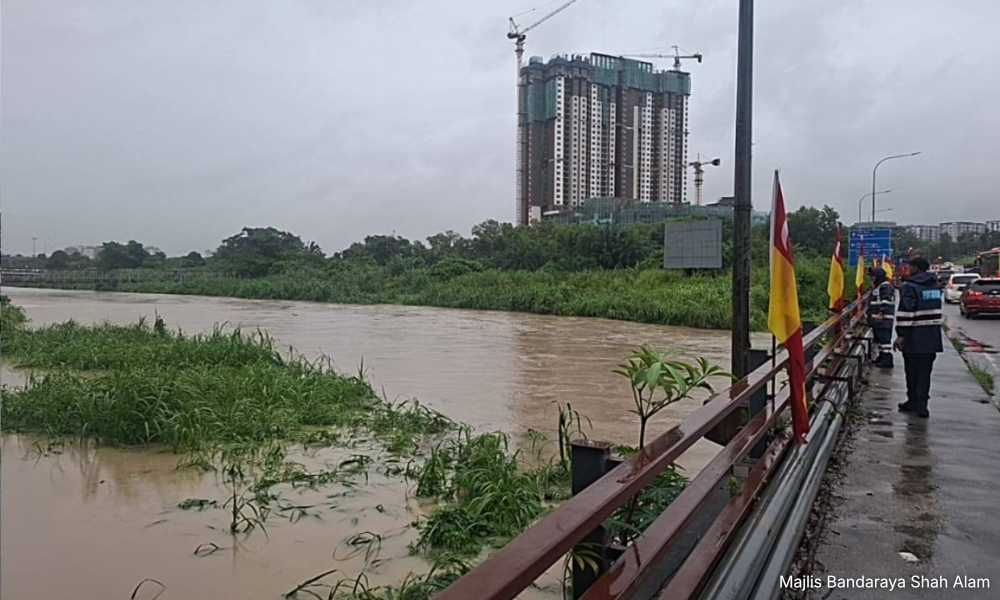
Are the root causes of flooding in Shah Alam and Petaling Jaya being studied and mitigation measures being developed?
The answer to each of these questions is most likely “No”.
If that charge is incorrect, where is the evidence? At this scale, it is not a series of oversights - it is a system.
So here are some changes that need to take place:
An independent, publicly funded Urban Ecology and Climate Institute with a statutory mandate to produce science that informs DBKL planning decisions - staffed by Malaysian researchers (meritocracy), grounded in Malaysian ecological conditions, and protected from ministerial interference.
Heat and ecological impact assessments required for all major development approvals, with results published and subject to independent scientific review before decisions are made.
Restoration of local government elections, or at minimum, appointment of DBKL councillors by elected state representatives - restoring a line of accountability between the people who govern the city and the people who live in it.
A statutory requirement that all post-incident environmental monitoring findings - pipeline explosions, industrial accidents, chemical releases - be made public within 60 days, with criminal penalties for non-disclosure.
A moratorium on the conversion of gazetted green areas and forest reserves to private development, with personal criminal liability for officials who approve such conversions in violation of the city plan.
A plan to create urban forests with the government using its powers to even recover private land for such use. A complete review and overhaul of landscaping services management to ensure large-scale replanting to combat the urban heat island effect.
These are not radical demands. They are the minimum conditions under which a tropical city of Kuala Lumpur’s size and complexity can govern itself responsibly and remain a competitive, liveable, and resilient city over the next 30 years.
The alternative is more heat, more floods, more explosions, more homes lost, decline in property prices, more corruption, and more talent and investment moving to better-governed cities. - Mkini
CHANDRAN NAIR is the founder and CEO of Global Institute for Tomorrow and the author of “Dismantling Global White Privilege: Equity for a Post-Western World”.
The views expressed here are those of the author/contributor and do not necessarily represent the views of MmkTt.

No comments:
Post a Comment
Note: Only a member of this blog may post a comment.