


Two days before DAP's highly anticipated national conference, Sunway University political scientist Wong Chin Huat has penned an open letter to Penang Chief Minister Chow Kon Yeow.
He proposed introducing "Democratically Appointed Non-Constituency Seats" (Dancs) in Penang.
Wong said the move could turn Penang into a testing ground for electoral reform and tackle the convergence of BN and Perikatan Nasional at its roots.
According to Wong (above), Chow recently said Pakatan Harapan would seek to regain control of the political narrative ahead of the next general election and counter hate and racial politics.
However, he said the recent Negeri Sembilan state election showed that government performance did not necessarily translate into votes, while negative emotions such as fear and anxiety could prove more effective in mobilising voters - or even prompt some to stay home.

He argued that, in addition to strengthening its social media and communications efforts, Harapan must consider more fundamental institutional reforms, including changing the existing first-past-the-post (FPTP) electoral system by incorporating elements of party-list proportional representation (List-PR).
Wong argued that proportional representation would allow more political parties to survive, reducing the risk of parties being wiped out when their rivals consolidate or when their own support is divided. This, in turn, could weaken the incentive for parties to pursue ethnic-based "grand unity".
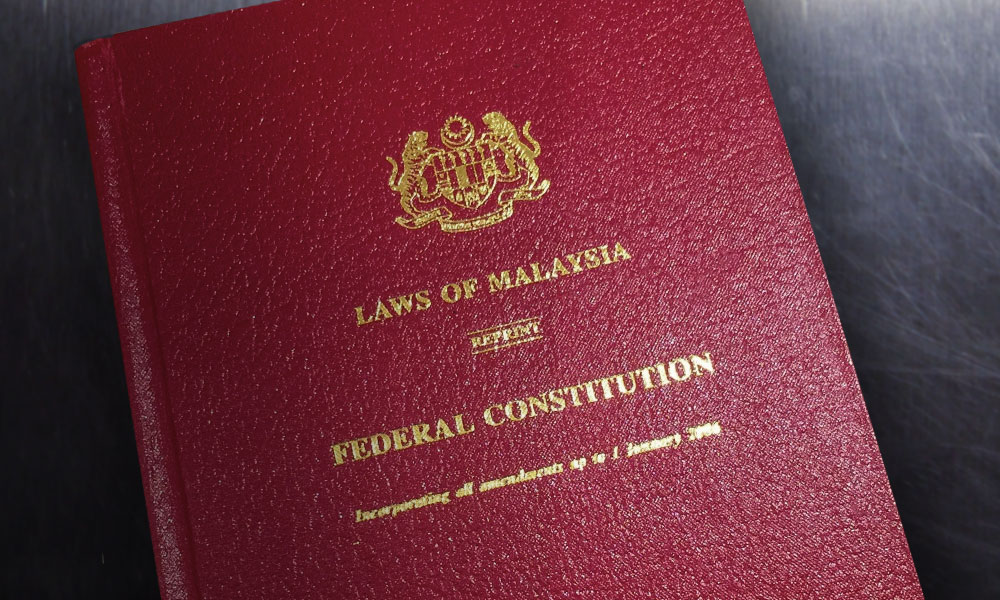
However, as reforming the electoral system for parliamentary and state elections would require amendments to Articles 116 and 117 of the Federal Constitution, and therefore a two-thirds majority in Parliament, Wong said such changes would be difficult to achieve in the short term.
He therefore proposed beginning with reforms at the state level.
His open letter was published in today's edition of Kwong Wah Yit Poh, the largest Chinese-language newspaper in northern Malaysia.
He also raised the proposal during a recent appearance on a Malaysiakini podcast.
Penang has two-thirds majority to act
In his open letter, Wong pointed out that the Penang government currently commands a two-thirds majority in the state legislative assembly, including Umno's two seats, giving it the numbers to amend the state constitution and make Penang a national testing ground for electoral reform.
"Although these are your final two years in office, you hold the key to whether Malaysia can break out of ethnic politics over the next decade," he said.
Wong, a former steering committee member of electoral reform group Bersih, proposed that Penang introduce nine Dancs, on top of the existing 40 elected state assemblypersons.
Under his proposal, every party or coalition fielding candidates in a state election could also nominate a ranked list of nine candidates for the non-constituency seats.
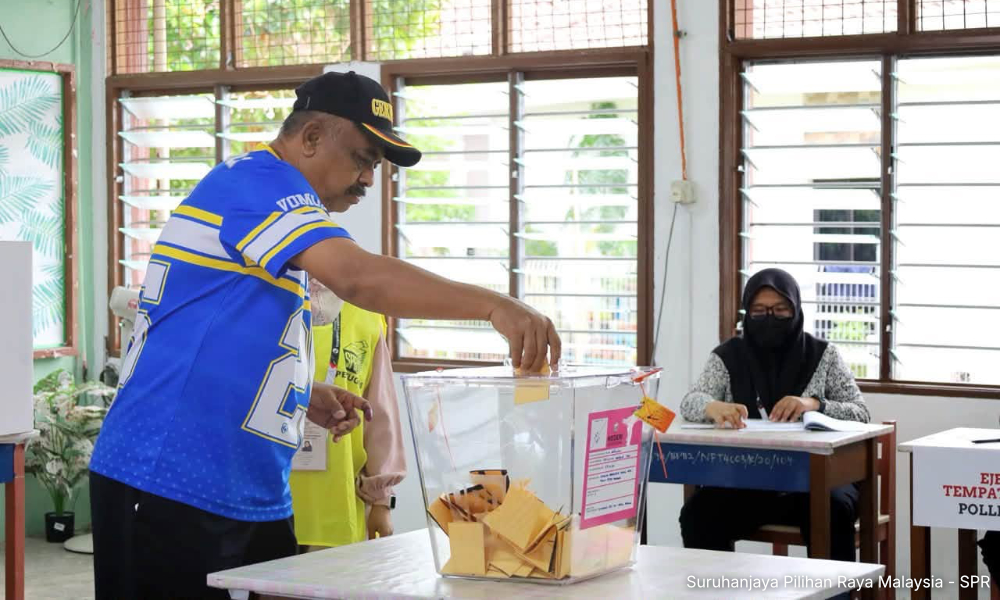
As the Federal Constitution prevents voters from casting a separate party-list ballot, Wong proposed that votes cast for constituency candidates also count towards their respective parties' statewide vote share. The nine non-constituency seats would then be distributed proportionally according to each party's statewide vote share.
In other words, voters would still cast only one ballot, but that vote would effectively be counted twice: first to determine their constituency representative, and again towards their party's statewide tally for the allocation of non-constituency seats.
To increase women's political representation, Wong proposed that the first, third, fifth, seventh and ninth candidates on each party's list must be women.
If a non-constituency seat falls vacant due to the assemblyperson's death, departure from the party, bankruptcy or other reasons, the next candidate on the same party list would automatically fill the vacancy without the need for a by-election.
Wong also proposed that the state assembly establish several select committees involving both constituency and non-constituency assemblypersons.
These committees could gather public input through hearings and field investigations, while non-constituency representatives should also receive allocations to establish service centres, he said.
Incentive for BN, PN to compete separately
Wong argued that one political effect of the proposed system would be to reduce the incentive for BN and PN to fully consolidate their votes through one-on-one seat negotiations.
Citing the result of the 15th general election in Penang, he noted that Harapan received about 60 percent of the vote, PN 24 percent and BN 15 percent.
Assuming the three coalitions maintained similar vote shares in a state election, Wong estimated that of the nine proposed non-constituency seats, Harapan would receive six, PN two and BN one.

He argued that if BN and PN wanted to secure more non-constituency seats, they would have an incentive to contest more constituencies themselves rather than reach seat deals to create straight fights.
"If BN and PN want to compete for more non-constituency seats, they would have to contest more constituencies, making one-on-one seat negotiations more difficult," he said.
Wong also cited Bersatu as an example, saying that even if the party failed to win a single FPTP state seat, it could still secure one non-constituency seat if it won about 10 percent of the statewide vote.
He therefore argued that the system would give different parties a chance of representation even if they were unable to win individual constituencies, reducing the pressure to form ethnic-based political "grand coalitions" simply to avoid splitting the vote.
FPTP ‘fuels Malay political anxiety’
In his open letter, Wong also outlined four reasons why he believed the FPTP system urgently needed reform: the risk of one-party dominance arising from BN-PN vote consolidation, the difficulty of addressing electoral malapportionment, the system's role in fuelling Malay political anxiety, and the limited space it provides for parties campaigning on issues beyond race and religion.
Wong estimated that if BN and PN votes are fully consolidated in the next election, and other factors remain unchanged since the last election, the 71 parliamentary seats won by Harapan and Muda in the last election could fall to 43, with 28 seats changing hands.
BN and PN, meanwhile, could collectively win 122 seats, enough to govern without relying on support from parties from East Malaysia.
Wong argued that because party fragmentation directly increases the risk of electoral defeat under FPTP, support among conservative Malay voters for Malay political unity was, in effect, a "rational choice" under the rules of the existing electoral system.
Introducing an element of proportional representation, he said, would allow Malay parties of different sizes to survive, compete and check one another, thereby weakening the political narrative that Malays must unite against outsiders.
Wong also argued that the current system disadvantages parties campaigning primarily on non-ethnic issues such as the economic disparity, youth interests or environmentalism.
Even if such causes attracted the support of 20 to 30 percent of voters, he said, those supporters would be unlikely to be concentrated in individual constituencies, making it difficult for such parties to win seats under FPTP.
Penang has led reforms before
Wong noted that Penang had previously been at the forefront of institutional reforms in Malaya and Malaysia on three occasions: holding municipal elections in 1951, introducing its own anti-party-hopping law in 2012, and imposing a two-term limit on the chief minister's tenure in 2019.
He also noted that the Penang government had explored using non-constituency seats to raise women's representation in the state assembly as early as 2020.
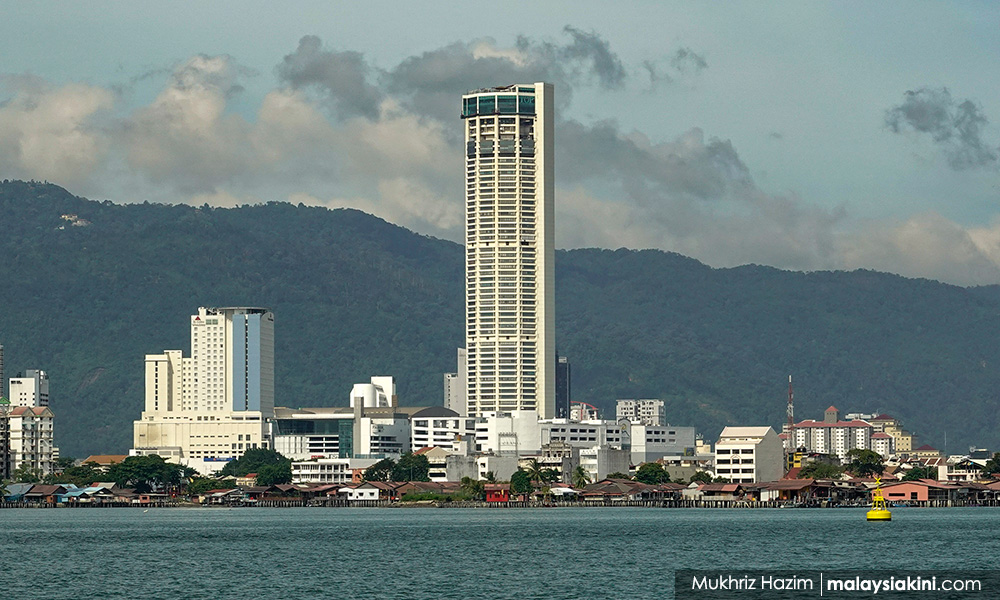
Wong and his Sunway University colleague Wo Chang Xi were commissioned at the time to design the Top-up Women-Only Additional Seats model. A white paper on the proposal was tabled for debate in the state assembly in 2021, but the plan was ultimately not implemented.
Wong pointed out that Sabah, Terengganu, Pahang, Johor and Malacca currently have various forms of appointed state assemblypersons, but said these representatives are largely appointed by the chief minister or state assembly and lack a direct electoral mandate.
He therefore argued that Penang should not replicate the conventional appointed assemblyperson model but instead use election results to allocate non-constituency seats, giving those representatives a degree of democratic legitimacy.
"If Penang sets the precedent, the whole country will benefit," he said.
Wong concluded by urging Chow to seize the opportunity presented by the state government's current two-thirds majority to pursue the reform and once again position Penang at the forefront of institutional change.
"We hope that when you leave office, it will not only be Penang that has changed, but Malaysia too will have begun to change, gradually emerging from the quagmire of racial and hate politics," he said. - Mkini

No comments:
Post a Comment
Note: Only a member of this blog may post a comment.