



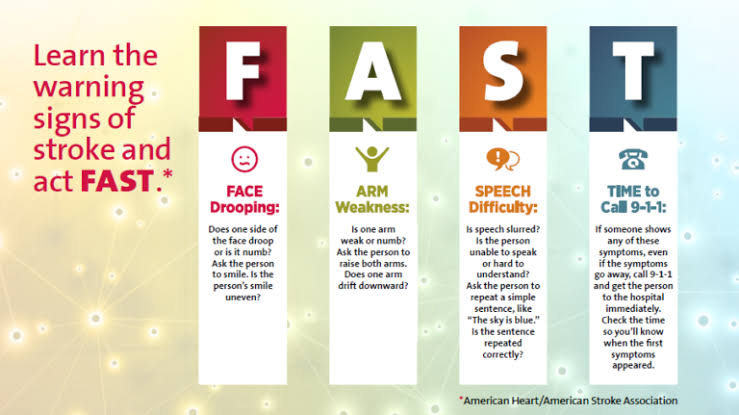
ACCORDING to research, stroke is overwhelmingly viewed as an affliction of the elderly because age is the single most powerful, non-modifiable risk factor for a stroke.
Statistically, approximately 75% of all strokes occur in people aged 65 and older with the likelihood of experiencing a stroke roughly doubling every 10 years after the age of 55.
The strong correlation between advanced age and stroke is driven by a combination of natural biological decline and the accumulation of chronic health conditions over time.
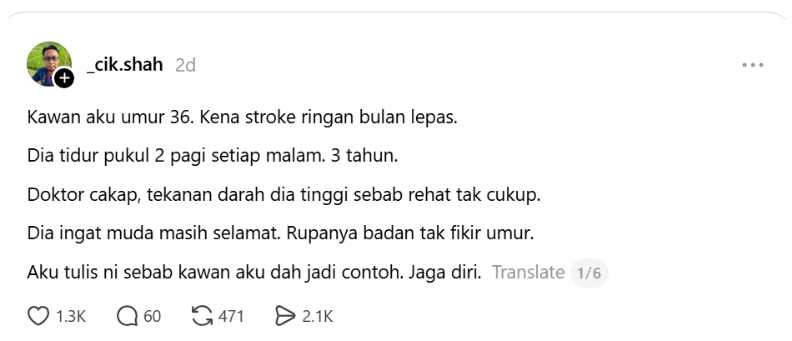
However, that perception no longer hold true as evidenced by a cautionary tale by Threader Shah (@_cik.shah) who recounted a 36-year-old friend suffering a mild stroke recently. Doctor confirmed that the lack of rest led to high blood pressure.
The poster noted that his friend thought he was immune as he is still young but it appears that the body doesn’t judge by numbers with the late nights catching up with him.
It was claimed that the stroke-afflicted friend had been sleeping at 2am on average for three straight years. The post was a cautionary tale to everyone to take better care of their health.
The poster further warned of the dangers of succumbing to the temptation of doom scrolling into the wee hours, indulging in a little “me time”.
However, he counselled that “just another five minutes” can quickly turn into late nights that lead to tiredness in the mornings.
The cycle was repeated until his body gave him firm warnings.

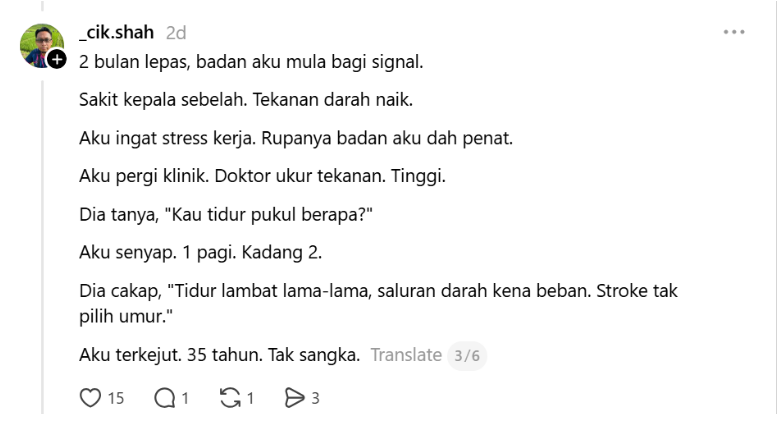
The danger signals appeared two months ago with headaches affecting the side of his head with blood pressure steadily rising.
Attributing it to work stress, he was shocked when a visit to the clinic measured extremely high blood pressure reading. Admitting to sleeping late (1am-2am), he was quite simply told by the doctor that stroke did not affect victims based only on age.
A change of routine was called for with the poster making sure he had settled down for the night by 10.30pm, thus allowing him to drift off by 11pm.
Previously, he only turned in at 11pm which only delayed his shutdown. He also changed his pillows for a more restful sleep. It was claimed the support afforded to the neck and the position of the head was far more comfy.

Since retiring early nightly, the poster is able to rise and shine as early as 6.30am. Fully charged and rested, he reports that his blood pressure has dropped, the headaches have disappeared and his heartbeats are calm.
On the contrary, his less fortunate friend has just regained the ability to make small steps, expressing regret at his lifestyle choices. “If only I knew, I would have slept earlier previously.”

Perhaps sensing his own good fortune at escaping a similar fate, the poster remained silent at this tacit observation.

Concluding his cautionary tale, the poster remarked the late nights accumulate as “debt that is paid with blood pressure and blocked blood vessels.”
Start with a comfy pillow was the pertinent advice. It’s the starting point to a good night’s shuteye without the use of medications or supplements.

Remember – healthy sleep patterns can help reduce the risk of stroke. – Focus Malaysia

No comments:
Post a Comment
Note: Only a member of this blog may post a comment.