


Letter to Editor
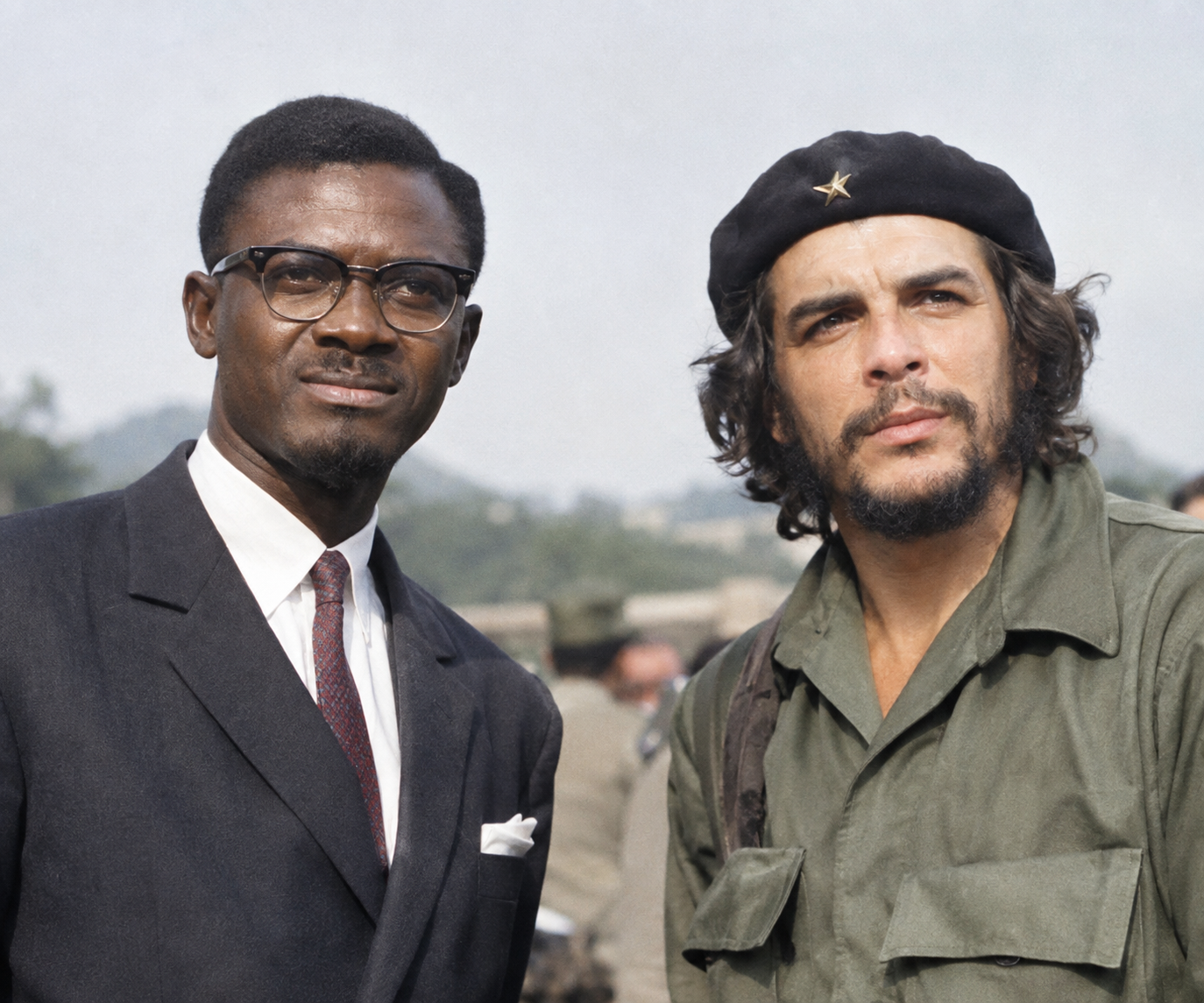
HISTORY is often written by those who win. Yet there are moments when the way a person dies becomes as important as the life he lived. Patrice Lumumba of Congo and Ernesto “Che” Guevara of Argentina were two such figures.
They were controversial revolutionaries, and neither should be romanticised uncritically. Both believed deeply in political change and were ready to use revolutionary struggle to achieve it.
But whatever one thinks of their ideology or methods, history should not forget what they stood for: the right of peoples to decide their own future, free from colonial rule and outside control.
Their deaths also raise an uncomfortable question for the modern world. What happens when political power becomes more concerned with removing an opponent than allowing history, law and the people to judge him?
Patrice Lumumba: the voice of a newly independent Africa
Patrice Lumumba became the first democratically elected Prime Minister of the Republic of the Congo after Belgian colonial rule ended in 1960.
His rise was extraordinary. Congo had suffered decades of brutal colonial exploitation, and independence created enormous hopes among its people.
Lumumba believed political independence would mean little without real national sovereignty and control over the country’s future.
His famous independence-day speech challenged the paternalistic story of colonialism and gave voice to the humiliation and suffering of Congolese people.
But independence quickly became caught up in Cold War geopolitics, Belgian interests and the struggle over Congo’s huge natural resources.
The country fell into crisis, including the secession of mineral-rich Katanga.
Lumumba was removed from office, arrested and eventually sent to Katanga with his colleagues Maurice Mpolo and Joseph Okito. On 17 January 1961, they were killed.
The tragedy was not simply that Lumumba died. It was the way he was eliminated. There was no transparent judicial trial in which the Congolese people could hear the accusations against their elected prime minister and see evidence tested before an independent court.
The United Nations itself set up a commission to investigate the deaths. Its report concluded that the official account that Lumumba and his colleagues had been killed by tribesmen was not supported by the weight of evidence.
The evidence instead pointed to their killing near Elisabethville in Katanga, involving mercenaries and Katangan authorities.
Later historical investigations have further established the involvement and responsibility of Belgian actors, while the wider Cold War context,including American opposition to Lumumba, remains an essential part of understanding the tragedy.
Lumumba therefore became more than a politician. He became a symbol of African independence and the unfinished struggle against colonialism and neo-colonialism.
Che Guevara: the revolutionary who refused to remain in power
Che Guevara followed a very different path. Born in Argentina and trained as a doctor, he became radicalised by his travels through Latin America and his encounters with poverty and inequality.
He joined Fidel Castro’s revolutionary movement and became one of the most prominent commanders of the Cuban Revolution.
After Castro’s victory in 1959, Che held important government positions. Yet he eventually gave up the security of political office because he believed revolution could not stop at Cuba’s borders.
He went to the Congo in 1965 to support an armed revolutionary movement and later went to Bolivia, where he tried to establish another guerrilla movement but both campaigns failed.
On 8 October 1967, Bolivian forces captured Guevara after he had been wounded. The following day, he was executed.
Again, the question of justice is unavoidable. Guevara was not given a proper judicial trial before his death. He was captured alive, yet the decision was made to execute him rather than bring him before a court.
Historical accounts also record the involvement of a CIA officer at the scene, although the exact American role in the decision to kill him remains contested.
His death turned him into something larger than the guerrilla commander he had been. His image became a worldwide symbol of rebellion against imperialism, inequality and political domination.
Remembering without romanticising
To remember Lumumba and Guevara does not require agreeing with everything they believed or did.
Guevara’s revolutionary violence, executions and authoritarian practices in revolutionary Cuba deserve historical scrutiny. Lumumba’s political career, too, should be examined in all its complexity rather than reduced to a heroic legend.
But there is a fundamental principle that goes beyond political ideology. No political system should fear an opponent so much that it denies him the right to a fair trial.
If a leader has committed crimes, let evidence be presented. Let an independent court judge him. Let history record the verdict.
An execution without due process deprives society not only of a human life but also of the chance to establish the truth.
This is why Lumumba and Guevara remain relevant to mankind. Their lives raise questions that are still painfully contemporary: Who owns a nation’s resources?
Who has the right to determine a people’s destiny? Can newly independent countries truly be sovereign when powerful outside interests intervene? Can political disagreement ever justify abandoning the rule of law?
Lumumba’s Congo and Guevara’s revolutionary Latin America were products of a world emerging from colonialism and entering the Cold War. Their struggles were shaped by forces far greater than any individual.
Yet their legacies survived their deaths.
Lumumba became a symbol of African dignity. Guevara became a global symbol of revolutionary resistance.
Their portraits, speeches and stories continue to inspire millions, even while their political methods remain contested. Perhaps that is the deeper lesson.
History should neither canonise nor erase its controversial figures. It should remember them honestly.
Lumumba and Guevara deserve to be remembered not because they were perfect, but because their lives illuminate the enduring human struggle for dignity, independence, justice and freedom.
Their deaths remind us of something even more fundamental:
The true test of civilisation is not how we treat those who agree with us, but how we treat those whom we fear, oppose or wish to defeat.
If the world has learned anything from the tragedies of Lumumba and Guevara, it should be this: political enemies must be defeated by truth, law and the judgment of history not by a bullet in the darkness.
K.Tamil Maran ( KT Maran)
Seremban, Negri Sembilan
The views expressed are solely of the author and do not necessarily reflect those of MMKtT.
- Focus Malaysia.

No comments:
Post a Comment
Note: Only a member of this blog may post a comment.