


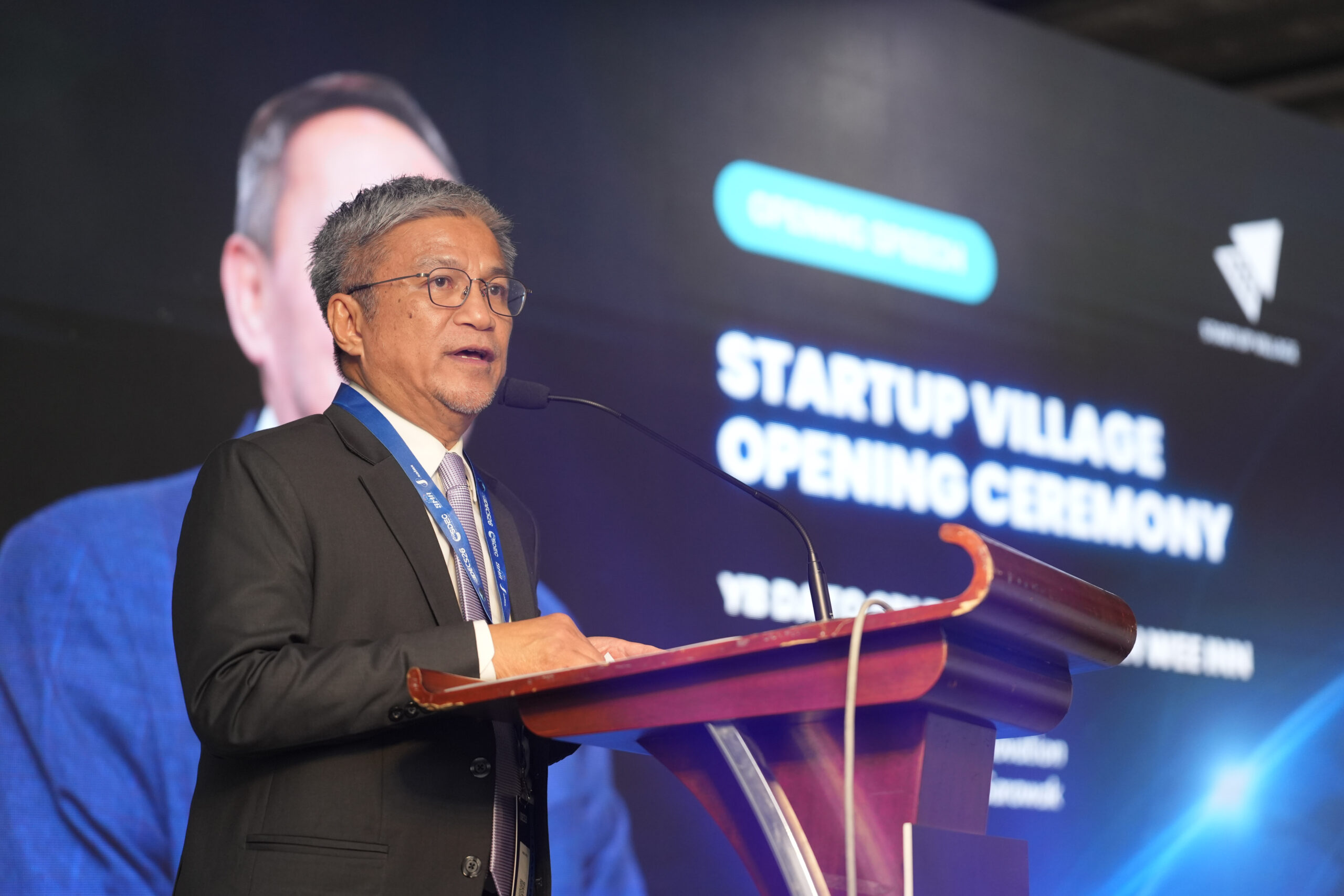
SARAWAK is shifting its startup strategy from capacity building towards commercialisation, investment and regional market access, as the Startup Village at the International Digital Economy Conference Sarawak 2026 (IDECS26) opens here.
The ninth edition of IDECS26 is being held at the Borneo Convention Centre Kuching from Oct 5 to 6, with Startup Village bringing together startups, investors, industry players, researchers and ecosystem organisations.
The shift was highlighted at the opening of Startup Village, officiated by deputy Education, Innovation and Talent Development minister Datuk Dr Annuar Rapaee, representing Minister Datuk Seri Roland Sagah Wee Inn.
In remarks delivered on his behalf, Roland said Sarawak’s next phase should focus less on creating standalone programmes and more on connecting different parts of the innovation ecosystem to commercial outcomes.
“Startup Village has been created to strengthen those connections. It should be a working environment where a researcher can meet an industry partner, a founder can find a potential customer, an investor can discover an emerging company, and a promising solution can find its next route to market,” he said.
“The real measure of success is therefore not simply how many programmes we run or conversations we have, but what comes next — a prototype, a pilot, a customer, a new company, an investment or entry into a new market.”
The approach builds on Sarawak’s Post-COVID-19 Development Strategy 2030, with the state having invested in digital infrastructure, skills development and programmes to help businesses adopt digital technologies.
Sarawak Digital Economy Corporation (SDEC) said its SDEC Technology Accelerator (STAcc) has supported 47 research teams, with 38 organisations undergoing market and technology validation.
The programme has also helped secure seven external funding opportunities and contributed to the creation of 11 jobs.
SDEC has previously reported that STAcc has produced seven spin-off companies and that its participating research teams have progressed technologies towards market-ready applications.
Its other startup programmes are also expanding. The Digital Village Accelerator (DiVA) and Sarawak SaaS Accelerator (SaSAR) have collectively supported 49 startup alumni, according to SDEC.
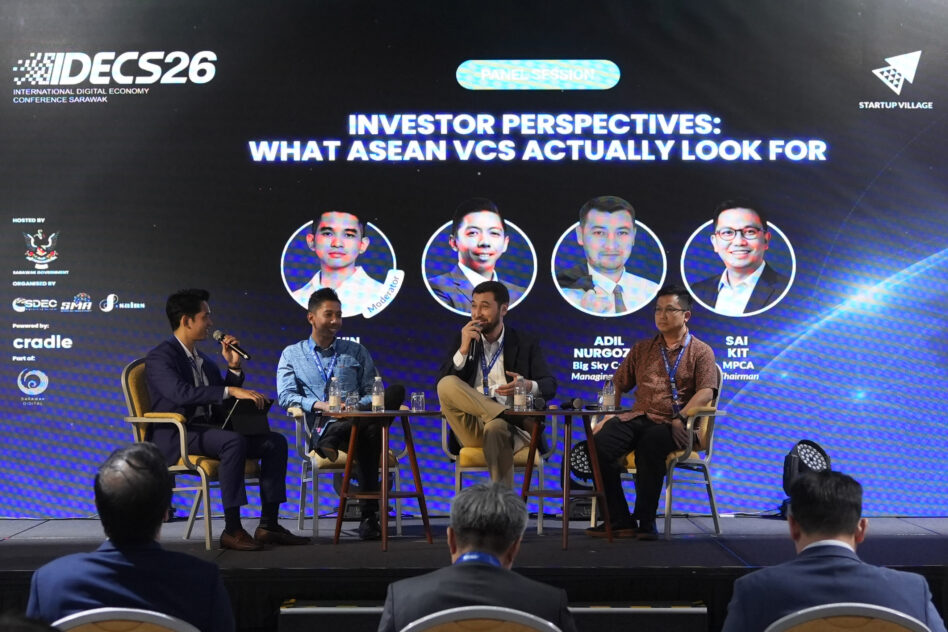
This year’s Startup Village features 78 startup exhibitors, up from 54 exhibition booths last year, providing opportunities for founders to connect with potential customers, investors and business partners.
SDEC has also facilitated about RM8.5 mil in investment into startup alumni and established the Sarawak Business Angel Network in 2025 to strengthen links with private investors.
The state’s focus also extends to social enterprises. Sarawak currently has 83 enterprises registered under its social enterprise ecosystem initiative, SEMy, while the second SEHebat Catalyst cohort has onboarded 10 enterprises.
Beyond Sarawak, SDEC is expanding regional links through a collaboration with the Brunei Economic Development Board (BEDB) via the Brunei Innovation Lab.
The partnership will establish a Sarawak-Brunei Hackathon and Incubation Programme, allowing entrepreneurs from both ecosystems to develop and validate solutions, work with mentors and industry partners, and gain exposure to both markets.
Promising ventures will also be able to progress into SDEC’s existing SaSAR and DiVA accelerator programmes, creating a pathway from ideation and prototyping to acceleration, market access and investment.
Roland said the long-term objective was to build companies that could grow from Sarawak while competing beyond the state.
“We want companies that can build from Sarawak, solve real problems, generate revenue, attract investment and eventually compete in markets beyond the state,” he remarked.
He added that Sarawak also wanted more of the knowledge, intellectual property, skilled employment and entrepreneurial experience generated by those companies to remain connected to the state.
IDECS26 is jointly organised by SDEC, the Sarawak Multimedia Authority and Sarawak Information Systems (SAINS), under the theme “Scaling Innovation Ecosystems for a Borderless Economy: Earth, Orbit and Beyond.”
The conference focuses on technology, investment and innovation, including artificial intelligence, semiconductors, future cities, digital talent and the emerging space economy. ‒ Focus Malaysia

No comments:
Post a Comment
Note: Only a member of this blog may post a comment.