


Parliament will reconvene on Sept 13, the first time under newly-minted Prime Minister Ismail Sabri Yaakob.
It will also be the first “real” Dewan Rakyat sitting in 270 days since it last sat on December 17 last year.
A special four-day Parliament sitting was only held in July half-heartedly by the then Muhyiddin Yassin government after pressure from the Yang di-Pertuan Agong.
On the verge of collapse and wary of parliamentary manoeuvring that could oust it, the Muhyiddin government turned the special sitting into a series of briefing sessions by ministers with zero legislative agenda. His government eventually collapsed.
With Ismail Sabri now in the driver's seat and less than four months before 2021 comes to an end, the entire year’s Parliament sitting will need to be squeezed into the remaining time. So, expect a Parliament marathon.
There will be two rounds of meetings which will run back-to-back. Parliament sits from Monday to Thursday, except for public holidays.
In the first meeting, the Dewan Rakyat will sit from Sept 13 until Oct 12, followed by the Dewan Negara from Oct 4 to Oct 26.
The second meeting will immediately follow with the Dewan Rakyat sitting from Oct 25 until Dec 16 and the Dewan Negara from Dec 14 to Dec 23. Budget 2022 will be tabled during this second meeting.
Here’s what to look out for during Parliament’s first meeting of the 2021 session.
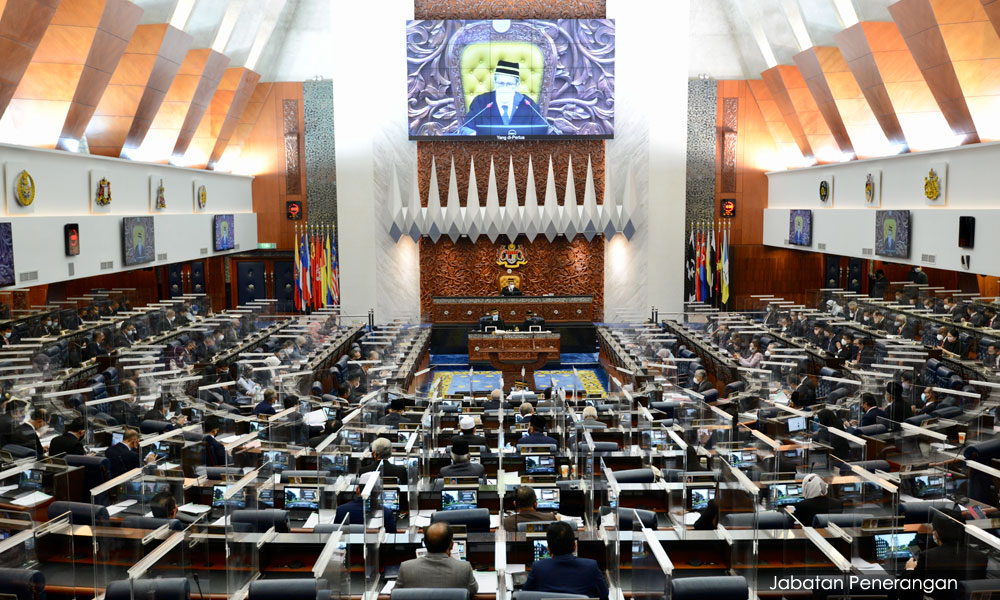
The king’s speech
The Yang di-Pertuan Agong’s speech is always delivered on the first day of the first Parliament meeting of the year before the members of both the Lower and Upper Houses.
The speech is prepared by the government and conventionally, the ruler will stick to the prepared text.
But with Istana Negara being dragged into the political crises in the last year, it will be noteworthy to observe if the palace injects its own messaging in this year’s speech.
The Yang di-Pertuan Agong had consented to a state of emergency in January on grounds that the Muhyiddin government needed more powers to fight the Covid-19 pandemic - but by June, the Conference of Rulers was talking about a need to curb abuse of power.
His Majesty also had to summon the Dewan Rakyat speaker and Dewan Negara president to force Parliament to reconvene after the then government stubbornly tried to stall.
The Agong was again dragged into conflict with the Muhyiddin government when it refused to table the emergency ordinances for debate in the House as requested by the ruler.
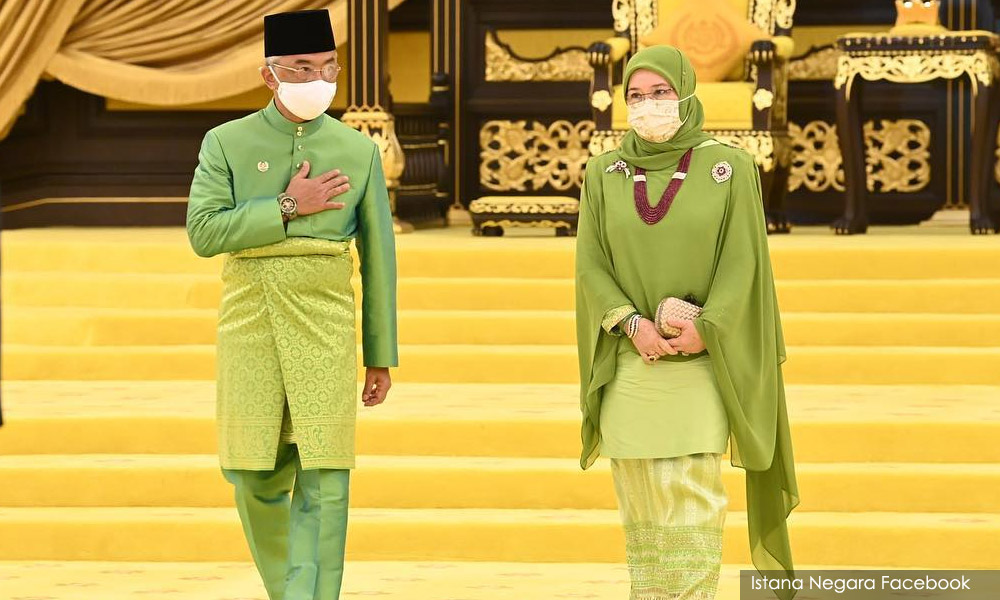
But the drama may not be over under a new government as the ruler is now dragged into a “he says, she says” episode.
The Agong had publicly decreed for the new prime minister to seek a confidence vote in Parliament, but the new government is now claiming the ruler has changed his mind.
This was revealed by de facto Law Minister Wan Junaidi Tuanku Jaafar, who said it was conveyed by Ismail Sabri during the first cabinet meeting.
But as soon as he said that, political aides scrambled to walk back on the reference to what Ismail Sabri purportedly told the cabinet meeting, raising questions if what the ruler wanted was accurately represented to his cabinet colleagues.
To date, there is no public announcement that the Agong had changed his position. The royal address on the first day of the Parliament sitting will, therefore, be an opportunity for the ruler to clarify.
Confidence vote
For now, there is no motion in the Dewan Rakyat Order Paper for Ismail Sabri to undergo a vote of confidence.
The government’s refusal to verify its majority is peculiar as Ismail Sabri’s support from 114 out of 220 MPs in the Dewan Rakyat is not disputed even by the opposition. Two seats are vacant.
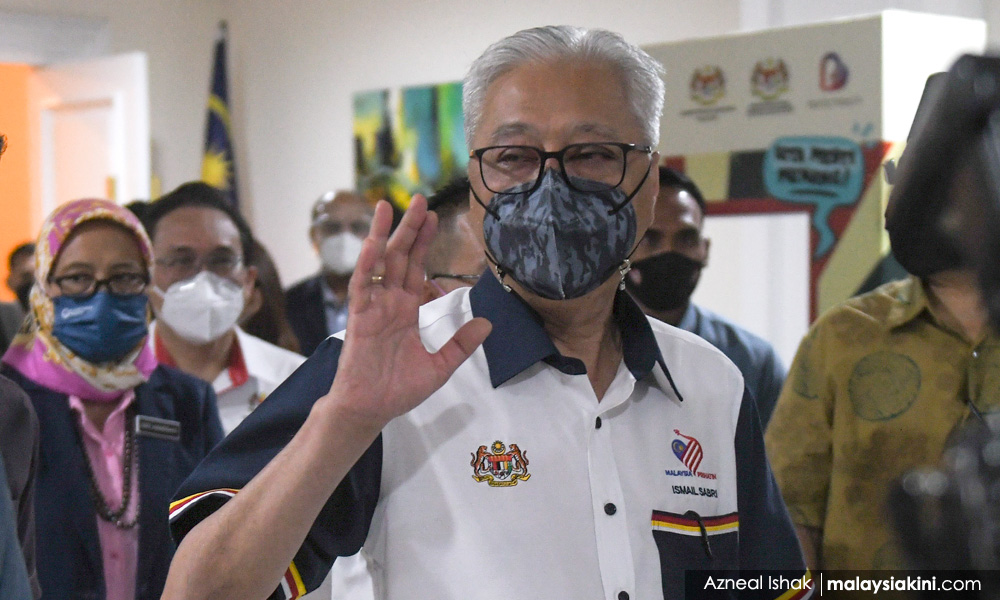
Apart from causing a royal controversy, the opposition is now thinking twice about a confidence and supply deal with Ismail Sabri.
They see the refusal to test his majority, a democratically normal process, as starting on the wrong foot and does not bode well for his commitment to reforms.
It will be interesting to watch if the government tables a confidence vote, after the Parliament sitting has started, in response to the pressure.
The pressure, however, can be lifted by the ruler and this will confirm that he no longer wants a confidence vote.
The deputy speaker’s position
The position is vacant after Azalina Othman Said resigned on Dec 18.
Officially, Azalina cited the need for a “reset” in Parliament for her resignation and even recommended an opposition MP to take her place.
Another angle was that her resignation, slightly more than a week before the new cabinet was unveiled, was so she stood a chance to be appointed as a minister, considering her experience as the de facto law minister from 2015-2018.
Ismail Sabri, however, skipped Azalina, who is from a rival Umno faction.
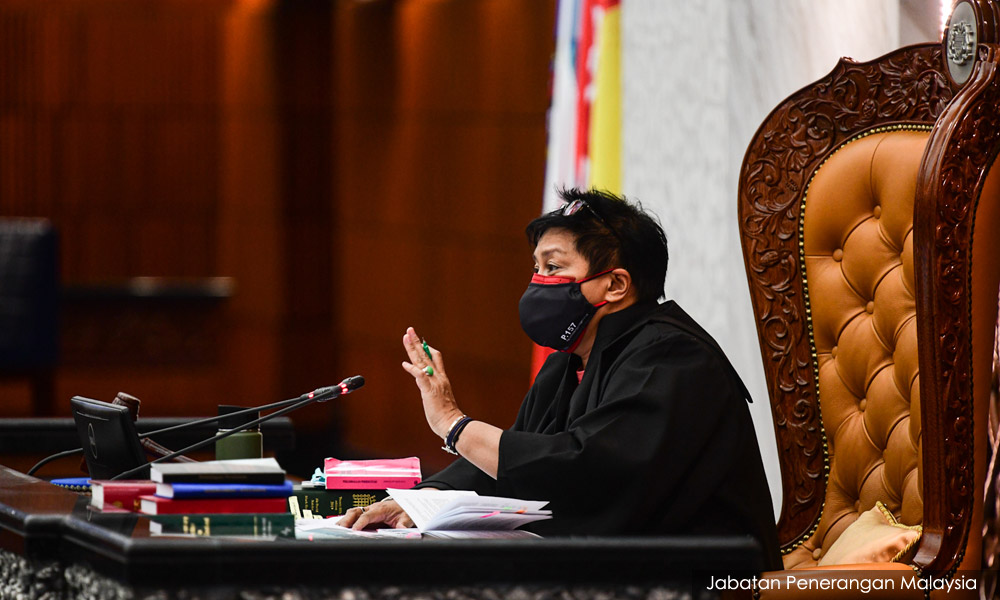
The vacancy in the deputy speaker’s position is interesting as it can serve as a proxy confidence vote.
While the voting to pick a deputy speaker only requires a plurality and not an absolute majority, a full turnout by the opposition will force the government to do the same, considering Ismail Sabri only has a four-seat majority.
The government has also nominated Pontian MP Ahmad Maslan, who is from the Umno 15 faction - the 15 Umno MPs responsible for ousting Ismail Sabri’s predecessor Muhyiddin - to fill up the vacant deputy speaker post.
The move is likely to keep the government's backing of 114 MPs intact.
The Umno 15 faction had been growing impatient over a series of decisions by Ismail Sabri, including retaining most of the previous Muhyiddin cabinet and appointing Muhyiddin as the National Recovery Council chairperson.
The government can also adopt a similar strategy the previous Muhyiddin government used to install the speaker and deputy speaker - by claiming the opposition didn’t nominate anyone in time, therefore no vote is necessary as there is only one government candidate.
It is unclear if the opposition has nominated its own candidate for the position of deputy speaker.
The speaker’s position
Political chatter in the Umno 15 circle is that they may consider nominating Azalina as the new speaker after she was passed over for a ministerial position.
Azalina, who is part of the Umno 15, has also positioned herself as a strong proponent of parliamentary reforms.
The DAP has indicated that it is open to nominating Azalina as the next Dewan Rakyat speaker.
However, there is no indication that Ismail Sabri wants the removal of the current Dewan Rakyat speaker Azhar Azizan Harun, who has proven himself to be a reliable ally of the executive.
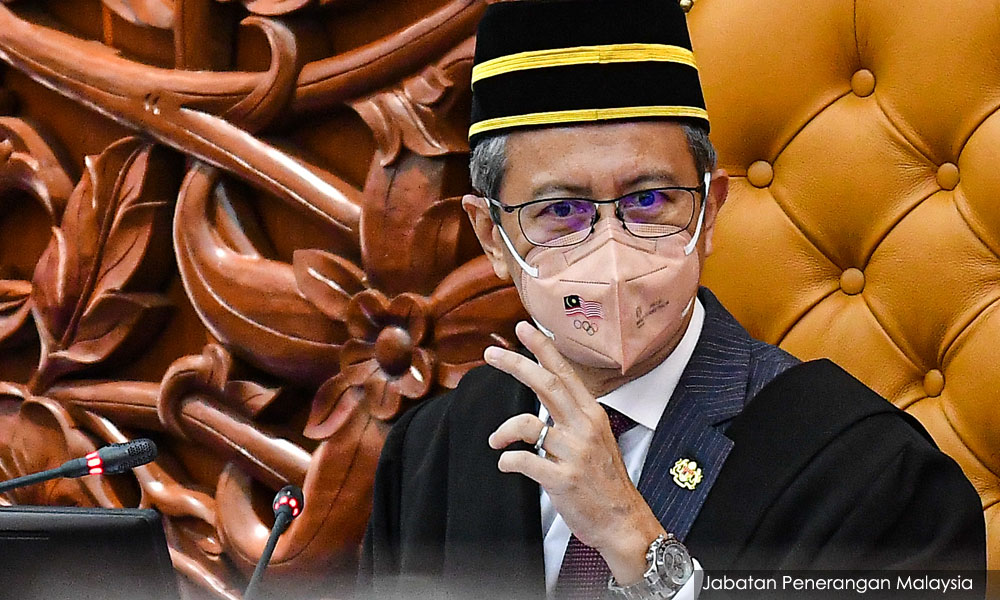
Azhar’s position is unlikely to be threatened even if the opposition and Umno 15 cooperate as any motion for his removal must go through him.
Azhar, citing a conflict of interest, has delegated motions on his removal to deputy speaker Mohd Rashid Hasnon, a Bersatu MP who will, with certainty, decide in Azhar’s favour as long as he has the government’s blessing.
There are two deputy speaker positions, the other post being vacant following Azalina's resignation.
Confidence and supply deal
A central condition set by the opposition for a confidence and supply deal with the government is parliamentary reforms.
The de facto law minister, Wan Junaidi, has spoken about a Parliamentary Services Act to give the august House more autonomy and also to modernise laws relating to Parliament by replacing the Houses of Parliament Privilege & Powers Act 1952.
He had also said the government is studying previous reforms proposed by Muhyiddin, including a term limit for the prime minister.
However, with a shaky start that has not inspired confidence about the government’s commitment, the opposition will likely want to see something concrete when Parliament convenes.
This includes the formation of bipartisan committees to look at the reforms.
The government’s commitment is central because Ismail Sabri's tenure will last less than 22 months - until the current Parliament's term expires - which means that if this new government does not move quickly, many of the proposed reforms won’t see the light of day. - Mkini

No comments:
Post a Comment
Note: Only a member of this blog may post a comment.