


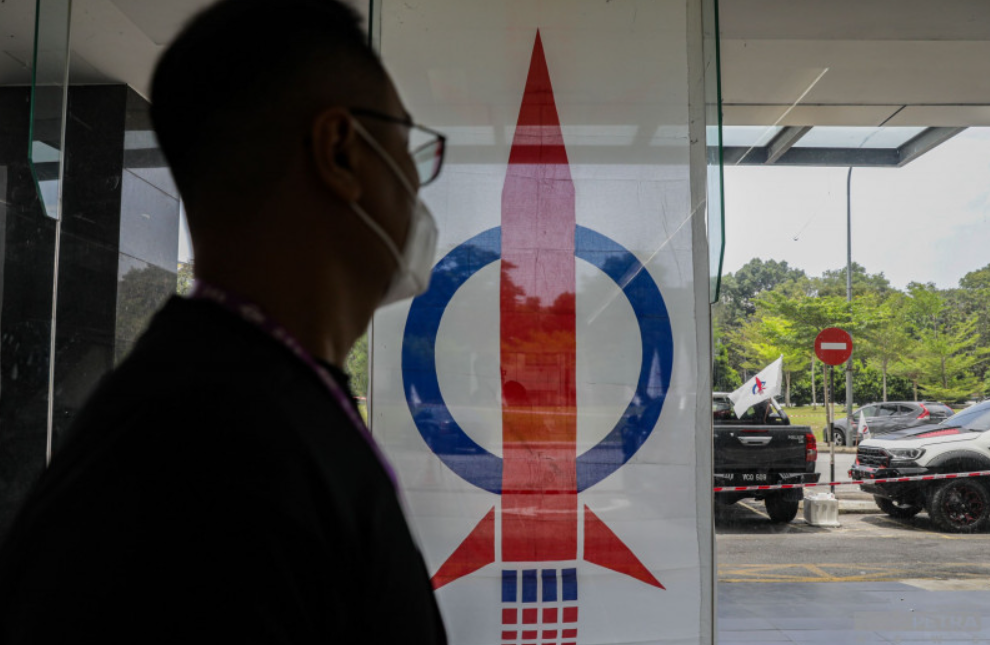
THE Nov 29 Sabah state election delivered one of the most dramatic verdicts in Malaysia’s recent political history: DAP, once confident in its Sabah foothold, lost all eight seats it contested—a devastating wipeout from the six seats it held after the 2020 state election.
This was not a narrow loss but a sweeping rejection even in urban Chinese-majority constituencies that were once considered DAP strongholds such as Likas, Kapayan, and Luyang.
To understand the broader national implications, this electoral collapse cannot be viewed in isolation.
It is both a symptom and a catalyst of deeper strategic realignments within the Madani government, one where DAP’s political appeal appears to be eroding just as its Pakatan Harapan (PH) partners, particularly PKR and Amanah, have refrained from robustly defending it against UMNO’s public pressure.
Litmus test

Sabah voters sent a clear message: dissatisfaction with federal parties that are perceived as detached from local realities. Analysts pointed to several factors driving DAP’s rout.
National narratives crafted in Putrajaya failed to resonate in Sabah, where local issues such as autonomy, revenue entitlements, and grassroots development dominated voters’ priorities.
Sabahans struggled to see how the Madani government’s broader reform agenda translated into tangible improvements in their daily lives, especially as federal-level controversies including the lingering fallout from the Albert Tei affair which undermined PH’s once-strong anti-corruption credentials.
Additionally, the rise of the Sabah-for-Sabahans sentiment, championed by regional parties like Warisan, siphoned off not just Malay and indigenous support but also significant chunks of the urban Chinese vote that were once DAP’s base.
Voters coalesced around local representatives who, unlike DAP’s candidates, could credibly claim to champion Sabah’s distinct political and fiscal priorities.
In this respect, Sabah’s results are more than a local setback—they are a harbinger of urban voter disillusionment with DAP’s relevance under the current PH leadership and a reminder that the party’s electoral strength is not immutable.
DAP’s weakening Within PH

But why has DAP’s appeal weakened? Part of the answer lies in internal coalition dynamics. Since the formation of the Madani government, DAP has frequently found itself defending coalition policies that are unpopular with its core supporters, while receiving little support from its coalition partners when under attack.
UMNO’s public jabs at DAP have become a pattern: rather than resolving disagreements discreetly within cabinet deliberations or party consultations, sensitive issues especially those involving racial and religious sensitivities are aired in the open, with DAP often absorbing the brunt of criticism.
This tactic is reminiscent of Barisan Nasional’s (BN) old strategy, where UMNO would publicly undermine its own partners like MCA, MIC and Gerakan, thereby diminishing their relevance and autonomy while retaining ultimate control of the coalition agenda.
Yet this time, the consequences are arguably more severe because DAP is not a peripheral partner; it is the largest component party in PH in terms of parliamentary seats.
Despite this, PKR and Amanah have exhibited remarkable restraint in defending DAP when UMNO’s rhetoric has escalated. This restraint is often justified in the name of “government stability” or “coalition unity.” But there is a fine line between strategic silence for stability and tacit acquiescence to political marginalisation.
PKR engaging in a quiet strategy?
The absence of a full-throated defence of DAP raises uncomfortable questions about PKR’s approach. PKR, as the leading partner in the Madani government, has both the motive and capacity to assert coalition solidarity but it has seldom done so with vigour when UMNO publicly pressures DAP.
This dynamic leads to a troubling inference: rather than protecting the coalition’s multiracial integrity, PKR may be implicitly tolerating a hierarchy that privileges UMNO’s political narratives over DAP’s core constituencies.
The result is a government where the power balance seems skewed in favour of UMNO, both in the court of public opinion and within the machinery of governance.
Some observers now speculate whether PKR could be positioning itself for a realignment ahead of GE16: a scenario in which it retains UMNO as a Malay-base partner while sidelining DAP to form a different coalition focused more sharply on Malay and conservative voters.
This is not a far-fetched strategic calculus if PKR believes that its political survival depends on aligning with the dominant Malay sentiment, especially after Sabah’s results underscored national governing stigma among non-Malay voters.
The broader strategic question
Should PKR pursue such a strategy, the implications would be profound. DAP’s marginalisation would not only weaken PH as a coalition but also potentially undermine the very multiracial foundation that was supposed to define the Madani government.
It would risk alienating constituencies that had believed in a post-BN vision of inclusive governance.
Moreover, Sabah’s election has shown that PH’s national brand has weaknesses in both East Malaysia and urban centres. The DAP wipeout in Sabah is a stark indicator that its supporters are no longer assured that the party can deliver on its promises within the constraints of the current coalition.
Loss of trust among key constituencies—urban Chinese voters, liberal reformists, and younger Malaysians signal that DAP must urgently reassess its strategy if it hopes to remain electorally relevant.
An urgent inflection point

The Sabah state election results are not merely a snapshot of regional discontent; they are a mirror reflecting national-level dissatisfaction with how PH and its partners have managed coalition politics.
If PKR and Amanah continue to refrain from defending DAP against public political pressure, they risk not just the weakening of a key partner but the erosion of the multiracial coalition architecture itself.
For DAP, the challenge ahead is existential: can it rebuild trust among its base while navigating the political constraints of Madani governance?
For PH, the question is equally existential: will it uphold a genuinely multiracial coalition, or will it capitulate to Malay-majoritarian realignment?
The answers will shape the trajectory of Malaysian politics long after GE16 is over.
R Paneir Selvam is the principal consultant of Arunachala Research & Consultancy Sdn Bhd (ARRESCON), a think tank specialising in strategic national and geopolitical matters.
The views expressed are solely of the author and do not necessarily reflect those of MMKtT.
- Focus Malaysia.

No comments:
Post a Comment
Note: Only a member of this blog may post a comment.