


In my earlier article, I wrote about how powerful stories often defeat facts. We live in an age where misinformation and polarising narratives travel faster than ever.
Social media platforms reward the emotional over the truthful, and artificial intelligence (AI) has added fuel to the fire by enabling the rapid creation of believable fake content.
The danger is not just misinformation - it’s the erosion of our ability to trust anything at all. This is not just a Malaysian problem but a global one.
Can anything be done to turn the tide, or are we destined to live in a post-truth world of confusion and permanent cynicism?
But despair is not the answer. There are ways forward - if we are willing to act collectively.
Taking control of the narrative
Major tech platforms such as Meta, X, TikTok, and Google are not just passive bystanders. Their algorithms decide what we see and what goes viral. This gives them extraordinary influence over public perception and political discourse.

We need to push for greater transparency and accountability from these platforms. Are they amplifying known falsehoods? Are they labelling AI-generated content clearly? Are they cooperating with fact-checkers?
In some countries, “circuit breakers” are used during sensitive times such as elections to slow down the spread of viral misinformation. Malaysia must seriously consider such tools to safeguard our democracy.
News outlets must resist the urge to “give oxygen” to claims that are sensational but baseless. Just because a statement is controversial doesn’t mean it is newsworthy.
Responsible journalism does not mean giving equal airtime to lies and facts - it means grounding reporting in evidence, context, and public interest.
Media companies must also re-examine their business models. Are they driven to chase clicks, outrage, and virality? Or are they upholding their duty to inform citizens and hold power to account?
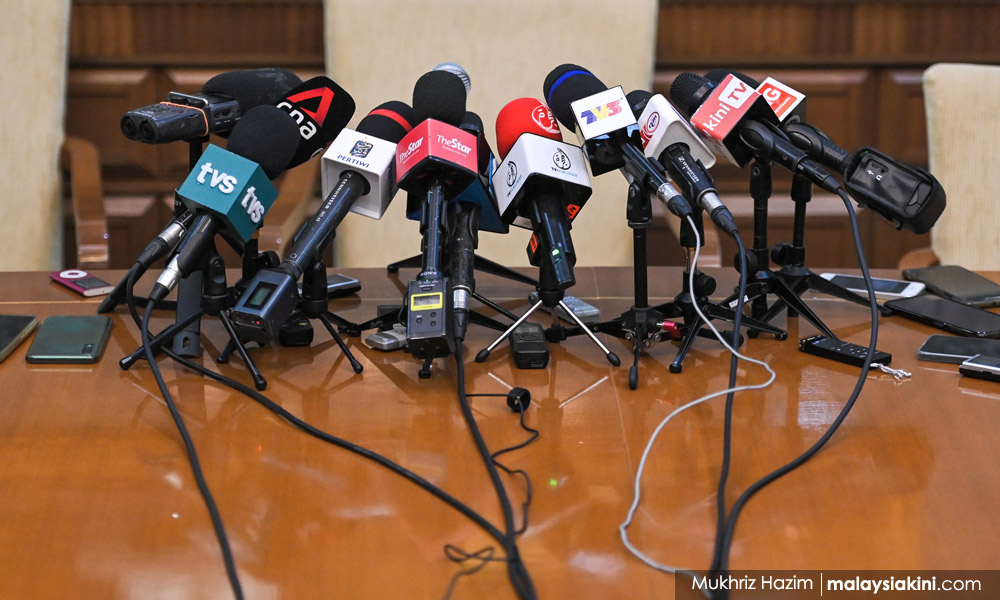
In an age of noise, silence can be a form of responsibility. Choosing not to amplify a misleading story is as important as correcting it.
Governments play a key role in regulating the space for public discourse, but they must tread carefully. The goal is not to control speech, but to curb deliberate disinformation campaigns that sow hatred and confusion.
Laws must be tightly scoped, clear, not subjective in interpretation and independently enforced. They should punish coordinated attempts to spread falsehoods or hate speech, not silence dissent or punish critics.
We’ve seen how poorly crafted laws can become tools for repression in Malaysia. We must improve these laws.
It takes all of us
In the long-term, the best defence is a thinking citizenry. We must teach media literacy in schools - not just how to read the news, but how to question it. How to spot manipulation. How to ask, “Is this true?”

If we can raise a generation that values truth over the sensational, we stand a better chance of building a resilient, informed society.
All of us - families, communities, religious and political leaders - must model responsible behaviour.
If a friend shares a misleading video, do we let it slide or gently correct them? When politicians speak in half-truths, do we cheer because it fits our beliefs, or challenge them?
Civil society organisations, independent media, and academia play a vital role in upholding truth. They conduct fact-checking, educate the public, and build cross-community bridges when politics seeks to divide.
They need our support - not just through donations, but in word and deed. We must protect their space to operate freely.
AI can create fake content - but it can also help detect it. There are tools now that flag manipulated images, monitor disinformation networks, and support fast fact-checking.
The key is ensuring AI is developed and used ethically - with human oversight and transparency.

Malaysia must not sleepwalk into the AI age. We need ethical frameworks that include civil society voices, not just corporate or government ones.
Stories will always be part of politics and human civilisation. They have always shaped how we see ourselves and others and have the power to mobilise the masses for good, or if abused, for evil.
The challenge is not to erase stories - but to ground them in truth. To tell stories that heal, inform, and unite.
It’s not easy. Truth is slow. But it lasts.
Let us build a culture where truth is not only spoken but honoured - by leaders, by institutions, and most importantly, by each of us. - Mkini
THOMAS FANN is the former Bersih chairperson. He writes on democratic integrity, civic empowerment, and institutional reform in Malaysia.
The views expressed here are those of the author/contributor and do not necessarily represent the views of MMKtT.

No comments:
Post a Comment
Note: Only a member of this blog may post a comment.