


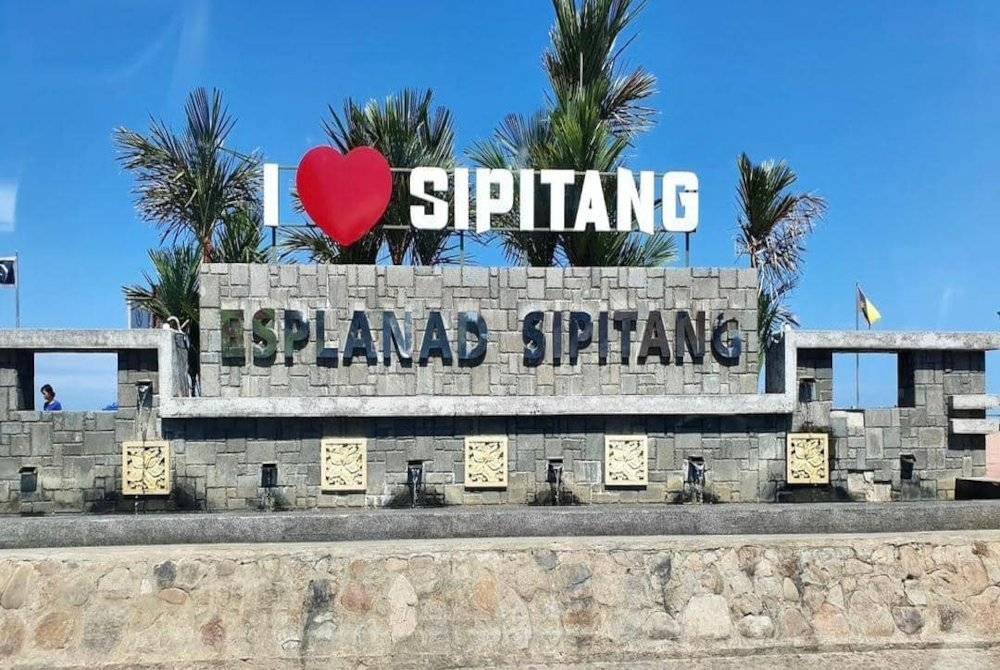
LIKE most Malaysians in peninsular Malaysia, I came across the name of Sipitang occasionally but had no idea of its exact location. After looking at a signboard in a photo forwarded to me, I decided to check and found it is the name of a town and district in Sabah bordering Sarawak.
The town is located 137km from Kota Kinabalu, and the drive normally takes two and a half hours. Sipitang is 54km and 58 minutes from Lawas, which is also a town and district, at the northernmost tip of Sarawak.
The main economic activities in Sipitang have been centred around the timber industry, subsistence farming and fishing, including in the sea at Brunei Bay. About 30% of the jungle has already been logged. With the establishment of the Sipitang Oil and Gas Industrial Park, it is now a hub for oil, gas, and heavy industries.
Like other parts of Sabah such as the Kiulu Valley, which is home to Kiulu Farmstay for farm and eco adventures, and the Kinabatangan River area with Batu Puteh village being a United Nations (UN) award winner, Sipitang has also jumped on the tourism bandwagon to cash in on community-based tourism.
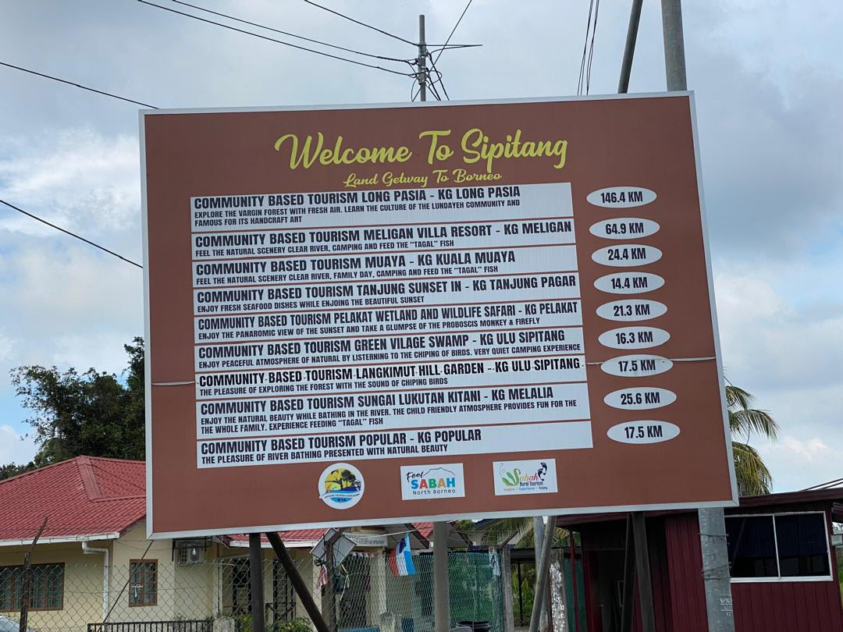
A prominent roadside signboard in the town displays “Welcome to Sipitang ‒ Land Getway to Borneo”. But there is no such word as ‘getway’.
If it is ‘gateway’, it means a place through which tourists typically visit on their way to a tourist attraction. If it is a ‘getaway’, it means a short holiday. Have the locals coined a new word to mean both?
The signboard is cluttered with the words ‘COMMUNITY BASED TOURISM’ repeated nine times, one each for the destinations listed, with all the words in capital letters, including the captions.
If the words ‘COMMUNITY-BASED TOURISM’ was used as the heading, then there is no need to repeat it for all nine destinations.
They are for Long Pasia at Kg Long Pasia (146.4km), Meligan Villa Resort at Kg Meligan (64.9km), Muata at Kg Kuala Maya (24.4km), Tanjung Sunset In (?) at Kg Tanjung Pagar (14.4km), Pelakat Wetland and Wildlife Safari at Kg Pelakat (21.3km), Green Vilage (?) Swamp at Kg Ulu Sipitang (16.3km), Langkimut Hill Garden at Kg Ulu Sipitang (17.5km), Sungai Lukutan Kitani at Kg Melalia (25.6km), and Popular at Kg Popular (17.5km).
Before we go any further, let us first understand what community-based tourism (CBT) is. Official definitions may be complete, but they mean little to the common man.
To me, it simply means that the local community benefits from tourism activities in their area, and not remain as bystanders while outsiders profit from it.
Locals can also make use of their natural and cultural resources without harming their environment and lifestyle, so that CBT is sustainable. It starts with providing basic needs of visitors, such as food and beverage outlets, accommodation for tourists staying overnight, and offering local produce for visitors to buy.
Then comes the activities to natural spots nearby, historical sites if any, and watching or participating in festivals, dances or daily life which may include trips to farms or plantations, cottage industries or factories where famous local goods are produced. The aim is economic growth that brings progress to the community.
It is beyond identifying and publicising all the places that visitors might be interested in. It is also essential to differentiate between recreational activities with tourism businesses. Natural spots are mostly accessible and open to the public, but most visitors spend little or no money on recreational activities at remote places.
On the other hand, tourism is a business that involves some or substantial expenditure by visitors such as for nature guides, riverine transport, jungle porters, camping gear, food and water supply for one or more days, aside from road transport to and from near these natural spots.
Large tour operators specialising in adventure or community-based tourism offer packages that are comprehensive for tourists to travel seamlessly from cities to various natural environments and return safely. They know what their customers want and also engage the locals to provide various tourism services.
Similarly, the locals must be able to identify the various types of paying customers and supply what is needed. Otherwise, publicising their natural heritage would only attract more recreational visitors that spend little or no money.
Not only that, many inadvertently damage or even take away from nature what they find interesting.
YS Chan is master trainer for Mesra Malaysia and Travel and Tours Enhancement Course and an Asean Tourism Master Trainer. He is also a tourism and transport business consultant.
The views expressed are solely of the author and do not necessarily reflect those of MMKtT.
- Focus Malaysia.

No comments:
Post a Comment
Note: Only a member of this blog may post a comment.