


Currently, our beloved nation is crying out for credible leadership that provides a clear sense of direction and upholds good governance, accountability, transparency, rule of law, and above all, is responsive to the needs and aspirations of its citizens.
Malaysians from all walks of life are disgusted, angry and fed up with the directionless, incompetent and highly corrupt leadership as exemplified by several political leaders and senior civil servants and which has resulted in a chronic trust deficit.
For the record, the Transparency International Corruption Perception Index in Malaysia decreased to 51 points in 2020 from 53 points in 2019. The 2020 Auditor-General’s Report highlighted RM620 million losses or wastages by federal ministries and departments due to non-compliance with stipulated financial management procedures. To top it all, our political leaders have no qualms in appointing unqualified and incompetent people to important positions in government-linked companies.
Some of these tainted/flawed political leaders and senior civil servants not only lack competence but are also guilty of grossly misusing authority and power for personal gain. They have no qualms about taking credit for successes not due to their efforts while blaming others, including the media, for their blunders. They are prepared to shamelessly lie to cover up their corrupt behaviour. And they proceed to reward undeserving subordinates who are ‘yes-men’ and the greatest enemy of quality improvement and the progress of the nation.
Consequently, an increasing number of Malaysians are pessimistic about the future of Malaysia, with some already predicting that it will soon be categorised as a “failed state” if nothing concrete is done to reverse the nation’s downward trajectory.
We need to set things right fast as the future of our nation and its continued progress in today’s highly competitive world greatly depends on visionary and credible leadership. What then is visionary and credible leadership? What are the most admired attributes of leaders worldwide? What can we do to ensure that our nation is led by visionary and credible leaders?
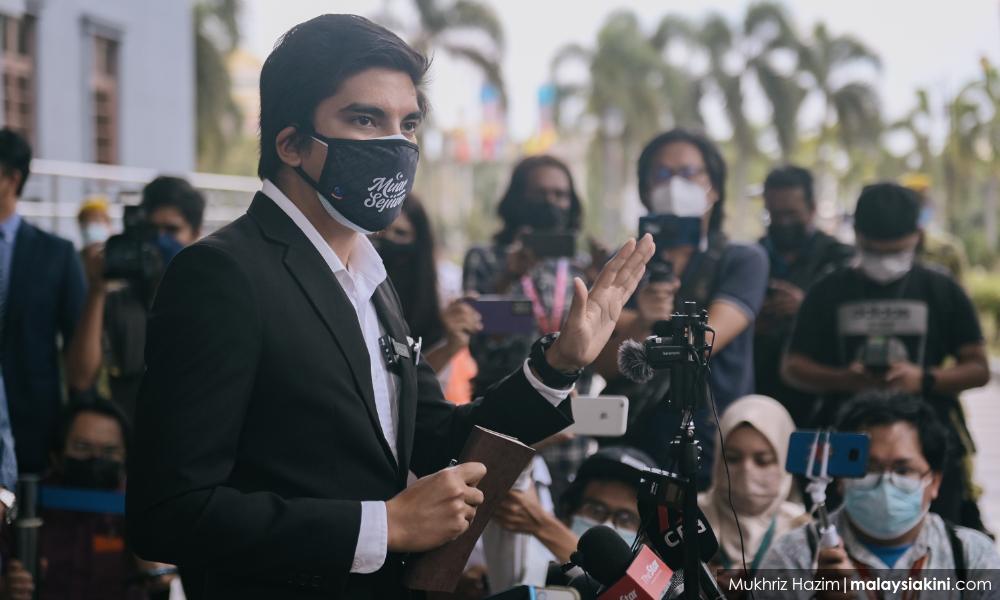
As stated by Robert H Rosen, an authority on leadership, a leader’s first job is to articulate a clear, compelling vision for an organisation or the nation. A vision is a mental image of a possible and desirable future state of the organisation or nation. A good example is the vision of the Malaysian United Democratic Alliance (Muda) which was established by Syed Saddiq Abdul Rahman in 2020: A democratic, prosperous and moderate Malaysia which celebrates its diversity and multiracialism.
The core twin components of credible leadership are competence and character. Competence involves having the appropriate knowledge and skills to perform effectively. Character encompasses moral intelligence, of which integrity is the key. The Oxford Advanced Learner’s Dictionary defines integrity as “the quality of being honest and having strong moral principles.” The major elements of integrity are being honest; practising what one preaches (modelling the way); honouring promises and commitments; not deceiving or manipulating others for personal gain; and taking responsibility for one’s actions and decisions.
According to research conducted worldwide by James M Kouzes and Barry Z Posner, two leading leadership gurus, the five most admired attributes of leaders worldwide are being honest, forward-looking (visionary), competent, inspiring and intelligent. The essence of leadership is credibility, integrity and task competence.
The importance of integrity is best summed up by Warren Buffett: “I look for three things in hiring people. The first is personal integrity, the second is intelligence, and the third is a high energy level. But if you don’t have the first, the second two don’t matter.”
Nation’s watchdogs
Let’s now look into how we can work towards ensuring we have credible political leaders and civil servants. First, Malaysians at large and the non-government organisations (NGOs) must be the watchdog of the nation to ensure our leaders perform well and behave ethically with impeccable integrity.
In this regard, I hold Lalitha Kunaratnam, an activist, and Edmund Terence Gomez, an academician, in high esteem. Based upon publicly accessible documents, Lalitha has apparently raised potentially serious ethical issues involving Malaysian Anti-Corruption Commission’s (MACC) chief commissioner Azam Baki’s interest in two public-listed companies. In the case of Gomez, he courageously resigned from the MACC Consultation and Corruption Prevention Panel in protest over the panel’s inaction pertaining to the allegations levelled against Azam.
Second, to ensure competent and ethical public governance, we need to develop a competence profile for future leaders, select the best and brightest candidates regardless of their ethnic origins to fill up important positions in the civil service, and provide them relevant training and mentoring.
Third, our political leaders need to demonstrate leadership by example, which is crucial in gaining the trust of Malaysians. As a right step towards building a progressive and united Malaysia, Prime Minister Ismail Sabri Yaakob proudly shared with the nation his concept of ‘Keluarga Malaysia’ (Malaysian Family) and reportedly stated that “the welfare and well-being of the people would be the government’s top priority regardless of race or religion.”
Unfortunately, his concept was not reflected in the nation’s 2022 budget. As stated by Bukit Mertajam member of parliament Steven Sim, the Chinese community was miserably allocated RM200 million, the Orang Asli community RM274 million and the Indian community RM145 million. In marked contrast, RM11.4 billion was allocated by the government for the bumiputera agenda.

We should nurture and practise the concept of ‘Bangsa Malaysia’ which was demonstrated recently by hundreds of volunteers of various ethnic groups and religions who tirelessly prepared vegetarian food aid at the Gurdwara Sahib Petaling Jaya (GSPJ) for thousands of flood victims. Mention must be made of the proactive and exemplary leadership provided by GSPJ president Sardar Awtar Singh and the Petaling Jaya Sikh youths who ably coordinated the food aid efforts through the media.
Allow me to share two personal experiences which reflect the true spirit of ‘Bangsa Malaysia’ which is vital in making Malaysia great again. First, whilst working in the Federal Treasury in the late 1970s, I wanted to get a transfer to the National Institute of Public Administration to enhance my chances of securing a government scholarship to do my Master in Public Administration degree in the United States.
Towards this end, I approached my immediate boss, Saedon Daud. His response is forever etched in my mind: “As a practising Muslim who does not discriminate against non-Muslims, you have my word of honour that I will support your transfer request provided you perform well over the next two years.” He honoured his word and I completed my MPA degree at Syracuse University.
The second incident involved eminent academician and former director of Institut Aminuddin Baki (IAB), Emeritus Professor Dr Ibrahim Ahmad Bajunid. I was selected based upon merit to conduct training for school principals at IAB. However, the Federal Treasury objected and wanted a bumiputera trainer to conduct the training. Ibrahim, a no-nonsense leader and a strong believer in
meritocracy, stuck to his guns and ensured that I was selected to conduct the training.
Fourth and finally, we should insist that our elected leaders and senior civil servants practise greater transparency and accountability. Additionally, stern action should be taken against civil servants who abuse their power and are guilty of corrupt practices.
Malaysians should continue to demand, speak up and do whatever we can in our respective roles to ensure that our leaders and bureaucrats practise good governance and demonstrate integrity – despite the odds stacked against us in the present circumstances. - Mkini
RANJIT SINGH MALHI is a widely-quoted authority on self-leadership, peak performance and soft skills. He has written six books on personal excellence, soft skills and management, three of which have been translated into Arabic.
The views expressed here are those of the author/contributor and do not necessarily represent the views of MMKtT.

No comments:
Post a Comment
Note: Only a member of this blog may post a comment.