


Factories operating under the enhanced movement control order (MCO) currently in force in most of Selangor are required to test all their workers twice a week.
According to procedures set by the International Trade and Industry Ministry (Miti) dated yesterday, the tests are to be conducted using rapid test kits and only workers who test negative will be permitted to work.
“The cost of the testing is fully borne by the company,” the SOPs read.
Moreover, companies must report to the nearest district health office if more than five percent of their workforce is absent from work due to fever or other Covid-19 symptoms.
Those who develop symptoms must be referred to the company’s panel clinic or a nearby government clinic, and those who test positive must be reported to the district health office and be isolated, pending further action from health authorities.
The guidelines come as Miti approved more manufacturing sectors in Selangor's enhanced MCO areas to operate.
These include the electrical and electronics sector and its supply chains, aerospace sector, machinery and equipment sector for the production of healthcare and food products, as well as key food and beverage manufacturing companies.
There are 34 subdistricts in Selangor that are under the enhanced MCO from July 3 until July 16, and only factories producing certain goods are allowed to operate.
Those allowed to operate must do so with only 60 percent of their usual workforce.
Tracking devices recommended
The Miti guidelines are silent on how to improve indoor ventilation, even though the government is expected to issue guidelines on the matter this week.
However, the Miti guidelines do stipulate that factories should set up Covid-19 emergency response teams comprising members of the company’s occupational health and safety committee.
The teams are tasked with monitoring compliance with the National Security Council’s standard operating procedures and coordinate Covid-19 prevention measures.
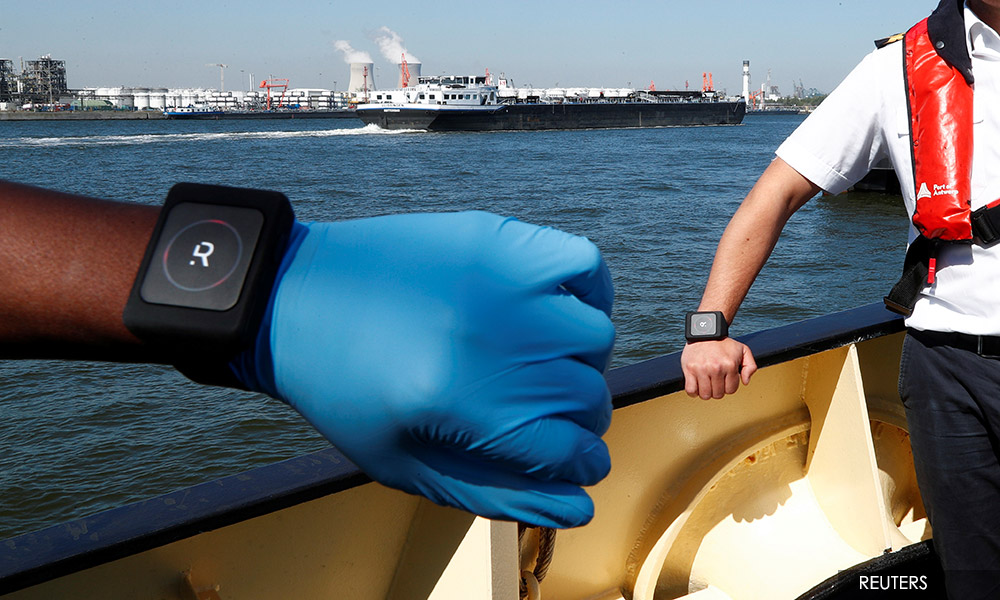
The guidelines also endorse the wearing of tracking devices to facilitate “real-time contact tracing”. Such devices would track where workers have been, who they have met, and for how long.
“Such digital systems may use the MySejahtera system or any other suitable system. All data needs to be shared with the Health Ministry when necessary,” it said.
Previously, it was reported that workplace clusters make up 16 percent of all Covid-19 cases in Malaysia from June 1 to July 1, while clusters linked to the manufacturing sector account for 10 percent of all cases.
There were 227 manufacturing sector clusters identified during this period, of which 85 were in Selangor.
Most Covid-19 cases are now sporadic, unlike previous waves where most cases can be linked to specific clusters.
Nevertheless, factories have been linked to large outbreaks in the past, including the Teratai cluster which was the largest known cluster up to May 29 when the Health Ministry stopped providing regular updates on Covid-19 clusters.
By the time the Teratai cluster was closed on April 17 after no more cases were recorded, a total of 7,205 cases were identified.
- Mkini

No comments:
Post a Comment
Note: Only a member of this blog may post a comment.