


The anticipated visit of US President Donald Trump to Kuala Lumpur during the 47th Asean Summit this October is more than just a high-profile diplomatic event; it is a litmus test for Prime Minister Anwar Ibrahim’s political maturity and strategic vision.
The visit comes at a time of intensifying geopolitical rivalry, domestic political sensitivities, and global ideological fractures. In the eyes of many, hosting Trump, a figure widely criticised for his pro-Israel policies and controversial legacy, appears at odds with Malaysia’s steadfast defence of the Palestinian cause.
Yet, beneath the surface, Anwar’s decision represents a complex and calculated balancing act between principle and pragmatism.
Since his student activism days, Anwar has built a personal and political identity rooted in justice for oppressed peoples, especially the Palestinians. His long-standing support for Palestine is not merely performative; it’s deeply ideological and central to his public persona.
In Malaysia, a Muslim-majority country with strong emotional and political ties to the Palestinian struggle, this position holds significant domestic value.
Anwar has frequently championed Malaysia’s commitment to the two-state solution, condemned Israeli aggression, and led international advocacy on behalf of Gaza. This consistency has earned him moral credibility among Malaysians and across the Global South.

However, realpolitik often demands difficult choices. His decision to allow Trump’s participation in the Asean Summit has sparked strong reactions, particularly from civil society groups, opposition figures, and even factions within his own ruling coalition.
Critics, including former prime minister Dr Mahathir Mohamad, argue that Trump’s presence undermines Malaysia’s long-held moral stance on Palestine.
Trump’s administration was closely aligned with Israel, overseeing the relocation of the US embassy to Jerusalem and backing controversial policies that were widely condemned across the Muslim world.
Balancing China and Washington
Nevertheless, Anwar’s defence of Trump’s attendance rests on sound diplomatic logic. The invitation, he has stressed, is extended under Malaysia’s role as Asean chair and is not a bilateral gesture of endorsement.
Rejecting Trump, he argues, would not only fracture Asean unity but would also forfeit a rare opportunity to confront the US president directly on issues that matter to Malaysia, especially Palestine.
This strategy reflects a belief that moral posturing must sometimes be paired with real engagement. As Anwar put it, diplomacy is not about avoidance but about dialogue, even with those we strongly disagree with.
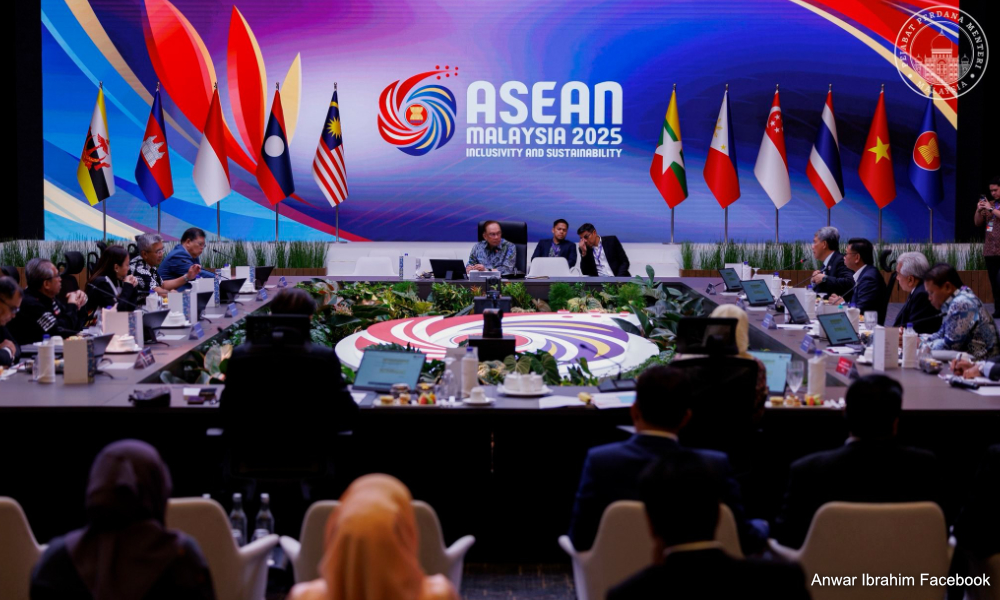
Moreover, the Trump visit takes place in a time of intense geopolitical competition between the US and China, a contest that has profound implications for Southeast Asia. The world is steadily moving from a bipolar to a multipolar configuration.
For Malaysia, the South China Sea remains a particular flashpoint. China’s expansive maritime claims and increasing militarisation of the region pose direct challenges to Malaysia’s sovereignty and those of its Asean neighbours. In this context, the US, for all its inconsistencies, remains a necessary counterweight to unchecked Chinese dominance.
By facilitating Trump’s presence, Anwar is sending a clear signal: Malaysia is committed to a balanced foreign policy that engages both major powers without succumbing to either. It is a strategy of hedging that is designed to preserve Malaysia’s autonomy and flexibility.
Despite deepening economic ties with China, Malaysia remains heavily reliant on the US for trade, particularly in high-value sectors like electronics, semiconductors, and palm oil.
In recent years, Trump-era tariffs and protectionist policies have caused disruptions, prompting Asean nations to seek greater clarity and cooperation with Washington.
The summit thus offers Malaysia and its neighbours a vital platform to push back against such policies and seek mutually beneficial terms of trade.
At the same time, Malaysia’s economic recovery post-pandemic remains fragile. Securing favourable relations with Washington, regardless of who occupies the White House, is essential. Ignoring Trump, who returned to power in 2025, would be diplomatically short-sighted.
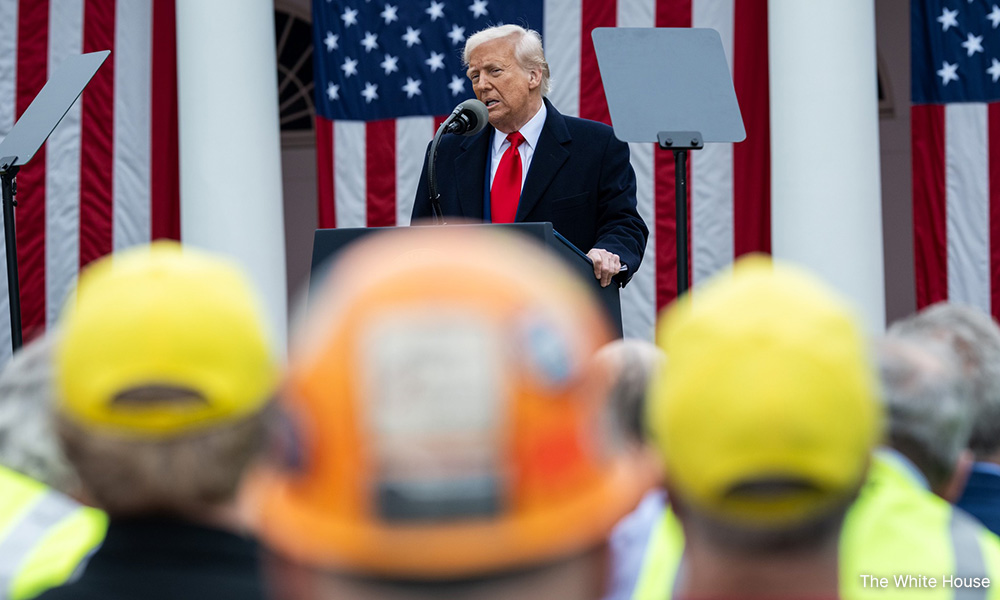
Engaging with him now, under the multilateral framework of Asean, provides a controlled environment where Malaysia can assert its views, advocate for regional stability, and promote its broader interests without appearing partisan.
Critically, Anwar’s choice to proceed with the invitation also reflects an understanding of Malaysia’s role as a middle power. Hosting the Asean Summit gives Malaysia a unique opportunity to position itself as a voice of moderation, bridge-building, and strategic clarity.
Diplomacy in a divided world
Anwar’s message is clear: Malaysia will neither shy away from tough conversations nor will it allow others to dictate its diplomatic priorities.
Of course, this path is not without risk. Anwar’s balancing act could alienate certain segments of the electorate, especially those who view any engagement with Trump as a betrayal of the Palestinian cause. The opposition may exploit this narrative, painting the prime minister as compromising on core principles.
But this criticism fails to appreciate the larger picture. In the arena of international politics, engagement is not endorsement.
Ultimately, the Trump visit must be seen within the broader arc of Malaysia’s foreign policy evolution. In an increasingly unpredictable world, leaders must make difficult choices that weigh moral imperatives against strategic necessities.
Anwar is betting that Malaysia can do both: remain a loud and consistent voice for Palestinian rights while engaging the geopolitical realities that shape its security and economic well-being. It is a bold and nuanced move, one that will test his leadership, but also one that could elevate Malaysia’s standing on the global stage.
If successful, this diplomatic gamble may redefine Malaysia’s role in Southeast Asia as a nation unafraid to engage the powerful, challenge injustice, and put national interest above political convenience.
And in doing so, Anwar may yet prove that principled pragmatism is not a contradiction, but a necessity. - Mkini
R PANEIR SELVAM is the principal consultant of Arunachala Research & Consultancy Sdn Bhd, a think tank specialising in strategic national and geopolitical matters.
The views expressed here are those of the author/contributor and do not necessarily represent the views of MMKtT.

No comments:
Post a Comment
Note: Only a member of this blog may post a comment.