


Elections are the defining moment of any democracy. They are when citizens exercise their sovereign right to decide who governs them and, ultimately, the direction their country will take.
Ordinarily, once Parliament or a state legislative assembly is dissolved, the incumbent administration assumes the role of a caretaker government.
Its mandate is deliberately narrow: to ensure the continuity of public administration while refraining from decisions that could confer an electoral advantage on any political party.
That interim period - between dissolution and polling day - is meant to belong to the political contest itself. It is a time for parties to present competing visions, unveil manifestos, nominate candidates and persuade voters on the strength of ideas rather than the weight of state power.
As political scientist Prof Pippa Norris explains in her book Why Electoral Integrity Matters (Cambridge University Press, 2014), electoral integrity must be assessed across the entire electoral cycle - not merely on polling day.
It requires adherence to democratic standards that ensure a genuinely level playing field, including safeguards against the misuse of state resources by incumbents.
Those principles underscore a simple but essential truth: democracy is judged not only by whether ballots are counted honestly, but also by whether the contest leading to those ballots is conducted fairly.
Malaysia's legal blind spot
In Malaysia, that principle is increasingly tested by an uncomfortable reality.
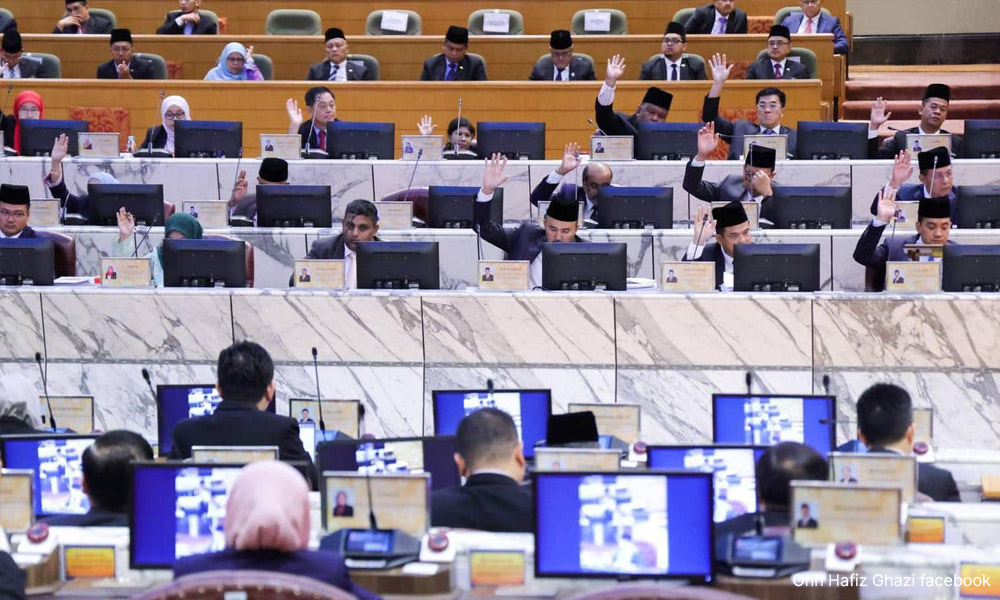
A significant legal grey area exists during the period after a legislature has been dissolved but before the official campaign period begins.
It is a window in which actions capable of influencing voters may occur without falling neatly within the reach of existing election laws.
Section 10 of the Election Offences Act 1954 criminalises bribery committed before, during and after an election. On paper, the provision appears comprehensive.
In practice, however, enforcement is considerably more complicated.
Election offences must satisfy strict legal requirements concerning who qualifies as a candidate, when the election process legally begins and whether particular conduct can be directly linked to electoral inducement.
Consequently, election petitions have historically concentrated almost exclusively on events occurring between nomination day and polling.
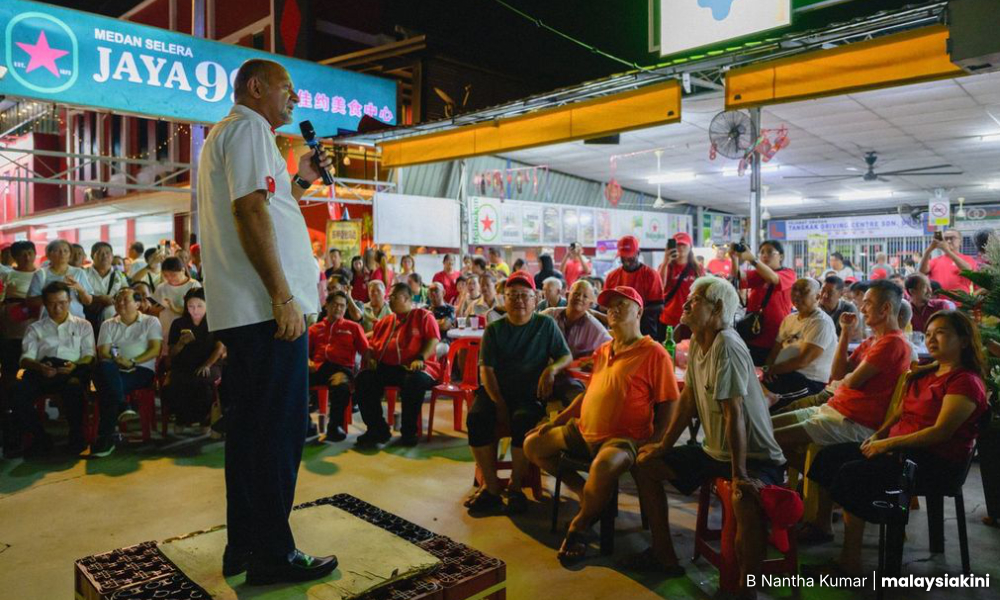
What remains outside that legal spotlight is the politically sensitive period immediately following dissolution.
The result is a regulatory vacuum - a lacuna - that can be exploited by those who continue to wield executive authority while simultaneously preparing for an election.
When govt becomes campaign
This is precisely the concern repeatedly raised by electoral reform advocates and civil society groups.
The pattern has become familiar.
Shortly after legislatures are dissolved, announcements of major development projects suddenly emerge. Financial allocations are expedited. Cash assistance is publicised. Infrastructure launches are scheduled with remarkable timing, often in electorally significant constituencies.
Legally, these announcements may not automatically amount to election offences under current legislation.
Politically and ethically, however, they raise a far more profound question.
Can an election truly be considered free and fair when one side retains access to government resources, official platforms and public institutions while its opponents campaign with none of those advantages?
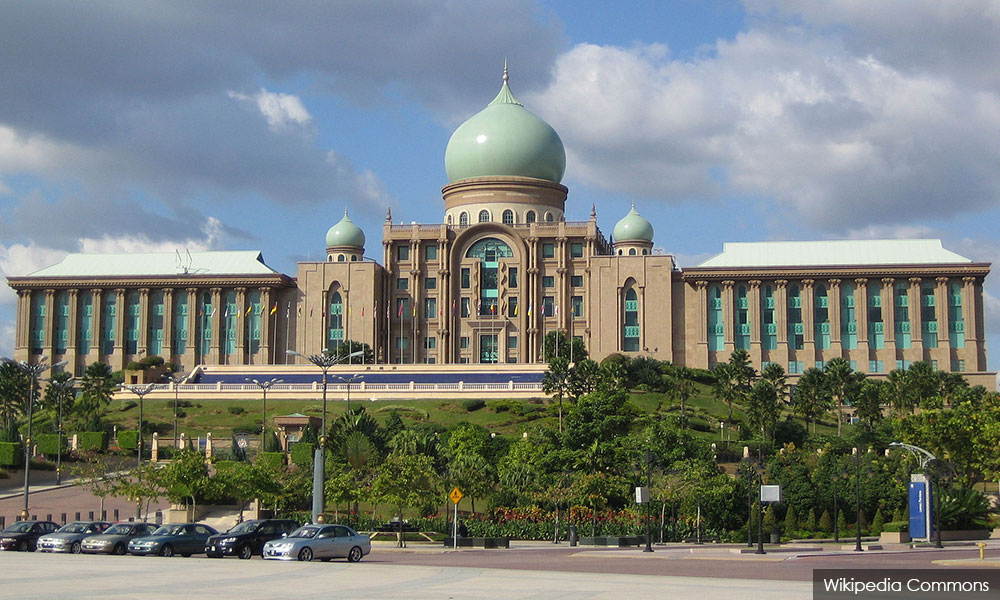
The issue is not merely legality. It is equality.
Democracy demands that electoral competition be decided by public confidence - not by the institutional advantages of incumbency.
Lessons from other democracies
Many established democracies confronted this dilemma years ago.
India addresses it through the Model Code of Conduct (MCC) administered by the Election Commission of India. The moment election dates are announced, ministers are prohibited from announcing new government schemes, financial grants or development projects capable of influencing voters.
Official visits cannot be converted into political campaigns, and public resources cannot be deployed for partisan purposes.
The United Kingdom adopts a similar approach through its General Election Guidance for Civil Servants, which governs the pre-election period of sensitivity (historically known as the “purdah” period).
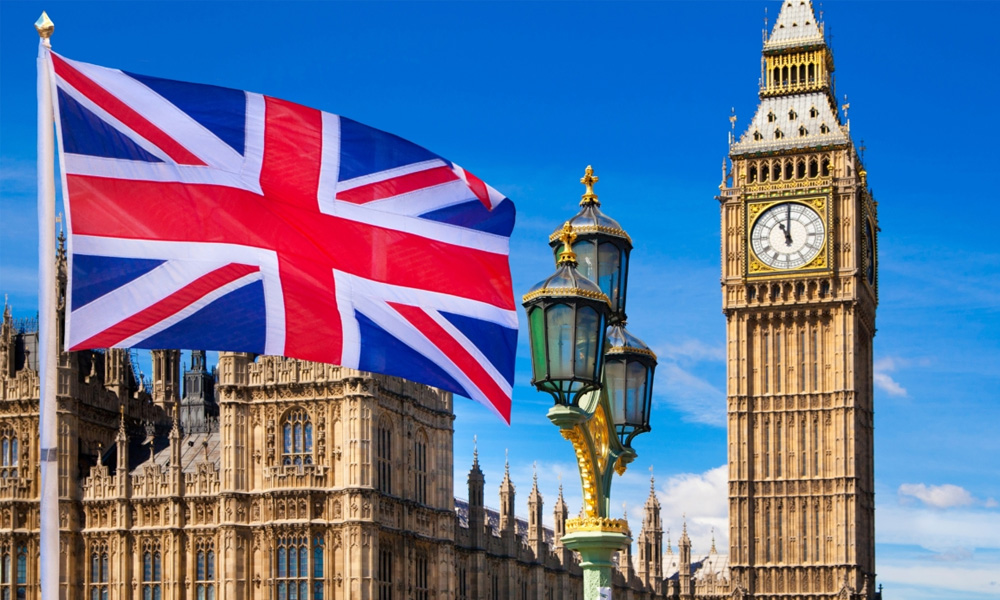
Once a general election is announced, government publicity is significantly restricted, new public consultations are generally deferred, and ministers are expected to avoid using official resources or government platforms in ways that could confer a partisan political advantage.
The objective is to preserve the neutrality of the civil service and ensure that the machinery of government is not used to influence the electoral contest.
Neither system is perfect.
Both nevertheless recognise a simple constitutional truth: elections cannot be genuinely competitive if the incumbent government continues to enjoy unrestricted access to the instruments of the state.
Malaysia, by contrast, relies largely on unwritten caretaker conventions.
While these conventions encourage restraint, they lack legal force and provide little guidance on matters that increasingly define modern elections: the use of ministry resources, official events featuring political candidates, government communications and publicly funded programmes that coincide with electoral contests.
The Johor test case
These concerns are no longer theoretical.
With the Johor state election approaching, allegations regarding the use of government machinery have already resurfaced.
Development announcements continue to be defended on the basis that they were “previously approved.” Official programmes proceed despite featuring individuals who are simultaneously contesting elections.
One recent example involved an invitation circulated by the Johor State Information Department for a programme entitled Johor State Election Dialogue.
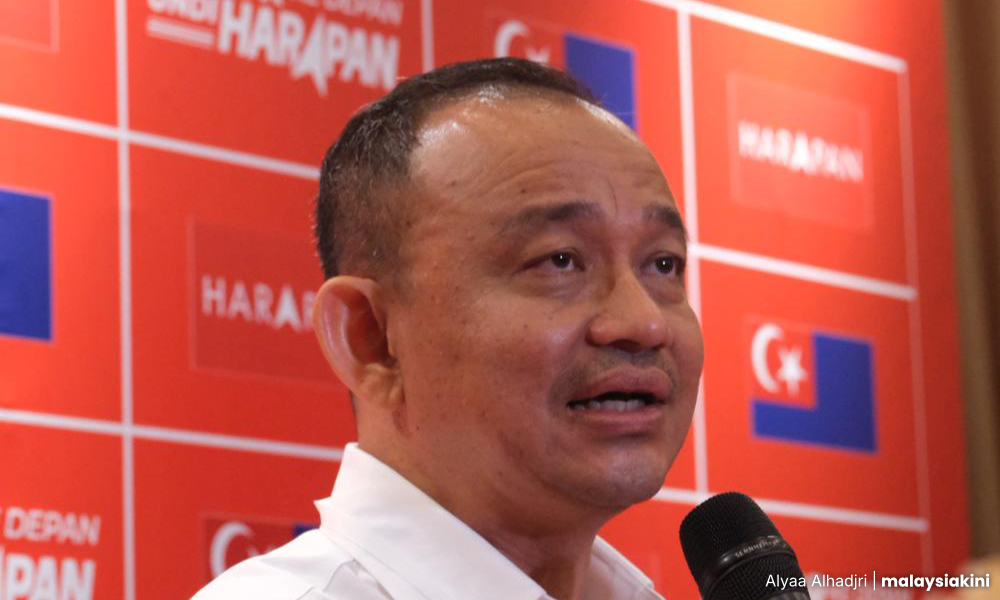
Among its featured speakers were the communications minister and Maszlee Malik.
Maszlee is not merely a public figure. He is the Pakatan Harapan candidate for the Puteri Wangsa state constituency and has been widely mentioned as a potential menteri besar should his coalition prevail.
The question practically asks itself.
Can an event organised and funded by a government information department during an election period genuinely be regarded as politically neutral?
Or does it represent precisely the type of institutional advantage that caretaker conventions were designed to prevent?
As political scientist Samuel P Huntington argues in Political Order in Changing Societies (Yale University Press, 1968), the stability and legitimacy of a political system depend on the strength and autonomy of its institutions.
The greater those institutions are perceived as serving partisan interests rather than the public interest, the greater the erosion of confidence in the democratic process.
Reform cannot remain a promise
Perhaps the greatest irony is that the government itself has already acknowledged the need for reform.
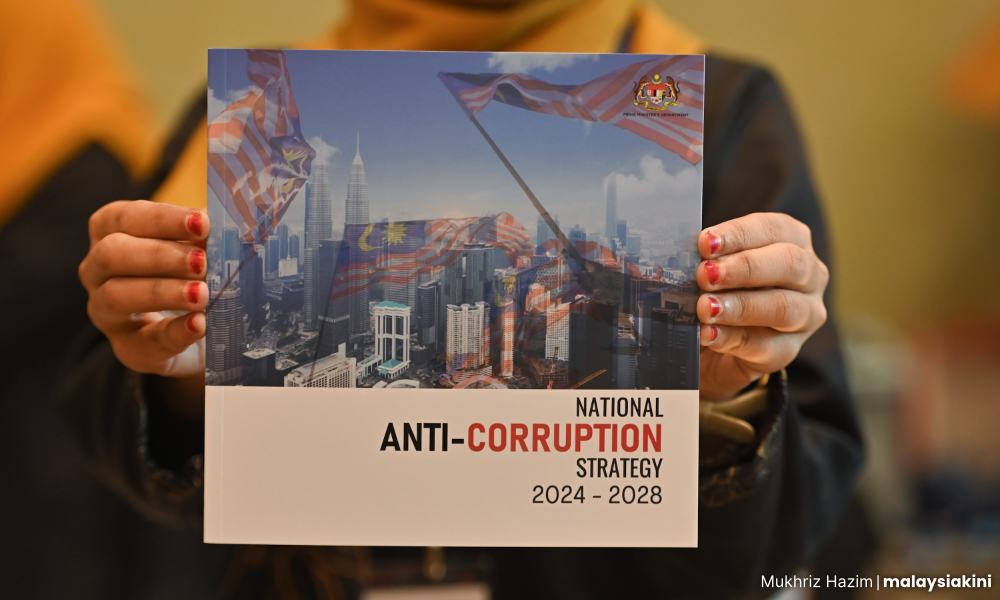
The National Anti-Corruption Strategy (NACS) 2024–2028, under Strategy 2 (Public Accountability), specifically proposes amendments to the Election Offences Act 1954 to criminalise the misuse of government machinery for political campaigning.
Yet, according to the Legal Affairs Division (BHEUU) of the Prime Minister’s Department, the proposal remains under “comprehensive study.”
Meanwhile, election after election proceeds under the same unresolved legal framework.
Clear legal rules needed
Good governance is measured not by speeches but by institutions.
If Malaysia is serious about strengthening democratic integrity, caretaker governments must be governed by clear legal rules rather than uncertain conventions.
The boundary between governing and campaigning should never depend solely on political goodwill.

Ultimately, this issue transcends any single political party.
Every government is an incumbent until it is not.
Every opposition hopes one day to govern.
The rules established today will determine whether future elections are contested on equal terms.
If the Madani administration genuinely seeks to restore public confidence in democratic institutions, it has an opportunity to move beyond rhetoric and implement the reforms that it has itself promised.
Until then, the grey area will remain.
And every election conducted within it will invite the same lingering question: not whether Malaysians were free to cast their votes, but whether the contest itself was ever truly fair. - Mkini
YUSFARIZAL YUSSOFF is Selangor PAS information chief.
The views expressed here are those of the author/contributor and do not necessarily represent the views of MMKtT.

No comments:
Post a Comment
Note: Only a member of this blog may post a comment.