


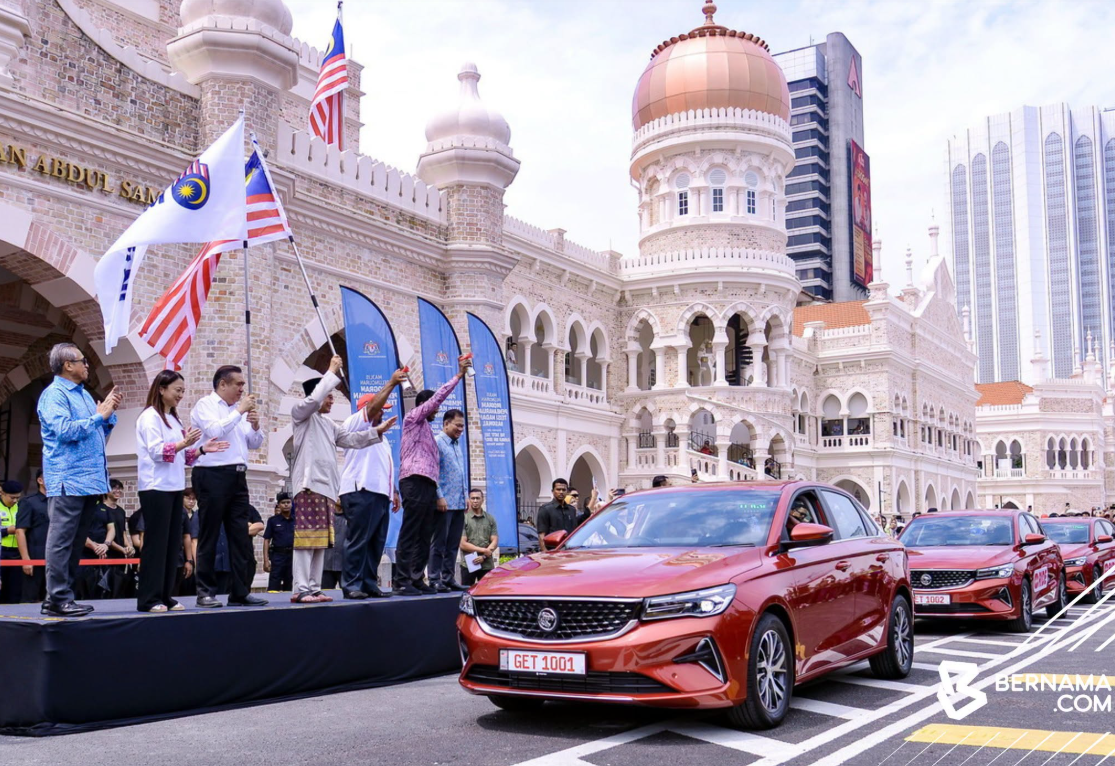
THE launch of the National Madani Taxi Reform Programme by Prime Minister Datuk Seri Anwar Ibrahim on July 3 has drawn inevitable comparisons with an earlier initiative launched more than a decade ago.
In March 2013, then-prime minister Datuk Seri Najib Razak introduced the Teksi 1Malaysia (TEKS1M) programme, which was intended to modernise Malaysia’s taxi industry. Despite ambitious goals, the initiative struggled to gain traction and eventually faded from relevance.
As the government rolls out Teksi Madani, it is worth examining why TEKS1M fell short and whether the new programme addresses the industry’s longstanding challenges.
One major problem with TEKS1M was the vehicle itself. The Proton Exora was selected as the flagship taxi, partly because its larger cabin could accommodate more passengers and luggage.
However, many drivers encountered persistent engine issues when operating on natural gas vehicles (NGV), the preferred fuel option due to its significantly lower cost compared with petrol.
Frequent repairs increased operating costs and reduced driver confidence in the programme. Many drivers eventually returned their vehicles, undermining the initiative’s objectives.
A second challenge emerged with the arrival of Uber in Malaysia in 2014, followed by the rapid growth of Grab. E-hailing services offered lower fares, greater convenience and shorter waiting times, quickly attracting passengers away from traditional taxis.
At the time, taxi fares were already under pressure. While many drivers argued that fares needed to be revised upward to reflect operating costs, higher fares made taxis less competitive against heavily subsidised e-hailing services.
When taxi fares were eventually increased in 2015, the move came too late. Many passengers had already migrated to e-hailing platforms, and the higher rates further reduced the attractiveness of traditional taxi services.
These developments highlight an important lesson: increasing fares does not automatically increase drivers’ income. If fares rise beyond what consumers are willing to pay, passengers simply seek cheaper alternatives.
This remains relevant today as policymakers consider measures to improve drivers’ livelihoods. Sustainable reform must balance the interests of drivers with the expectations of passengers.
Transport Minister Anthony Loke recently said taxi fare structures would be reviewed to ensure drivers are not left behind economically while encouraging greater integration with e-hailing platforms.
However, taxi participation in e-hailing services is not new. Many taxi drivers have already embraced platforms such as Grab to supplement traditional street-hail and advance-booking services.
Those who adapted benefited from a wider customer base, while others who relied solely on taxi stands and street pickups found it increasingly difficult to compete.
Where Teksi Madani differs from its predecessor is in its choice of vehicle. The Proton S70 offers substantially better performance and a more modern appearance than many of the ageing taxis currently on Malaysian roads.
The use of LED displays in place of traditional taxi toppers also gives the new fleet a cleaner and more contemporary image.
The programme also provides drivers with various financing options through collaborations involving DRB-HICOM, EON-Avis and participating financial institutions.
While this may help drivers replace ageing vehicles, financing support alone will not determine the programme’s success.
The central challenge facing the taxi industry today is not the availability of new vehicles. It is competition from e-hailing services, changing consumer preferences and the need for drivers to remain economically viable in a highly competitive market.
Malaysia’s taxi industry has received substantial government assistance over the years, including tax incentives, vehicle financing schemes and regulatory reforms.
While such support can ease the burden on drivers, long-term success will ultimately depend on whether passengers choose to use taxis.
In that respect, Teksi Madani should be judged not by the appearance of its vehicles or the scale of its incentives, but by whether it can attract passengers back to taxis while ensuring drivers earn a sustainable income.
The new Proton S70 taxis undoubtedly represent an improvement in image and presentation. Whether they can transform the industry’s fortunes, however, remains a much more difficult question.
YS Chan is a tourism, transport and training consultant.
The views expressed are solely of the author and do not necessarily reflect those of MMKtT.
- Focus Malaysia.

No comments:
Post a Comment
Note: Only a member of this blog may post a comment.