


Johor’s official campaign has hit its midpoint, with this important election remaining highly competitive.
With less than a week to go, 18 seats remain open, a third of all constituencies.
Indecision over who to support and whether to come out to vote remains high, especially among the decisive bloc of young voters.
As the campaign has evolved, there have been gains by both BN and Pakatan Harapan in consolidating seats, with Perikatan Nasional struggling to gain ground given its internal divisions.
Even in PN incumbent seats such as Maharani and Endau, this coalition is facing tough fights.
The toughest fights are for the smaller parties, Muda, Bersama, PSM, and the Orang Asli party.
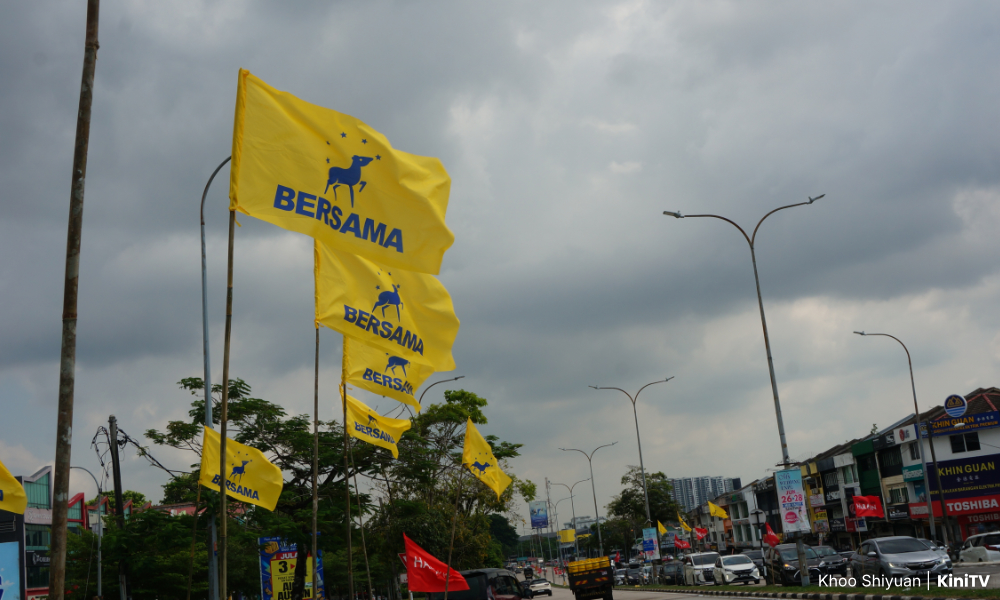
These parties are fighting all out for visibility and electoral traction, hoping that splits in voting will work in their favour, without losing their deposits.
Seemingly the same
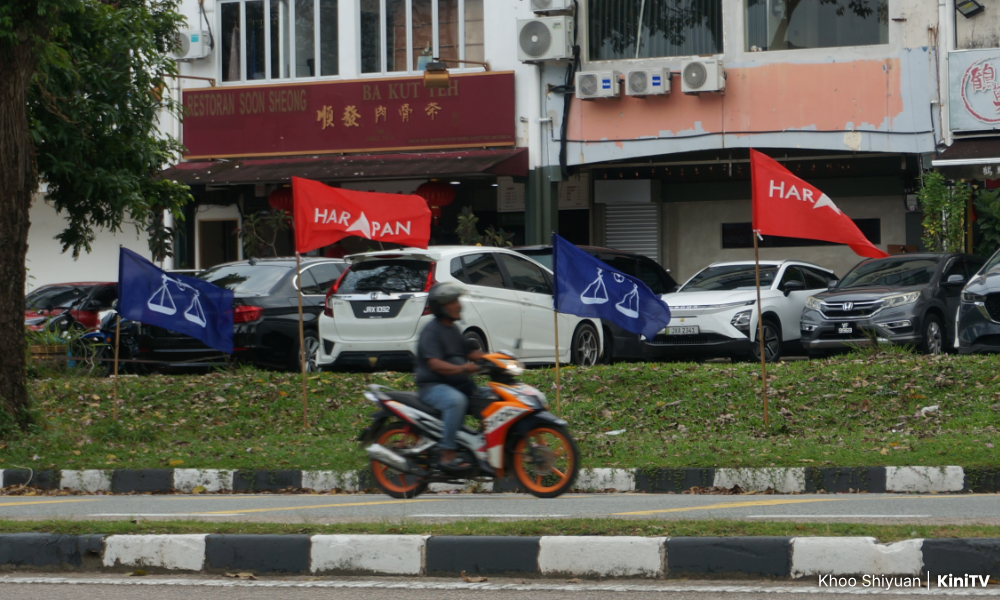
On the surface, this election looks like the pattern Malaysia has seen in recent Peninsular Malaysia elections - three dominant coalitions fighting each other, with the same dominant players and similar ethnic mobilisation of voters.
Smaller parties are similarly trying to change the system, facing serious hurdles in doing so in a first-past-the-post system that favours established players.
There are similar modes of voter engagement. Harapan is criticising Umno/BN, and they are responding in kind, mostly featuring a negative attack mode.
DAP is tapping into fear of PAS, responding to PAS’ calls to vote along ethnic/religious lines.
These dynamics are not new - attacks, fear, and ethnic insecurities are the usual repertoires of Malaysian campaigns.
The dominant political narratives are to vote for the same - to keep to the steady deliverable leadership of BN’s Johor caretaker menteri besar Onn Hafiz Ghazi or to keep to the ongoing transformation promises of Prime Minister Anwar Ibrahim’s Harapan.
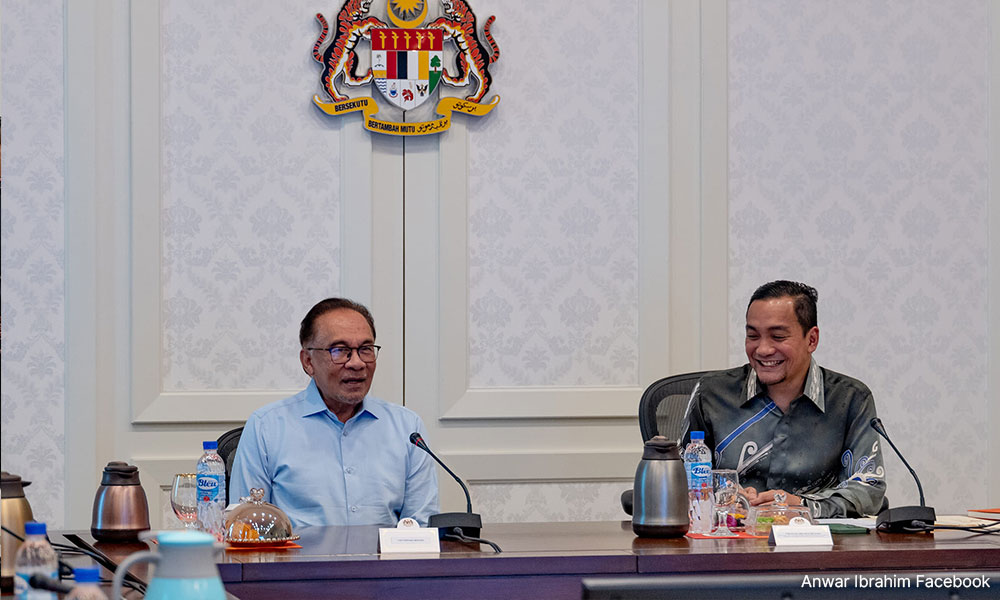
Coalitions are hoping that core voters will stay loyal to their traditional support patterns. These are also not new.
Yet, fundamentally, this is a different election. Johor’s 2026 election is standing out for how the ground of Malaysian elections is changing. Let me unpack the main changes.
A different mood
Observers have remarked that there is “no mood”. Indeed, this election lacks excitement and is missing “hope” for change. There is a mood, but a different one than in the past.
Voters are more distrustful of all the political parties, politicians, and coalitions than in previous elections, while parties are simultaneously more unsure of voters’ loyalties than before.
Electoral volatility - a history of significant swings in voting - and unease over political alliance formation have left their mark.
Many voters see the parties as much the same. All too often, voters will remark that the choices are “sama saja” (just the same) and highlight that their vote will not make a difference when the parties are not different from each other and are working with each other.
I call this the “sama phenomenon”. This observation is more often expressed by Chinese and Indian voters, who noticeably show their frustration, disappointment, and sense of disempowerment from a lack of deliverables in addressing the challenges facing these communities.
A different response
This has led observers to highlight that Chinese voters in particular - so pivotal in Johor’s multiethnic constituencies - may punish Harapan this round.
The focal point of the dissatisfaction message is resonating in the more urban areas of Johor, in seats such as Johor Jaya and Bukit Batu.
Analytically, the memory of the 2019 Tanjung Piai by-election remains sharp.
Other observers have also said this sentiment could help smaller parties such as Bersama and Muda, who are positioning themselves as alternatives to capture protest voting, yet are limited in their capacity to show how they will be able to deliver on being different.
This mood was first evident when Muda came on the scene in 2022, a dynamic that Bersama hopes to replicate.
So far, most of these campaigns have struggled to gain traction against the main coalitions.
Political conditions today are not the same. They are more complex, mixing emotions and realism in a different political cocktail.
Clearly, many voters are dissatisfied. Yet the sentiment ranges from ambivalence to anger, and remains in flux, competing with mobilisation efforts tapping into ethnic insecurities, pragmatic concerns about the need for government access and careful assessments of candidates/incumbents locally, all developed below.
Analyses that claim dissatisfied voters will vote one way over one issue (Harapan’s performance) are too simplistic and not well grounded in the varied considerations of voters being discussed from kopitiams to family dinners across a diverse state.
A different enemy
This campaign is different in another way; there are strong ethnic emotions at play over possible electoral alliances.
Umno-DAP is gone from electoral salience, as the Johor campaign - especially online - has become a bitter one between these former frenemies.
DAP is returning to issues such as former prime minister Najib Abdul Razak (which strangely does not fit easily into a state election as the decision on his release/pardon is a federal matter) and has replaced the campaign alliance attack line with Umno-PAS, responding to early statements by PAS in the campaign.
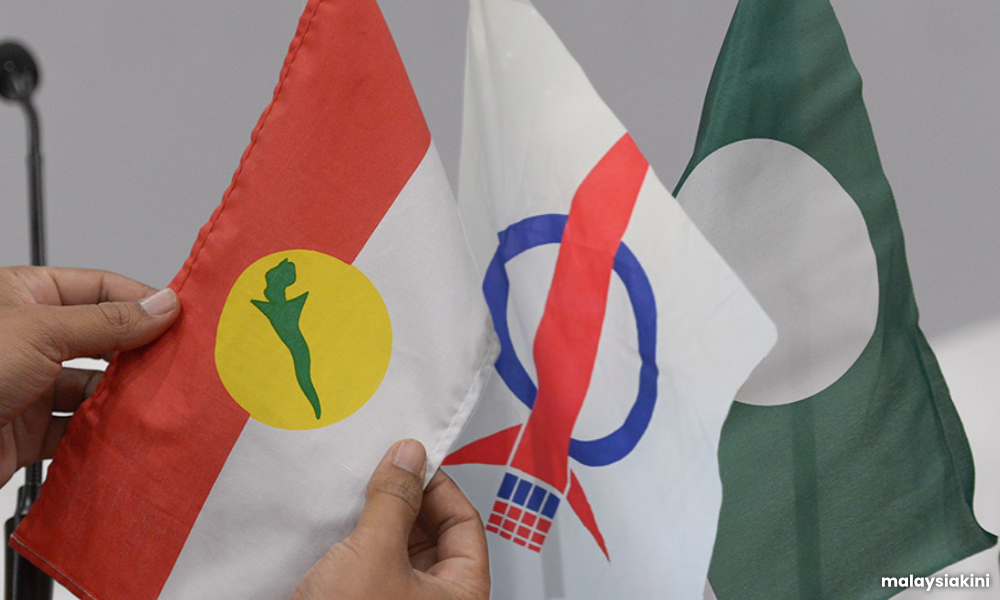
This is not just about political alliance relationships or mobilising fear of PAS’ religious conservatism.
It is a deepening of racialised politics where political power is being portrayed in zero-sum ethnic terms, with Umno-PAS being seen as adding to the insecurity and exclusion that non-Malay voters perceive.
Ironically, DAP’s campaign has become similar to that of PAS/PN, mobilising ethnic loyalties, perceived differently across communities.
The reality is that if one steps back and looks at the history of Johor politics, the likelihood of an Umno-PAS government in Johor is minimal at best - effectively zero.
PAS does not have strong machinery in the state, and its recent political gains came from its alliance with Muhyiddin’s Bersatu, which has soured.
Umno/BN is aiming to win a majority, and any coalition with a majority will not need to share power.
The Umno-PAS narrative also ignores the fact that for all its weaknesses (and there are many), BN is a multi-ethnic coalition; it has fielded a considerable number of MIC and MCA candidates in these polls, 19 seats in total (four and 15 respectively).

This marks a return to greater inclusion of BN’s non-Malay partners, who were pushed out in recent polls such as the 2023 state elections, though it comes with considerable disgruntlement within parts of Umno - for example, over the fielding of an MCA candidate in Layang-Layang.
Ironically, the use of the Umno-PAS narrative is weakening the chances of a multi-ethnic government, undermining the highly competitive MCA seats, such as Yong Peng and Pekan Nanas, and Chinese representation more broadly.
Parties nevertheless continue to use the same enemy-alliance campaign repertoire, even if who the enemy is and how they are tied together has changed.
In a focus on expedience, little attention is being spent on the consequences of using rising ethnicised mobilisation, which will inevitably impact alliances nationally - history has shown that this type of campaigning can yield results but comes with high costs.
A different place
No doubt, the Johor campaign has become a national one, taking on elements from the Umno-PAS narrative and attacks on Umno/BN to differing portrayals of the Anwar-led federal government.
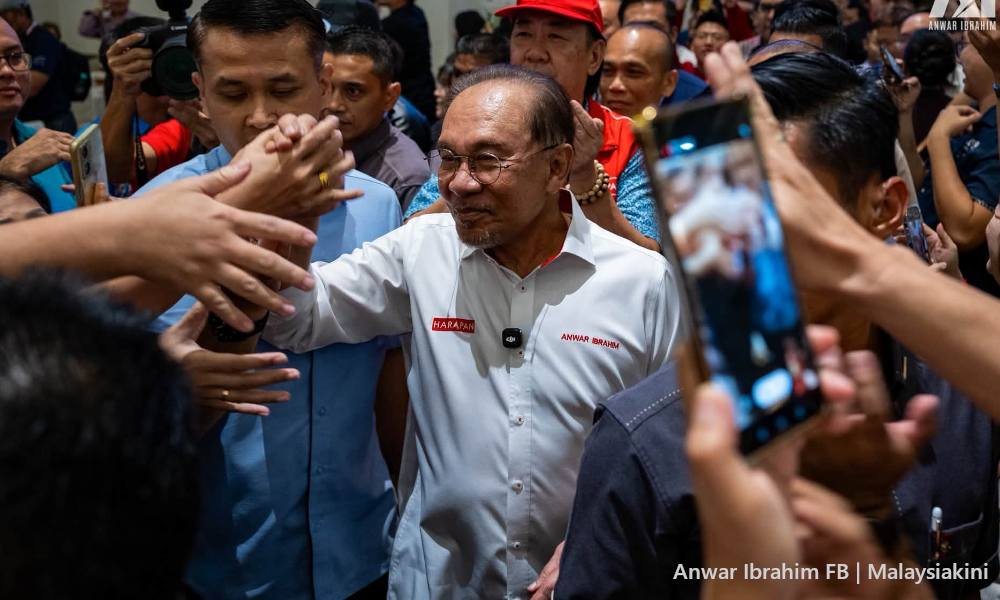
Yet this is a state election in a state with its own political culture. The reality is that Johorean voters are unique. Bangsa Johor is a key foundation of her identity, with multiethnic living shaped by a complicated, intertwined history of community and tensions.
The political economy in Johor is different, dominated by small businesses and regionally oriented, with ties to Singapore and Indonesia shaped by proximity that varies across the state.
These elements are influencing voting, increasing the prominence of pragmatism that Johoreans are known for.
The focus on the business environment, development, and livelihoods remains the main concern of voters. Johoreans are demanding and expect more from all the coalitions.
What makes this campaign different from earlier ones is the prevalent economic insecurity.
Survival is a concern for all too many Johoreans. Amid the disappointment, ethnic insecurities and increased information, voters are regularly asking what is the best for Johor, best for my family, for me.
There is a narrowing of the assessment of what is best, as “best for my family” and “best for me” are gaining traction.
More voters are navigating the political noise, not by embracing it as they did in earlier Malaysian campaigns, but by tuning it out and focusing in.

Here is where the candidate factor has gained importance compared to earlier polls focused on party, with greater attention on the candidate’s past performance and/or promise(s).
Strong incumbents are maintaining support across ethnic groups, such as in Buloh Kasap and Pasir Raja, while newcomers are fighting to show their connections to power and abilities.
This is especially the case for younger candidates. Parachute candidates are being actively rejected, except in a few diverse urban areas where outsiders like PKR’s Mazlee Malik in Puteri Wangsa are seen as more acceptable - at least for some in this highly competitive seat.
A different campaign
What has also distinguished this campaign is the lack of resources, especially for Bersatu, compared to the 2022 state campaign. This is (not yet) a campaign driven by spending and patronage to the same degree as in the past.
The comparative lack of resources has meant campaigns got off the ground slowly. Billboards only started to come up in some locations in the past few days. Campaigners still speak of fund shortages across parties.
Only Umno/BN and DAP campaigners are actively working the ground with any consistency across the contests. Other parties are constrained in their ground mobilisation by challenges in machinery and resources.
Where the campaign momentum has caught fire is online. Fed by artificial intelligence, the messages are booming with a plethora of narratives in active story (re)telling.

Ceramah have become photo ops and places to find video snippets to post online - secondary to where decision-making is being made.
Part of the reality is that the Johor election is being experienced differently in a more siloed manner.
Given the share of voters relying on social media for their information, this has made the campaign more fluid, particularly among voters who are considering whether to come back to vote and have relied more on their smartphones.
The final days will be intense for the outcome, depending on whether they return to vote.
Given the interaction of these different factors - the sama phenomenon, the ethnicised campaigning, the self-focus, fewer resources, and the rapid information shifts - it is no wonder the campaign remains open in so many seats.
It will settle more in the days ahead as voters sift through their priorities, and the campaign rhetoric intensifies.
What is evolving, however, is a new dynamic of campaigning, less cohesive, less predictable and less meaningful for those experiencing it - even as voting in the highly competitive contests will matter more in shaping the result. - Mkini
BRIDGET WELSH is an honorary research associate of the University of Nottingham’s Asia Research Institute, a senior research associate at Hu Fu Centre for East Asia Democratic Studies, and a senior associate fellow at The Habibie Centre. Her writings can be found at bridgetwelsh.com.
The views expressed here are those of the author/contributor and do not necessarily represent the views of MMKtT.

No comments:
Post a Comment
Note: Only a member of this blog may post a comment.