


JOHOR POLLS | As politicians tout their campaigns for the Johor state election, a concerning refrain appears to be emerging among Chinese voters in small urban areas: some might not turn up to cast their ballots at all, no matter how many promises are made.
Interviews conducted by Malaysiakini among voters in several state seats indicated that the apparent fatigue among residents runs deeper than misgivings against any single party or candidate, with most making it clear that their apathy is not due to a lack of knowledge regarding the election.
Instead, what came up repeatedly was a sense of unaddressed frustrations resulting in a calculated move to withhold their vote, evidenced by their comments insisting that voting changes little, coupled with their belief that those elected will disappear after polling day.
In at least one household, the distrust has become deep enough to pass down to the next generation, with one elderly lorry driver speaking of his decision to tell his children working in Kuala Lumpur not to bother coming home to vote.
Speaking during a break between his rounds collecting recyclable materials from factories, Lim (not his real name) said his instruction this time around is a stark reversal compared to prior elections when he would encourage relatives to travel back.
“(Previously), no matter how far they were, I would tell them to come back and support ‘rocket’ (DAP) as well as (Pakatan Harapan chairperson and prime minister) Anwar Ibrahim, but what have they done for us?” he questioned.
“A lot of other Chinese people are saying to come back and vote for Harapan, but I don’t want to vote - there’s no ‘feeling’.
“I might as well rest at home and watch football,” the Bukit Naning voter said when met at a kopitiam in Bukit Bakri.
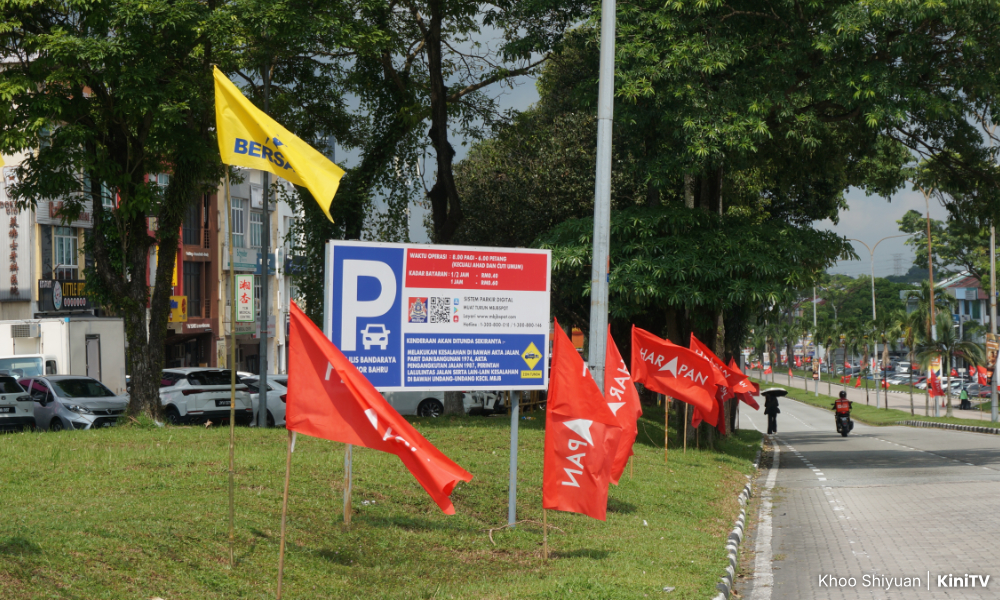
Like many other voters, Lim’s reasons for disengaging from the state election were mostly related to matters which affected his livelihood, including road transport regulations he associated with DAP secretary-general-cum-Transport Minister Anthony Loke.
Between a rock and a hard place
While Lim conceded that the rules are probably beneficial in principle, he said they still left him feeling pressured as he is caught between doing right by the law and forking out hard-earned funds over matters he has little say over.
Accusing government leaders of being disconnected from the plight faced by ordinary citizens, the senior citizen lamented: “Whoever wins, I will still be a lorry driver.”
His apathy is such that even his fears that PAS may one day rule the country and oppress minorities do little to motivate him to cast his ballot.
For Lim, it has come to the point where he said that if he could afford it, he would have left the country.
Lim’s grievances point to a wider dynamic supposedly shaping ground sentiment ahead of the state election: frustrations with federal-level policies and personalities could be bleeding into how voters approach what is, on paper, a separate state-level contest.
‘Whoever wins, Chinese will struggle’
The situation was further exemplified by a Mengkibol voter, Chua (not his real name), who expressed similar sentiments in painting a bleak picture of the economic pressures shaping his outlook on the polls.
“Times are hard now; even earning a living is difficult. I’m too tired to even vote,” he said while manning a stall at a night market in Kampung Paya.
He noted that as someone who isn’t particularly inclined to any one party, he remains undecided on whether he will turn up at his voting centre on July 11, saying: “If there are only two candidates, I’ll give my vote to whoever I think is good.
“If I don’t like either of them, then I won’t go vote. I’ll see how I feel on that day.”
Chua added that his reluctance to head to the polls is also fuelled by a broader disillusionment over how politicians typically engage voters in a seemingly transactional relationship, which tends to evaporate once ballots are counted - an assessment supported by numerous other voters. - Mkini

No comments:
Post a Comment
Note: Only a member of this blog may post a comment.