


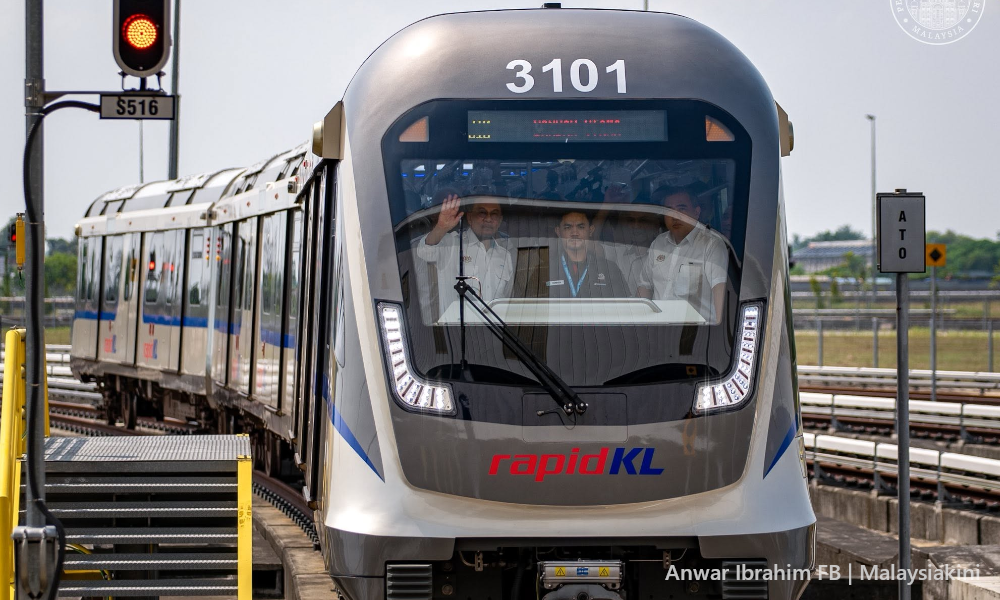
It is a great relief that, finally, after massive delays, realignments and costs, the LRT3 Shah Alam line is now running. For the estimated two million people living along the route from Klang, through Shah Alam to Bandar Utama, that’s a great relief.
After waiting more than six years, they have an alternative route into town with the Glenmarie and Bandar Utama interchanges connecting them to all parts of Kuala Lumpur instead of the congested roads.
The immediate impact is that commuters no longer have to clamber into cars for a long, arduous drive into town. As Selangor ruler Sultan Sharafuddin Idris Shah himself said, husbands and wives working in far-off Kuala Lumpur do not have to come back home way after dinner time.
Kuala Lumpur is not that far off, actually a mere 20 to 40km away depending on where you live, but at peak times it can take two to three hours to reach your destinations. You can reach Johor Bahru by that time on a good day.
And if it rains, you are stuck in a major crawl. You might as well wait until after 8pm before heading home, but even that is not guaranteed to be much better with the North Klang Valley Expressway and the Federal Highway chock-a-block.
Relief masks problems
The sheer relief over the completion of this long-delayed part of the Klang Valley transport system masks many unanswered questions to this day.
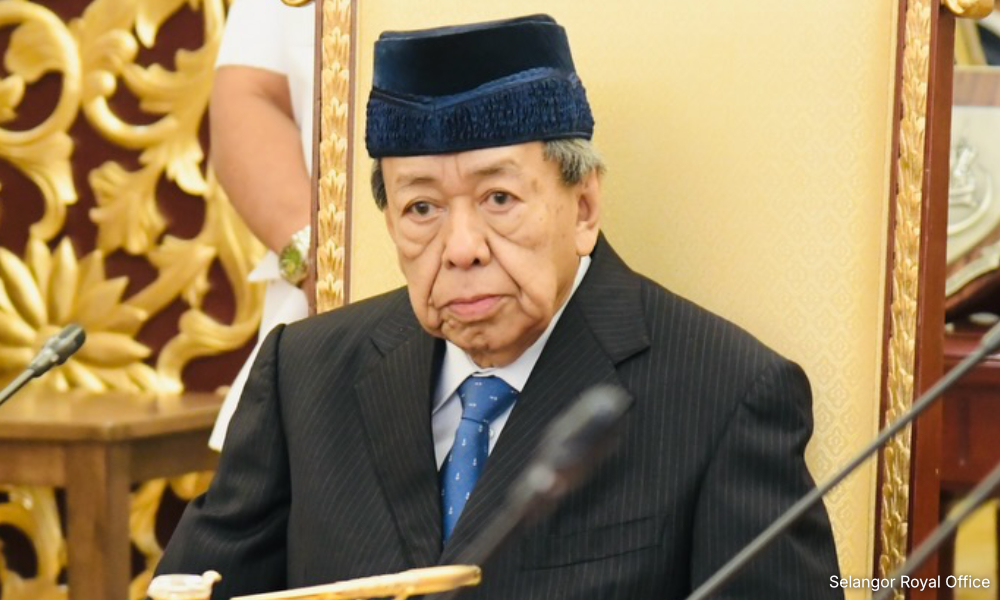
The Selangor ruler raised some of them in a statement while appreciating Najib Abdul Razak and Anwar Ibrahim and blaming DAP’s Lim Guan Eng and Tony Pua for cutting back on costs.
Many of the problems and delays relate to the way contracts are awarded to connected companies in Malaysia, which introduces layers of intermediaries under a political patronage process that effectively increases costs and results in massive inefficiencies and cost overruns.
Najib had approved the project back in 2016 when he was the prime minister, while Anwar had reinstated some of the cuts that had been made by Lim when he was finance minister from 2018 onwards. Pua was assisting Lim at the time.
It cannot be denied that Lim and Pua made a huge cut in expenses from RM31.7 billion to RM16.7 billion, a massive reduction in costs by nearly half.
The reinstatement of some stations, to be completed by 2027 and operations the following year, drove the cost up by RM5.3 billion to RM22 billion.
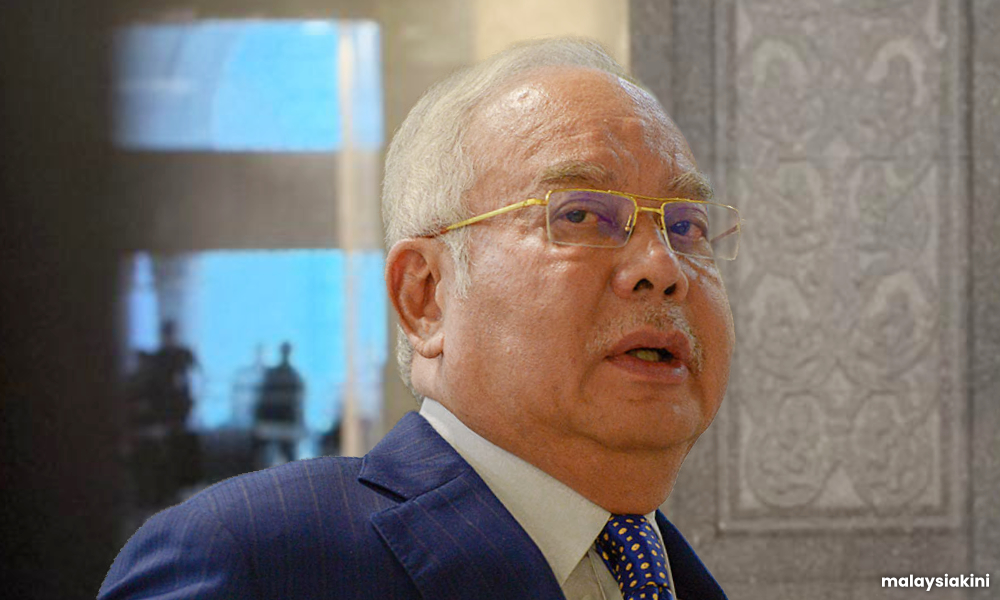
However, Pua said in July 2018 Najib was “not entirely lying” when he disputed the Pakatan Harapan-led government’s figures on the cost of the LRT3 project. Harapan came to power in May 2018.
He said this is because the Pekan MP was probably unaware that the cost of the project had ballooned, despite having signed off on the Work Package Contracts (WPC) that were awarded in March 2018 for the project.
That’s an indication that the system is prone to abuse by adding in expenses subsequent to the award of the project without the knowledge of the ministers, yet another weakness of government procurement which goes unmonitored.
No clear reason for delays
It’s not clear why these changes in 2018 resulted in a delay of the project from a completion date of 2020 to 2024 and then subsequently to 2026 - an inordinate delay of six years, which has postponed benefits considerably.
I have not been able to find a good and proper explanation for these delays, which have prolonged the agony of the lengthy daily commute for some two million people living in that corridor and caused daily traffic congestion.
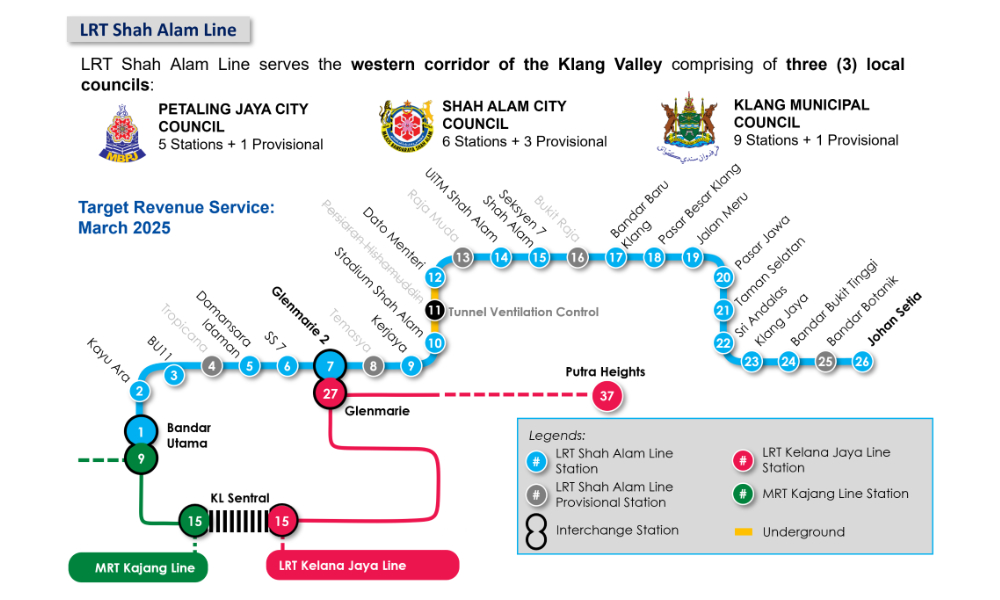
The map gives a good outline of the route and the areas that it covers, with provisional stations included.
That the project was required is not in dispute - it’s the way the contract was awarded, the companies to which it was awarded, the opaque way, the many layers before it lands on the companies doing the job, and others.
They all lead to delays and high costs.
As is common with most large projects in Malaysia, the Shah Alam line was awarded to intermediaries who then got the expertise and obtained contractors to build the lines, adding layers to costs. This prevails to this day as part of the political patronage process.
Government-owned Prasarana Malaysia Berhad awarded the contract to two politically connected companies under the so-called project delivery partner (PDP) process, which gives them the sole right to pick contractors and the way to execute it.
The PDP route is a flawed one. They get paid a commission of six percent or more of the cost of the project. There is an inbuilt incentive for them to go for a higher cost. The more efficient way is for Prasarana to decide, with expert opinion, the requirements.
Then it is a simple matter to decide on the various packages, call for tenders, eliminate all intermediaries and deal directly with principals. Appointing a good overall consultant of international repute will help and ensure that all is done with costs kept down, timeliness and effectiveness preserved.
The Star reported that Prasarana had announced in September 2015 that MRCB George Kent Sdn Bhd (a joint venture between Malaysian Resources Corporation Bhd and George Kent Sdn Bhd) had been appointed as the PDP for the project, which Najib officially launched on Aug 24, 2016.
Fundamental change needed
The PDP format was then abandoned. MRCB officially bought out George Kent’s entire 50 percent stake in the joint venture for RM53 million, taking 100 percent control of the entity and renaming it Setia Utama LRT3 Sdn Bhd in 2021.
George Kent chairperson and major shareholder at the time was businessperson Tan Kay Hock, said to be close to Najib, who was prime minister then.
MRCB’s major shareholder is retirement fund the Employees Provident Fund (EPF) with a 36 percent stake. The executive vice-chairperson of MRCB is Salim Fateh Din, who, in the past, was said to have been close to Umno and currently to Anwar.
Salim, according to company records, has a 15.4 percent interest in MRCB. He is also MCMC chairperson, reappointed for a second two-year term by Communications Minister Fahmi Fadzil on March 1 last year.
The Shah Alam LRT3 project went through major changes and has cost the public dearly through a system where there is heavy patronage in the award of contracts, many layers before actual contract award and much political and other interference.
If these blocks are removed and if professionals handle these projects with appropriate policy guidelines from the top political leadership, then improvements can be expected.
Otherwise, expect these episodes to be repeated as they have regularly been for decades in many of our mega projects. - Mkini
P GUNASEGARAM says we need a fundamental change in the way contracts are awarded to cut corruption and patronage to the bone.
The views expressed here are those of the author/contributor and do not necessarily represent the views of MMKtT.

No comments:
Post a Comment
Note: Only a member of this blog may post a comment.