


JOHOR POLLS | BN is projected to retain its position as the ruling Johor government, with DAP potentially becoming the largest party in the opposition following the July 11 state election, according to political analyst Ibrahim Suffian.
Ibrahim, a programmes director at the Merdeka Center, opined that based on observations thus far, BN could keep between 40 and 42 seats in the election, with Pakatan Harapan component members Amanah and PKR possibly bagging one and two seats, respectively.
“By some accounts, we think that Umno’s position in Johor has improved from the 2022 general election, where we estimated that they obtained about 45 percent of the Malay votes back then.
“State-wise, I think the number has now crept up higher to about maybe 55 to 60 percent.
“We are expecting BN to win, (but) the big question mark is on the margin - will they get fewer than 40 seats or more than 40 seats?” he said during a webinar hosted by the S Rajaratnam School of International Studies today.
He noted, however, that such support is “not evenly spread”, as while the BN lynchpin is a more formidable force in the rural and east coast parts of the state, Harapan and Bersatu are “stronger” in west coast areas.
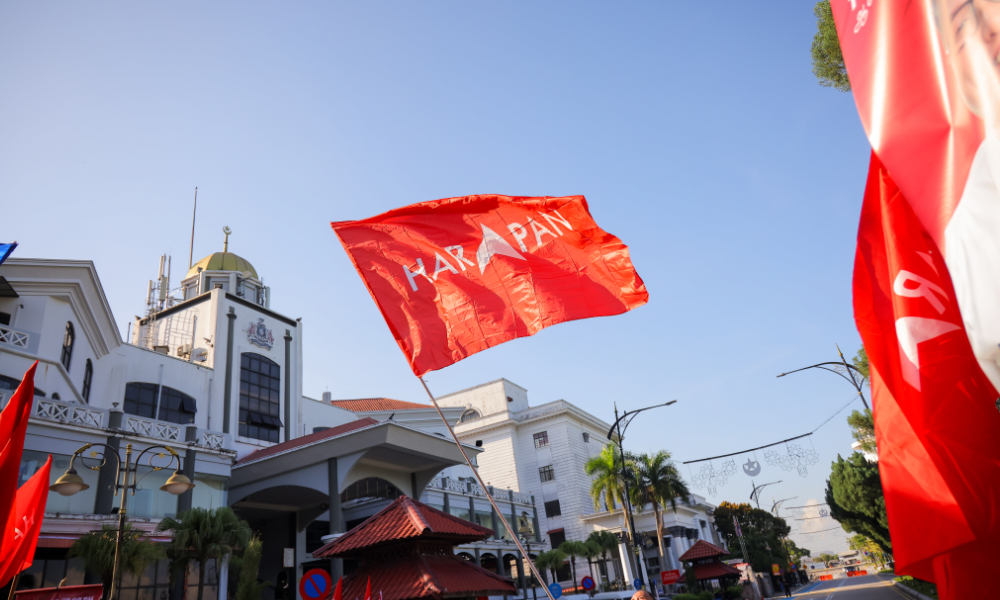
During the March 2022 state election, BN secured 40 seats within the 56-seat Johor assembly, with Umno holding a major share at 33 seats, followed by MCA (four) and MIC (three).
DAP controlled 10 seats to Bersatu’s two, while PKR, Amanah, PAS, and Muda each held one seat.
‘Clear advantage’ for BN
The Merdeka Center co-founder pointed out that BN’s position at the helm of the state administration prior to the dissolution of its legislative assembly meant that the coalition entered the state election with a “clear advantage”.
Referring to a survey conducted in May before the dissolution of the Johor legislature, Ibrahim shared that caretaker menteri besar Onn Hafiz Ghazi garnered broadly positive ratings among Johoreans across all major racial groups and ages.
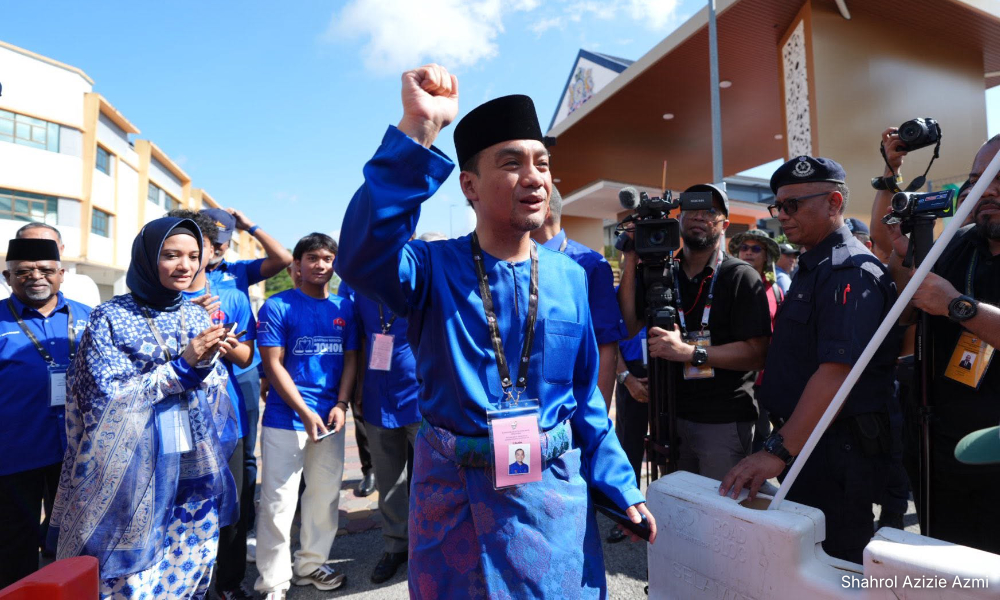
Similar backing could also be seen in the rating comparing the state and federal government, with the survey finding that nearly two-thirds of Johoreans are happy with the state administration’s management of economic matters.
“The state government received a 79 percent approval rating, yet at the federal level, only 44 percent are satisfied with the federal government - I would say this is largely due to partisanship as only maybe about one-third of BN voters will give positive ratings for the federal government.
“This also speaks of the lack of voter transferability between the two parties (as) you have a situation whether BN supporters see the current (federal) government as a Harapan government because it’s led by a Harapan prime minister,” Ibrahim said.
However, he stressed that “ratings” might not translate into votes, referencing a previous Merdeka Center survey which put Prime Minister Anwar Ibrahim in the lead in terms of support from non-Malay and overall respondents.

“If people are saying that he got such high ratings, so he must win the election, no - it just means that people appreciate what he’s trying to do.
“They’re giving him decent scores, but when voting time comes, they have a lot of other considerations that come into play,” he said.
PAS-BN cooperation could backfire
Besides “strong backing” from the Johor palace for BN and Johor-founded Umno’s opportunity to capitalise on fragmentation within their opponents, Ibrahim said PAS’ decision to support BN’s bid at the state polls would serve in the coalition’s favour.
On the flip side, he cautioned that the apparent PAS-BN cooperation could lead to undesirable effects, particularly among non-Malay voters.
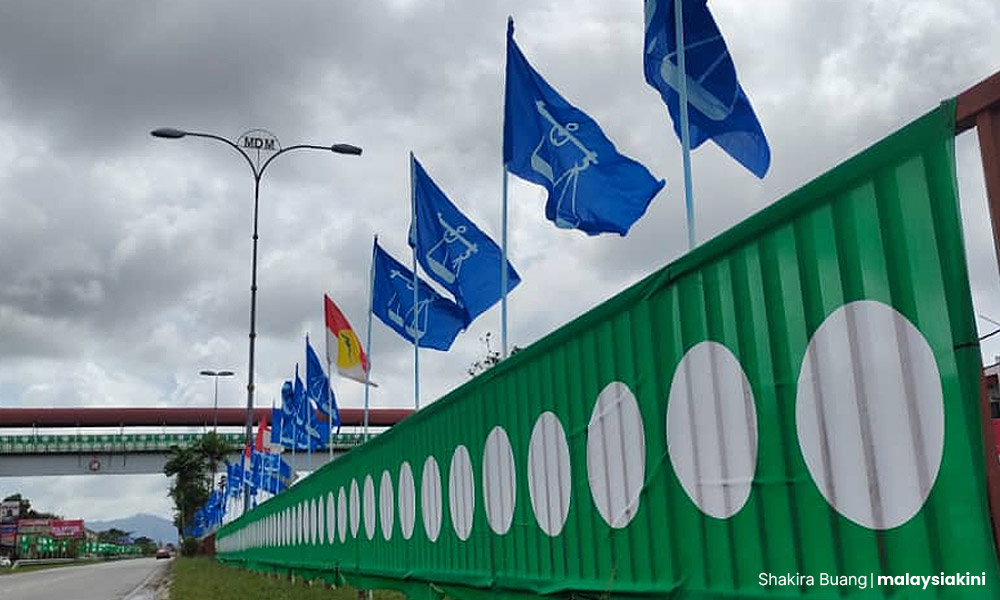
“While some non-Malay voters have expressed dissatisfaction with the ruling coalition (BN) and Harapan, citing some unmet expectations and frustrations over reform promises, there could be a backfire (from PAS’ involvement).
“With PAS and Umno working together, it makes it harder (for non-Malays) to vote for an MCA candidate, partly because many of the non-Malay voters, especially ethnic Chinese, will continue to not want to touch PAS with a 10-foot pole,” Ibrahim said.
He added that the Johor election, where early voting is scheduled for tomorrow, is also perceived as a bellwether that could provide key insights on anticipated political happenings nationwide.
“If we take it together with the upcoming Negeri Sembilan polls, we’ll see whether Umno has truly consolidated (and) revived itself, as well as whether the ‘Green Wave’ led by PAS through Perikatan Nasional has reached its peak and decarbonated, or otherwise.
“(BN’s win in Johor) could also hint at the viability of Umno’s strategy on moving alone - is it something that can deliver them returns in the future general election?” Ibrahim detailed.

Negeri Sembilan voters will cast their ballots on Aug 1, about three weeks after their Johor counterparts.
He further predicted that the voter turnout for the polls this Saturday could be “less than a general election”, with an estimated overall turnout of around 60-65 percent, including 70-75 percent of Malay voters and 55-60 percent of Chinese voters.
“Chinese voters, who are pivotal voters in this election, are generally satisfied with the state administration, but there is a noticeably low political interest in this election, and this has a risk of leading to lower turnout, which will adversely affect Harapan,” he said.
Which way will the youth go?
Citing Merdeka Center’s survey findings, Ibrahim said the younger bloc of voters, which make up about 40 percent of Johor’s electorate, are “not really sold” on identity politics or intensely loyal to party brands that are heavily situated within communal politics.
Instead, the group’s concerns were mostly focused on issues surrounding the cost of living, the economy, and housing, with such pressures potentially causing them to lash out at those associated with their troubles.
Responding to a question regarding his thoughts on former Umno supreme council member Puad Zarkashi’s assertion that Umno is “controlled by” the Johor palace, Ibrahim said the matter could lead to PAS or Bersatu securing a portion of youth votes.

“With respect to Puad’s revelation and his subsequent resignation from Umno, I think that’s something that also speaks to the younger generation of Malays,” he noted.
“If we look at, say, the social media space, comments from younger Malays have been less than respectful when royal figures go into political topics or talk about issues that do not seem to be their space.
“Younger voters in the 20-year-old range do have a sense of unfairness against the system against them, which they have decided to take out on any powerful figure, partly because this segment of voters does lead very financially distressed lives,” he added.
As such, he said the survey had found that younger Malay voters are more keen to cast “protest votes” that could potentially benefit Bersatu or PAS, which are considered “more familiar” than Harapan. - Mkini

No comments:
Post a Comment
Note: Only a member of this blog may post a comment.