


The devastating flood in Nepal, triggered by a massive collapse of glacier ice and rock, is a stark reminder of how quickly environmental disasters can overwhelm communities and infrastructure.
The margin for error is narrowing. The past 11 years have been the warmest on record, and every additional fraction of warming increases the risks associated with heat, drought, and water stress.
The risks associated with resource-intensive development are also becoming harder to treat as hypothetical. In parts of the United States, communities living near major data centre developments have already become embroiled in disputes over water quality.
In India, meanwhile, data centre expansion is taking place in areas where communities are already grappling with declining groundwater and water scarcity.
Closer to home, Malaysia faces its own environmental pressures. Attention is turning to El Niño, a naturally occurring climate phenomenon associated with hotter and drier conditions in Malaysia.
The United States National Oceanic and Atmospheric Administration said the current event is strengthening, with a greater than 90 percent chance of becoming very strong during the northern hemisphere autumn and winter of 2026-27.

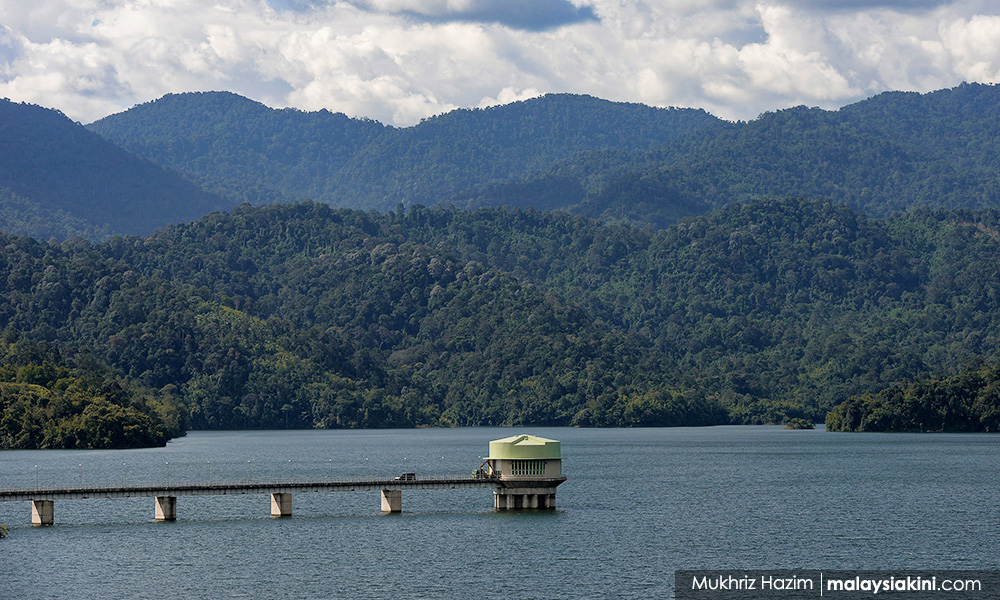
That outlook has sharpened concerns over Malaysia’s water security. On Aug 28, the National Water Services Commission (Span) reported that nine of 49 major dams supplying raw water in Peninsular Malaysia and Labuan were at warning levels, two on alert and one critical.
Against this backdrop, Malaysia is rapidly expanding another resource-intensive form of infrastructure: data centres.
Globally, data centres consumed an estimated 415 TWh of electricity in 2024, about 1.5 percent of global electricity consumption. The International Energy Agency projects this to more than double to around 945 TWh by 2030.
More significantly, data centre electricity consumption is expected to grow by around 15 percent annually over that period, more than four times faster than the growth in electricity consumption from all other sectors.
For Malaysia, the implications could be particularly significant. The Energy Transition and Water Transformation Ministry projects that data centres could account for as much as 31 percent of the country’s electricity consumption by 2035, up from about seven percent in 2026.
The issue, therefore, is not whether Malaysia should welcome data centre investment. It is whether the regulatory framework governing that expansion is keeping pace with the demands it will place on electricity, water and the environment.
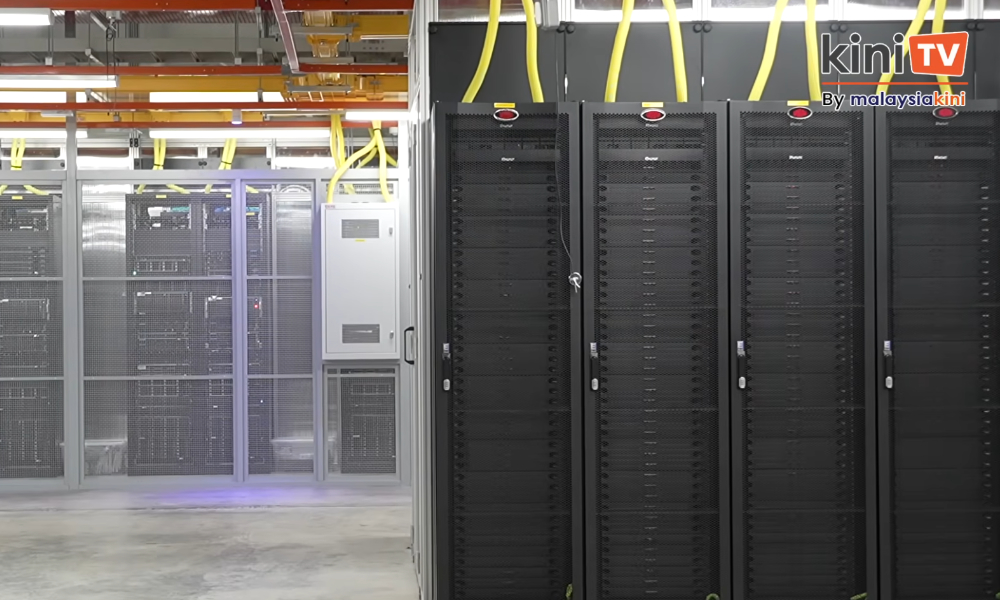
Malaysia is not starting from zero
It would be unfair to suggest that the government has ignored the environmental implications of the data centre boom.
The Investment, Trade, and Industry Ministry’s Guidelines for Sustainable Development of Data Centres use three internationally recognised measurements: Power Usage Effectiveness (PUE), Carbon Usage Effectiveness (CUE), and Water Usage Effectiveness (WUE).
PUE measures how much extra electricity a data centre needs beyond the power used by its servers. For example, a PUE of 1.4 means that for every one unit of electricity used by the computing equipment, another 0.4 units are used for cooling and other supporting systems.
WUE measures the amount of water used relative to the energy consumed by the computing equipment.
CUE, meanwhile, measures the carbon emissions associated with that energy use, taking into account whether the electricity comes from sources such as coal, gas, or renewable energy.
The guideline then translates PUE and WUE into measurable benchmarks. For the largest hyperscale facilities, it sets a design PUE benchmark of 1.4 or below and recommends a WUE of 2.2 cubic metres per megawatt-hour or lower.
Operators subject to the guideline must also monitor their actual WUE and disclose it annually.
Beyond this federal framework, Johor warrants particular attention given its emergence as Malaysia’s leading data centre hub.
The state has introduced its own Johor State Data Centre Development Planning Guidelines, issued by PlanMalaysia Johor.
The guidelines require data centres to follow industry best practices for PUE and to consider efficient water use based on WUE practices adopted by the industry.
Developers must also consult the relevant utility and regulatory authorities, including TNB on electricity requirements and Ranhill SAJ, Span, and Johor Water Regulatory Body on water-management requirements.
The state has since gone further by establishing a special technical committee to scrutinise proposed data centre projects, including their electricity needs, total water demand, and site suitability.
Johor has also required WUE to be below 1.8, with the state stressing that meeting the efficiency threshold alone does not guarantee approval if sufficient water is unavailable.
These are significant safeguards.
The question, therefore, is not whether Malaysia has data centre regulation. It does.
The harder question is which of these sustainability benchmarks are binding requirements, and what happens when actual performance falls short.
When does a benchmark become a rule?
The language of the existing framework is revealing. Miti’s guideline says operators “shall” declare certain measurements and “shall” continuously monitor and disclose actual WUE.
Yet WUE of 2.2 is expressly “recommended”. New data centres “should” avoid water-stressed areas, while operators “may” use reclaimed water.
The guideline specifically states that applications received by the Malaysian Investment Development Authority for tax incentives under the Digital Ecosystem Acceleration scheme up to Dec 31, 2027 are subject to its conditions.
There is nothing inherently wrong with a guideline combining requirements with recommendations. Not every sustainability objective needs to become an offence. But when facilities operate at hyperscale, the distinction matters.
Suppose a new facility is designed on the basis of a particular PUE and WUE, with projected electricity and water consumption. Three years after operations begin, its actual resource use is materially higher than anticipated.
What happens then?
Does the operator merely disclose the figure? Is corrective action required? At what point is efficiency considered unacceptable? And what consequence follows if an important benchmark continues to be missed?
These questions become particularly important because environmental scrutiny cannot end when planning permission is granted.
EIA only part of the answer
Malaysia’s Environmental Impact Assessment (EIA) system is mandatory where a proposed development falls within the prescribed activities under the Environmental Quality (Prescribed Activities) (Environmental Impact Assessment) Order 2015.
Data centres are not expressly identified as a standalone prescribed activity under that Order, although a particular data centre development may still trigger an EIA because other aspects of the project fall within a prescribed category.

Under Section 34A of the Environmental Quality Act 1974, where an EIA is required, it must assess the project's likely environmental impacts and the measures proposed to prevent, reduce, or control them before the prescribed activity proceeds.
Given the scale and resource intensity of today’s hyperscale facilities, there is a legitimate case for reviewing whether data centres of a certain size should themselves attract specific environmental assessment requirements.
But an EIA alone cannot solve the problem. An EIA largely asks what a development is expected to do before it begins.
A sustainable data centre regime must also ask what the facility actually does once it is operating.
What can we learn from elsewhere?
There is no single international model that Malaysia should simply copy.
Singapore offers a useful regional comparison. Like Malaysia, it operates data centres in a hot and humid tropical climate, but with far tighter constraints on land, water, and energy.
Under its second Data Centre Call for Applications, projects were required to obtain Green Mark Platinum certification, achieve a PUE of 1.25 or better at full IT load, and source at least 50 percent of their power through eligible green-energy pathways.
In August 2026, Singapore provisionally allocated 200 MW of new capacity to four operators under this framework.
The European Union takes a different approach. Data centres with an installed IT power demand of at least 500 kW must report their actual energy and water use every year using a common reporting system.
This gives regulators comparable information on how facilities are performing once they are in operation, rather than relying only on estimates made at the design stage.
The EU has not yet imposed a single PUE or WUE limit across all member states. Its approach, for now, is to make actual operating performance more transparent and easier to compare.
Ireland offers a cautionary example. Data centres accounted for just five percent of its metered electricity consumption in 2015, rising to 22 percent in 2024 and 23 percent in 2025.
Its experience shows how quickly data centre demand can become a significant part of a country's electricity system.
Ireland has responded by making new data centres take greater responsibility for the electricity they require. New data centres seeking a grid connection must provide enough generation or energy storage, either on-site or nearby, to match the maximum amount of power they want to draw from the grid.
They must also meet at least 80 percent of their annual electricity demand through additional renewable-energy projects in Ireland.
Germany goes further by making PUE an operating requirement for data centres covered by its Energy Efficiency Act.
Under the Act, data centres that begin operating from July 2026 must achieve a PUE of 1.2 or below on an annual average basis within two years, while older facilities must meet a PUE of 1.5 or below from July 2027 and 1.3 or below from July 2030. Breaches of these requirements can attract fines of up to €100,000 (RM470,000).
The German government has proposed revisions to some of these rules, but the broader principle remains significant: efficiency benchmarks can carry enforceable consequences rather than serving only as design targets.
Malaysia should not simply copy Germany’s numerical thresholds, given the significant differences in climate and cooling requirements between the two countries.
The next stage
Malaysia does not need to choose between becoming a serious digital hub and protecting its natural resources. The challenge is to ensure that the industry’s rapid expansion is matched by equally credible environmental safeguards.
For the largest facilities, Malaysia could establish clearer minimum operating standards for PUE and WUE, calibrated to local conditions, alongside standardised reporting of actual PUE, WUE, CUE, electricity consumption, and potable-water use.
Where mandatory standards are persistently missed, there should be a defined process for corrective action rather than disclosure being the end of the matter.
Electricity supply deserves particular attention. If data centres are expected to become one of Malaysia’s largest sources of new electricity demand, all new facilities could be required to source a minimum proportion of their electricity from additional renewable-energy projects.
The percentage should be calibrated to Malaysia’s own renewable-energy capacity, grid conditions, and energy-security needs.
Projects placing exceptionally large loads on the electricity system could then face additional requirements, such as providing energy storage or demonstrating how their operations will avoid placing undue pressure on grid reliability.
Water policy should develop in parallel. Greater use of reclaimed or other non-potable water could be required where technically feasible, particularly for the largest facilities, together with contingency plans for periods of water stress.
Malaysia should not simply copy foreign models. Different jurisdictions face different constraints, but their experience shows the range of tools available: conditions tied to access to new capacity, renewable-energy obligations, standardised reporting of actual performance and enforceable efficiency requirements.
Malaysia has already begun deciding what a sustainable data centre should look like. The next question is what happens when the numbers promised on paper are not the numbers delivered in practice.
For an industry built on data, environmental accountability should ultimately be driven by data too. - Mkini
THULASY SUPPIAH is a lawyer focusing on artificial intelligence, data centres and cybersecurity.
The views expressed here are those of the author/contributor and do not necessarily represent the views of MMKtT.

No comments:
Post a Comment
Note: Only a member of this blog may post a comment.