


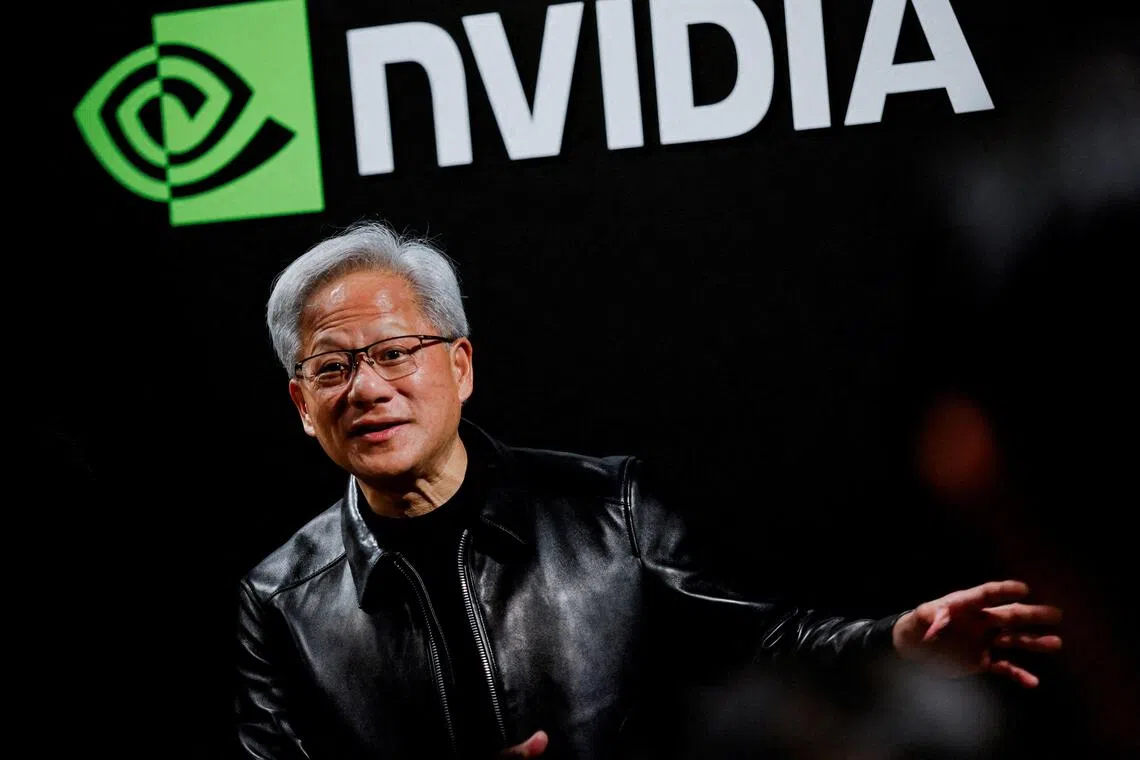
THE controversy surrounding Nvidia and its former chief executive Jensen Huang is a reminder that the global struggle for technological supremacy is no longer confined to semiconductor manufacturing, trade restrictions or military competition.
Increasingly, it involves intelligence gathering, corporate relationships, human networks and the protection of commercially sensitive information.
For Malaysia, the unfolding affair is a warning that economic development and national security can no longer be treated as separate policy priorities.
In November 2026, Nvidia’s board announced an independent investigation following reports that Huang had been targeted by a foreign intelligence operation involving Alice Huang, a Chinese businesswoman and former executive of Singapore-based Megaspeed.
Jensen Huang admitted to an extramarital affair but denied no specific espionage allegation, having not been accused of a crime. On Nov 12, he stepped down as Nvidia chief executive.
However, US Attorney-General Todd Blanche said the Justice Department had not reached a conclusion on whether Alice Huang was a Chinese spy.
Beijing has rejected the allegations, while Singapore has stressed that its own investigation into Megaspeed did not concern espionage.
There is no established finding that Nvidia’s proprietary chip designs or technological secrets were stolen.
Nevertheless, the controversy highlights a potential vulnerability: the intersection between corporate leadership, international commercial relationships and foreign intelligence interests.
The strategic value of technological secrets
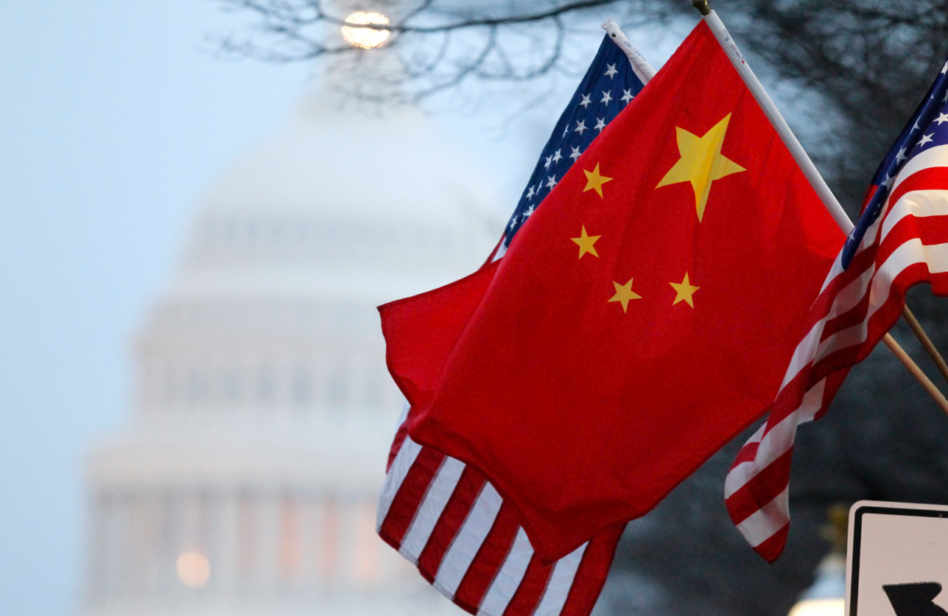
The United States and China are competing for leadership in artificial intelligence, advanced semiconductors, quantum computing and military technologies.
Advanced AI processors are particularly consequential because they support sophisticated computing, intelligence analysis, surveillance and military applications.
Washington has repeatedly raised concerns about Chinese economic espionage, intellectual property theft and attempts to circumvent export controls. The Nvidia controversy also demonstrates why intelligence threats cannot be examined exclusively through cybersecurity.
Cyber intrusions can expose confidential information, but human intelligence may provide access to commercial relationships, executive decision-making and sensitive corporate networks.
Semiconductor supply chains create additional vulnerabilities. International intermediaries, distributors, cloud providers and technology partners may provide access to strategically important products and information.
Export-control violations and intellectual property theft are distinct issues, but both can undermine technological advantage.
Malaysia must examine its exposure
Malaysia cannot assume these developments are exclusively American concerns. Under the National Semiconductor Strategy (NSS), the country aims to attract at least RM500 bil in combined domestic and foreign investment, develop local integrated circuit design capabilities, strengthen advanced packaging and train 60,000 high-skilled engineers.
These ambitions will elevate Malaysia’s position in the global semiconductor ecosystem. However, greater technological sophistication also increases exposure to industrial espionage, intellectual property theft and foreign intelligence collection.
The vulnerabilities extend beyond semiconductor manufacturers. Universities, research institutions, government-linked companies, telecommunications providers, financial institutions and data centres hold commercially and strategically valuable information.
Research partnerships and international investments can facilitate innovation, but inadequate oversight may expose sensitive technologies and unpublished research.
Does this mean Malaysia’s strategic assets have already been systematically penetrated by foreign intelligence agencies? There is insufficient publicly established evidence to reach that conclusion.
However, the absence of publicly demonstrated compromise should not be confused with the absence of vulnerabilities.
Moving beyond conventional cybersecurity
Malaysia has made progress through the Cyber Security Act 2024 (Act 854), which came into force on Aug 26, 2024. It establishes obligations for designated National Critical Information Infrastructure (NCII) entities, including cybersecurity risk assessments, audits and incident reporting.
However, cybersecurity legislation alone cannot address the entire spectrum of economic espionage.
Malaysia needs stronger coordination between NACSA, the National Security Council, law enforcement agencies and relevant ministries. Security assessments should extend to sensitive foreign investments, technology transfers, research partnerships and access to critical industrial information.
Companies operating in strategic sectors should strengthen personnel screening for sensitive positions, conflict-of-interest declarations, access controls and insider-threat monitoring.
Universities must also establish appropriate safeguards for commercially sensitive research without unnecessarily restricting legitimate international academic collaboration.
Investment screening should consider national security implications while preserving Malaysia’s attractiveness to legitimate foreign investors.
Greater intelligence-sharing with trusted international partners would further strengthen semiconductor security, export-control enforcement and protection against emerging technological threats.
Protecting Malaysia’s technological future

Sun Tzu’s enduring lesson is that strategic advantage often comes from understanding vulnerabilities before an adversary exploits them.
In contemporary geopolitical competition, national power increasingly depends on protecting information, intellectual property, technological capabilities and institutional integrity.
The Nvidia controversy remains an unresolved investigation, not proof of successful technological espionage. Nevertheless, it demonstrates why corporate governance and national security must intersect when companies control technologies with significant economic and strategic implications.
As Malaysia pursues its ambition to become a higher-value semiconductor and digital economy, it must recognise that technological advancement without adequate protection creates new strategic vulnerabilities.
The critical question is not whether Malaysia should welcome international investment and technological partnerships, but whether it possesses the institutional capacity to protect its national interests while doing so.
Economic competitiveness must be accompanied by intelligence preparedness. Otherwise, Malaysia risks becoming an increasingly important participant in the global technology race without adequately safeguarding the assets that will determine its future.
R. Paneir Selvam is the principal consultant of Arunachala Research & Consultancy Sdn Bhd, a think tank specialising in strategic national and geopolitical matters.
The views expressed are solely those of the author and do not necessarily reflect those of MMKtT
- Focus Malaysia.

No comments:
Post a Comment
Note: Only a member of this blog may post a comment.