


The political revival of the Umno following its historic defeat in the 14th general election in 2018 is one of the most remarkable developments in contemporary Malaysian politics.
Under the leadership of Ahmad Zahid Hamidi, Umno has demonstrated an extraordinary capacity for political survival, strategic manoeuvring and coalition management.
Although the party has yet to recover its former electoral dominance, Zahid has successfully restored Umno's position as an indispensable force in the country's political equation.
The question, however, is whether this revival represents genuine institutional renewal or simply the successful consolidation of political power by an astute party leader.
When BN lost federal power in May 2018, Umno faced an existential crisis.
Its association with the 1MDB scandal, public dissatisfaction with the previous administration and declining confidence in its leadership severely damaged the party's credibility.

Zahid inherited an organisation that had lost its governing position and was struggling to regain the confidence of its traditional Malay support base.
Rather than pursuing immediate institutional reform, Zahid's political approach increasingly focused on preserving Umno's relevance through strategic alliances, internal consolidation and the exploitation of changing political circumstances.
His subsequent political manoeuvres suggest that he understood something fundamental about Malaysian politics: a party does not necessarily need to command the largest number of parliamentary seats to exercise considerable political influence.
It needs to become indispensable to whoever seeks to govern.
Opportunity through Sheraton Move
The collapse of the Pakatan Harapan government in February 2020 through the Sheraton Move provided Umno with its first major opportunity to regain political influence.
Although Zahid was not the principal architect of the political realignment, Umno benefited considerably from the collapse of the Harapan administration and became part of the subsequent Perikatan Nasional-led governing arrangement.
Umno's relationship with PN, however, was never one of unquestioning loyalty. The party was simultaneously a coalition partner and a political competitor, particularly against Bersatu, which was attempting to establish itself as the dominant Malay political party.
This arrangement created an inherent contradiction: Umno wanted access to government power but was unwilling to surrender its historical position as the principal representative of Malay political interests.
And Zahid exploited this contradiction effectively.
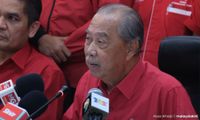
During Muhyiddin Yassin's premiership, Umno's internal pressure against the Bersatu-led administration continued to intensify.
In August 2021, Zahid and the Umno leadership withdrew support for Muhyiddin, contributing directly to the latter's resignation.
The subsequent appointment of Ismail Sabri Yaakob as Malaysia's ninth prime minister represented an important political achievement for Umno. Although PN's governing arrangement continued, the premiership had shifted to an Umno politician.
Zahid’s strategic moves
This demonstrated Zahid's ability to use parliamentary numbers and party discipline as instruments of political leverage.
Umno could support a government, when necessary, challenge it when politically advantageous and withdraw its support when the party believed a different arrangement would better serve its interests.
The pressure for an early general election continued under Ismail Sabri. Zahid and his supporters favoured returning to the electorate, believing that BN's victories in the Malacca and Johor state elections in 2021 and 2022 indicated an opportunity to restore its national political position.

The 15th general election, held in November 2022, nevertheless produced a hung Parliament. BN suffered a devastating setback, winning only 30 parliamentary seats, of which Umno secured 26.
Paradoxically, this electoral defeat created another opportunity for Zahid.
With neither Harapan nor PN securing the 112 seats required for a parliamentary majority, coalition negotiations became essential.
Zahid made the consequential decision to support Anwar Ibrahim and Harapan in forming the coalition government, rather than joining Muhyiddin's proposed alternative arrangement.
Harapan pact a boon to Umno
This decision transformed Umno's political fortunes. A party that had secured only 26 parliamentary seats regained access to federal power.
Zahid became deputy prime minister, other top Umno leaders secured important cabinet positions – including Khaled Nordin and Mohamad Hasan.
The political significance of this arrangement should not be underestimated. Umno had suffered its worst electoral performance, yet its president occupied the second-highest position in government.
Its political bargaining power had exceeded what its electoral numbers alone would ordinarily suggest.

This is where Zahid's political instincts become particularly evident. He recognised that political influence is not determined exclusively by electoral strength but also by the ability to negotiate, manage uncertainty and make oneself indispensable to competing political interests.
James Chai's analysis for the Iseas–Yusof Ishak Institute in 2023 provides an important explanation of how Zahid transformed his political vulnerability into institutional control.
His consolidation of the party presidency, appointment of loyalists and management of internal challenges strengthened his position within Umno even as the party struggled electorally.
However, the question of whether Umno has genuinely recovered its electoral legitimacy remains unresolved. Political survival and political rehabilitation are not necessarily the same thing. - Mkini
R PANEIR SELVAM is the principal consultant of Arunachala Research & Consultancy Sdn Bhd, a think tank specialising in strategic national and geopolitical matters.
The views expressed here are those of the author/contributor and do not necessarily represent the views of MMKtT

No comments:
Post a Comment
Note: Only a member of this blog may post a comment.