


Malaysians have been warned.
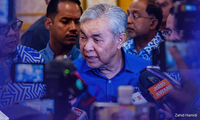
According to Umno-Baru president Ahmad Zahid Hamidi, questioning the convict Najib Abdul Razak's conditional pardon and his transfer to house arrest could amount to derhaka (disloyalty or treason).
Derhaka is a powerful word, often associated with betrayal, disloyalty and defiance of the ruler. The word also carries considerable historical, cultural and political weight.
We should ask Zahid, "What is stealing billions from the rakyat if not derhaka?"
If derhaka means disloyalty, should the word only be invoked when citizens question a decision involving the monarchy? Respect must be reciprocal, and authority comes with obligations. Those entrusted with power and the nation's wealth must also answer to the rakyat.
Honouring the monarchy should never come at the expense of respecting the rakyat.
In our constitutional monarchy, the Constitution provides for the king's powers, including the power of pardon (Article 42). It also provides citizens with rights to freedom of expression and peaceful assembly, subject to constitutional restrictions.
Questioning a decision is not automatically the same as rejecting the institution that made it.
Holding public officials accountable for their conduct is not derhaka to the country.
Scrutiny needed
When Zahid speaks of derhaka, does he realise that public office is also a position of trust? So, derhaka to whom? Why is the word being invoked against citizens questioning a decision, but not in discussions about the responsibilities of politicians entrusted with public money?
The rakyat is not the enemy of the monarchy. They can respect the royal institution without abandoning their own dignity, rights and constitutional protections.
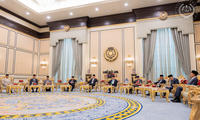
Respect works both ways.
What is Zahid's understanding of public office? A prime minister, minister or public official holds office in trust. What does loyalty mean when that trust is abused?
His remarks deserve scrutiny. Is Zahid defending the constitutional institution, or is his choice of words an attempt at discouraging legitimate public discourse?
Article 42 gives the Agong powers concerning pardons, but it does not make every public question about its exercise an attack on the monarchy.
Sadly, Najib's house arrest exposes the uncomfortable possibility that “One Country. One Constitution. One System of Justice” is little more than a convenient national myth.
If the law is supposed to be blind, does it need a different pair of spectacles when dealing with the powerful?
Lest we forget
Perhaps we should revisit Malay history.
Remember Hang Jebat? He challenged the sultan because he believed his friend Hang Tuah had been unjustly executed.
Was Jebat a traitor? Or was he standing up against an injustice? Even today, Malaysians debate whether Hang Jebat was a rebel or a man defending justice.
So, is questioning authority always wrong?
Second, what about the familiar Malay proverb, Raja adil raja disembah, raja tak adil raja disanggah? A just king is revered. An unjust king is challenged.
This is not a foreign imported concept but a part of our own Malay political and cultural tradition. Has Zahid forgotten?
Third, let us remember 1993.
Was Parliament being derhaka in 1993 when it amended the Constitution to remove the personal legal immunity of the Malay rulers? Or was it exercising its constitutional responsibility to ensure that nobody stood above the law?

There was growing unease among the rakyat following a series of incidents involving members of the royal households. Former prime minister Dr Mahathir Mohamad recognised the seriousness of the situation and understood that those occupying positions of privilege and authority could not be exempt from accountability.
If Parliament could insist on accountability in 1993, then why should the rakyat's questions about accountability today, in 2026, be regarded as derhaka?
Fourth, is Zahid's own confusion.
When Anthony Loke resigned as Transport Minister in protest over Najib's house arrest, Zahid praised him for standing by his principles and convictions.
Yet, ordinary Malaysians who questioned the same decision were warned that protests amounted to derhaka towards the monarchy.
Is dissent a democratic right, or is it only acceptable when it suits those in power?
Fifth, the Federal Constitution.
Article 42 provides for the Agong's pardoning powers. Article 10 recognises freedom of expression and peaceful assembly.

Respecting the Agong does not mean surrendering our constitutional rights; nor does questioning a decision automatically mean rejecting the monarchy.
Billions of ringgit were misappropriated from 1MDB, and the SRC International case involving RM42 million was a small part of the wider scandal.
The fallout from the 1MDB scandal extended far beyond Najib, damaging Malaysia's international reputation, burdening its public finances and eroding the rakyat's trust in government.
Loyalty is not silence
So, where was the outrage about betrayal of public trust? Where was the outrage about the money that should have served Malaysians?
Stealing billions from the rakyat is derhaka.
Does loyalty only flow upwards, from the rakyat to those in authority? Should those in power not also demonstrate loyalty to the people?
Derhaka is a serious word, and Zahid has casually weaponised it.
Loyalty is not silence. Respect is not obedience without question. And public office is not a licence to escape accountability.
The rakyat are not the enemy of the Constitution. They are the people in whose name this country is governed.
Zahid and his peers should think twice before lecturing Malaysians about derhaka. Perhaps they should first ask themselves: Have they been loyal to the rakyat? - Mkini
MARIAM MOKHTAR is a defender of the truth, the admiral-general of the Green Bean Army, and the president of the Perak Liberation Organisation (PLO). Find her on her website and on X.
The views expressed here are those of the author/contributor and do not necessarily represent the views of MMKtT

No comments:
Post a Comment
Note: Only a member of this blog may post a comment.