


The government’s unexpected legislative 84-86 defeat on the motion to renew a key provision of the Security Offences (Special Measures) Act (Sosma) shows a stronger Parliament, but neither a weaker government nor the end of the memorandum of understanding (MOU) signed with the opposition as alleged by some politicians who do not understand how parliamentary democracy works and cannot comprehend the MOU text in standard Malay.
Check and balance in parliamentary democracy
The first thing we need to understand about parliamentary democracy is that because the executive is a subset of Parliament (as all ministers and deputy ministers must be MPs from either the Lower or Upper House), check and balance is really performed by the opposition MPs and government backbenchers (two groups of MPs) against ministers and deputy ministers (the third group of MPs).
The government’s bills and motions getting defeated is proof that check and balance is happening and its presence should not be seen as a sign of the government’s weakness. So long as the government’s main agenda and budget can still be passed in the House, even with amendments forced by opposition MPs, the government is sufficiently strong.
The government has a margin of 12 votes (116 vs 104) in the House. This means they can have 11 more absentees than the opposition and still pass any bill or motion that requires only a simple majority of voting members.
To lose the Sosma motion by 84 to 86 simply means that the government has 32 absentees – many of whom are ministers and deputy ministers, as shown in their empty seats. That was 14 more than the opposition’s 18 absentees. Both sides have an unknown number of MPs under quarantine for Covid-19, but it is certainly fewer than 32 and 18.
If so many government MPs did not see the Sosma motion as important enough for them to turn up to vote, how did they expect the motion to be passed? Did they expect opposition to support them or count on more opposition MPs to play truant as they did?
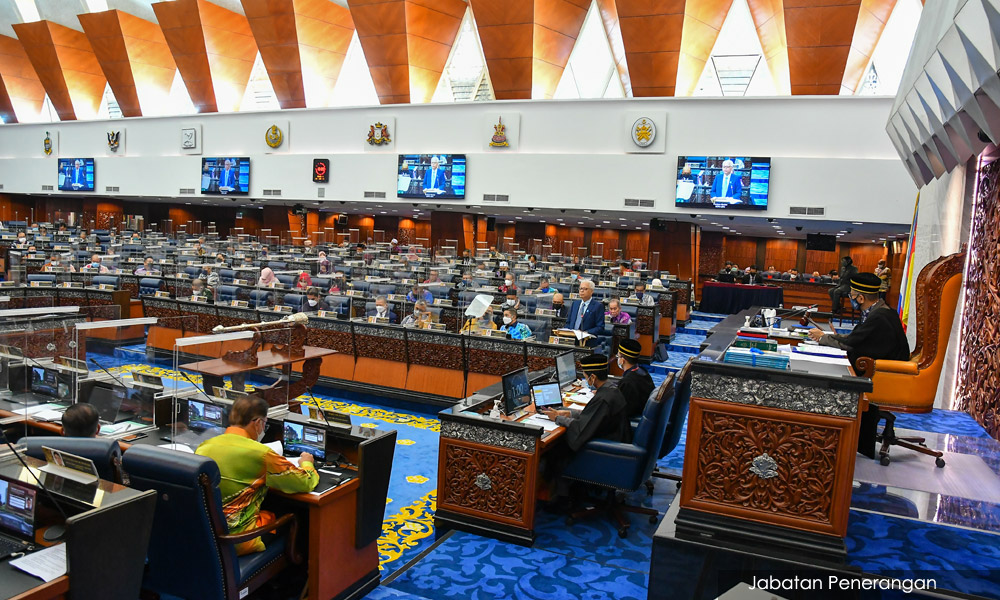
If a government is seen to be strong only if it can pass any bill or motion, even when its own MPs including ministers and deputy ministers don’t bother to vote, then strength in this situation simply means indiscipline and irresponsibility.
And if such childish expectations are representative of BN or PN, looking at some of their ministers’ emotional outbursts, then the country is in danger if either bloc wins a simple majority!
Where is Sosma in the MOU?
The accusation that the opposition has nullified the MOU by defeating the Sosma motion suggests that many BN and PN leaders either cannot comprehend the MOU text in standard Malay, deposited at the Parliament’s website, or have all along fooled themselves that the opposition has joined the government’s backbench.
Let’s look at the actual content of the MOU. The government promised to carry out some policy measures on Covid-19 and a series of institutional reforms.
The Covid-19 policy measures include raising the total fund from RM65 billion to RM110 billion and filling the membership of the National Recovery Council with 50 percent experts, 25 percent government MPs and 25 percent opposition MPs.
The latter covers three items of “Administrative Transformation”: Anti-hopping law (item 2.1), Undi18 and automatic voter registration (item 2.2), PM’s two-term limit (item 2.3), which must be implemented by the first parliamentary meeting in 2022 (item 2.4). The items for this and the next two paragraphs are in the Appendix.
It also covers six items of “Parliamentary Reform”: the Parliamentary Services Act (PSA) which must be completed by the second parliamentary meeting in 2022 (item 3.1), restructuring and increasing Parliamentary Special Select Committees with more balanced membership (items 3.2-3.3), amendment to the Standing Orders (item 3.4), equal constituency allocation for MPs involved (item 3.5), appropriate rights and facilities for the parliamentary opposition leader (item 3.6), all of which except PSA should be carried out immediately after the MOU was signed.
Further, the government promised to ensure judiciary independence (Item 4) and strengthen efforts towards implementation of matters in the Malaysia Agreement 1963 (MA63) (Item 5).
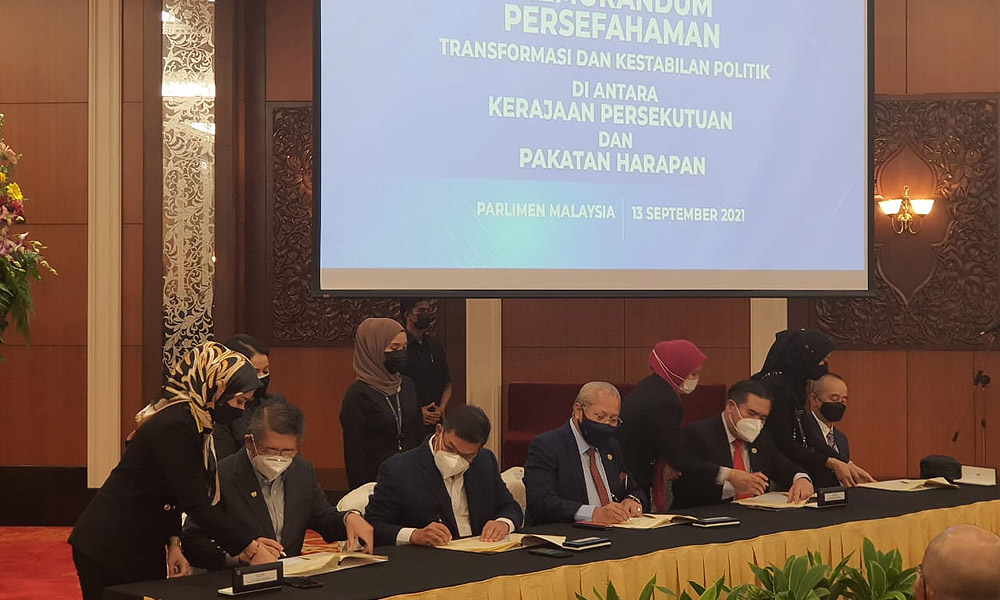
In return, subject to the fulfilment and implementation of the MOU, Pakatan Harapan promised to support or abstain in the vote on the 2022 Budget (Item 3.3[a], main text) and “support or abstain in the process of passing any motion and other bills by the government, the failure of which is a form of no-confidence to the government, after a drafting process for such bills is negotiated and mutually agreed in principle” (Item 3.3[b]).
For the benefit of politicians and commentators who comment without first reading the MOU, here is the wording in Item 3.3(b) in standard Malay: “[Pakatan Harapan … bersetuju…] Tertakluk kepada penunaian dan pelaksanaan Transformasi dalam Memorandum Persefahaman ini, mengambil pendirian menyokong atau berkecuali dalam process meluluskan apa-apa usul atau rang undang-undang lain yang kegagalan meluluskannya merupakan satu bentuk ketidakpercayaan atau tiada keyakinan kepada Kerajaan, selepas proses penggubalan rang undang-undang tersebut dirundingi dan dipersetujui secara bersama pada dasarnya.”
How can the Sosma motion defeat be deemed as Harapan walking away from the MOU? This is not and must not be construed as a matter of confidence. If the government sees it so, then it should have consulted and sought the consent of Harapan before tabling the motion, in line with the last clause of item 3.3(b).
Mature politics of ‘frenemies’
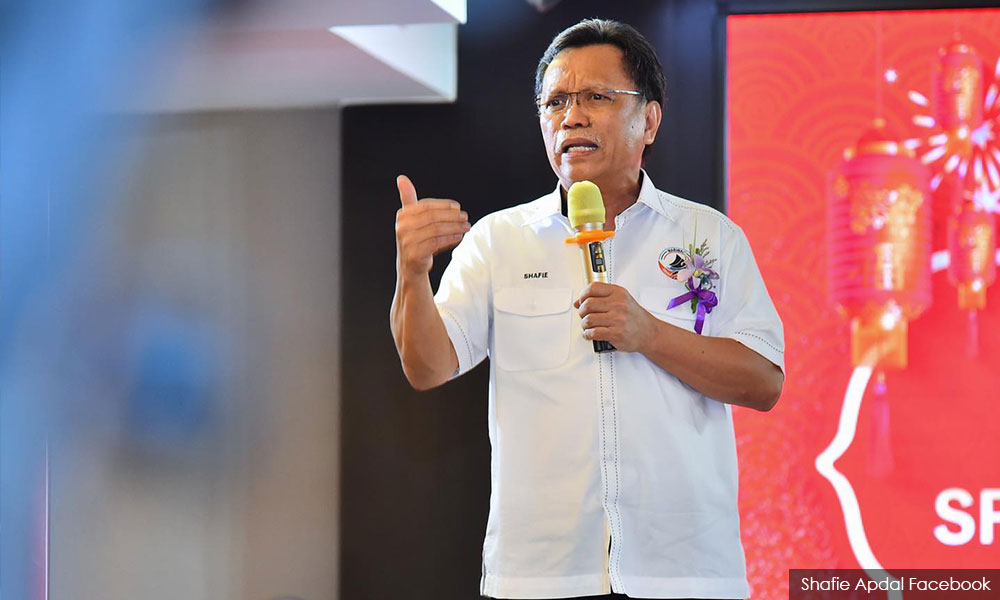
The MOU does not undermine Harapan’s function as an opposition, as Warisan president Shafie Apdal ignorantly and/or dishonestly claimed before his post-Johor about-turn for “smart cooperation” with any party including BN and Gabungan Rakyat Sabah.
The MOU, essentially a confidence and supply agreement (CSA), is a deal of cooperation and competition. Harapan is neither a venomous enemy nor a subservient ally to the Ismail Sabri government. Both are frenemies to each other, who would simultaneously compete to win greater support from the voters and cooperate on specific policy agendas.
Yes, politics can move away from war-like ugliness towards sport-like decency. Politicians don’t have to win all or lose all.
Home Minister Hamzah Zainuddin does not need to resign for losing the motion. Neither should he table the same or similar motion today.
If he attempts to do so, the speaker must have the intelligence and courage to stop his motion as UK Parliamentary Speaker John Bercow stopped PM Boris Johnson’s attempt to table a defeated motion on Brexit.
Instead of scoring partisan mileage on the Ismail Sabri government or Minister Hamzah, the first opposition MP who gets to speak in today's sitting must show magnanimity in framing yesterday’s victory as a positive precedent for all, urging or congratulating the government for accepting it gracefully.
The idea that a government has the right to pass every bill and motion until it is overthrown is stupid, harmful, and seriously archaic. This 19th-century fixation should have been buried a long time before yesterday.
Alas, it is done. May no one resurrect the dead from the grave today. - Mkini
WONG CHIN HUAT is an Essex-trained political scientist working on political institutions and group conflicts. Mindful of humans' self-interest motivation while pursuing a better world, he is a principled opportunist.
The views expressed here are those of the author/contributor and do not necessarily represent the views of MMKtT.

No comments:
Post a Comment
Note: Only a member of this blog may post a comment.