


The last year has seen a serious erosion of female political empowerment and a rise in misogynistic attacks on women in public life.
From Kamala Harris to Hannah Yeoh, women who opt for public service or engage in public discourse are subjected to vicious personalised attacks in which the aim is to silence their voices.
Attacks all too often are on the woman herself, not the substance of her arguments, fed by a “bro” pack of attackers who aim to outdo each other through chest-thumping egoistic competition to do the most harm.
Sometimes, this is to curry favour with their male bosses whom a woman should not dare to criticise or challenge.
Sadly, the scope of attacks on women goes beyond the targeting of women in public life. They extend to worrying increases in violence against women, fueled by male misogynist bias and prejudice.
The culture of “misogyny” is one of the most serious threats to an inclusive and stronger society.
On this Women’s Day, with the annual theme of “accelerating attention,” it is important to draw attention to this practice and to recognise the scope of harm being done – from narrowing the space to enter politics and encouraging a demeaning and dismissal of a woman’s views to outright physical harm and bloodshed.
Marginalisation of female voices
The global trend in undercutting women in public life is clear with the rise of “strong man” politics. Male leaders – largely surrounded by other men – dominate the discourse and decision-making.

As these more autocratic leaders build narcissistic “cults of personality,” they create “boys clubs” of unaccountable advisers to make and implement decisions and listen to like-minded “bro” views rather than more balanced and inclusive contributions.
Women are being actively excluded in decision-making as attention to women’s issues has been de-prioritised.
The effect is a cycle of exclusion and rise of norms excluding women.
Malaysia’s female exclusion
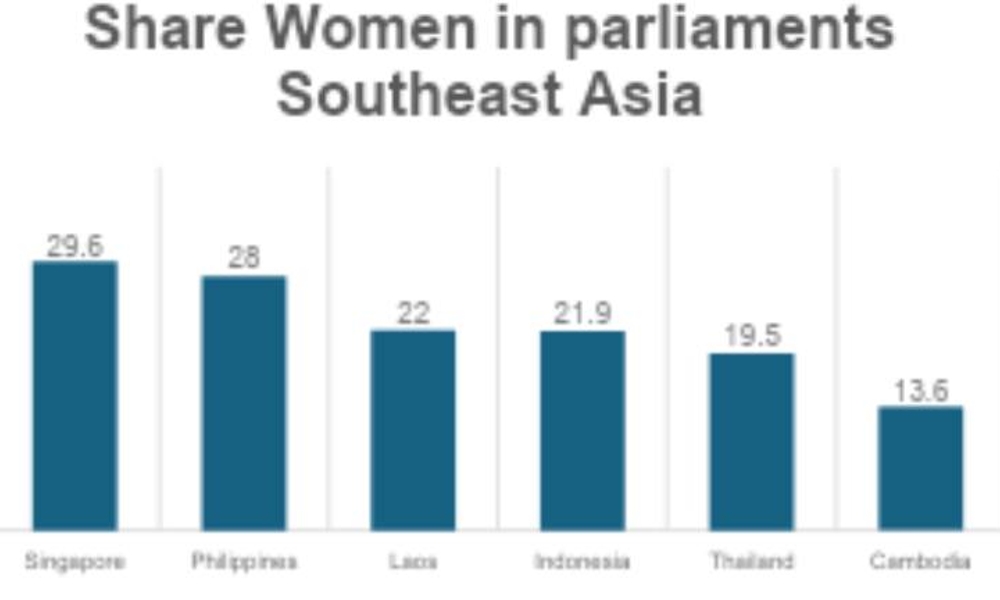
In Malaysia, representation of women in Parliament has declined to a pitiful 13.6 percent - far below the global average of 25.5 percent.
Malaysia has one of the lowest representation of women in Parliament in Southeast Asia, with only Brunei (where women are appointed to the legislature) below them.
The number of female ministers has plateaued at no more than five or 16 percent of the cabinet. The global average is 23 percent, and Malaysia continues to fall below international norms in female representation.
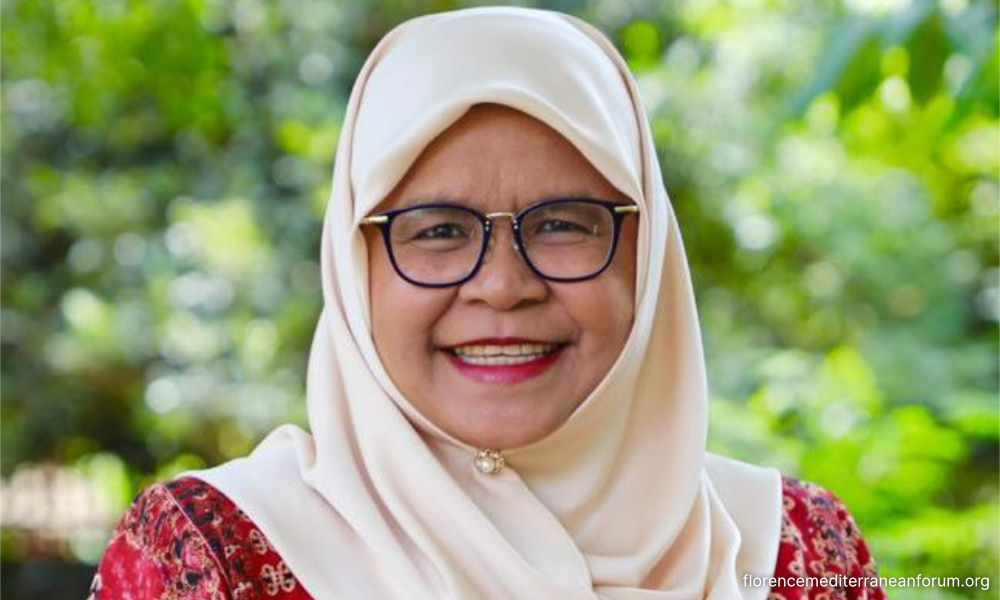
The Anwar Ibrahim Madani government has not substantively increased female representation. Much has been made of the appointment of a female mayor in Kuala Lumpur last year, Maimunah Sharif, a former mayor in Penang, with little acknowledgment that Malaysia has one of the lowest representations of women in local government, including less than 15 percent of local councils.
This is hampered by a denial of local election.
The fact is that women are not substantively being given greater roles in the Anwar Madani government. What is also not being acknowledged is that too many women who should have been promoted, such as female judges, have been denied their promotions. There are too few senior female bureaucrats, a trend that has also not increased.
The exclusion of women extends to the attention to women’s issues – which only seem to get attention on Women’s Day. We hear from the women’s minister and see news from a few events, drawing attention to the issues but not fully appreciating how low on the priority these issues such as addressing the gender gap, child marriage and marital rape are.
There is hype over seeking gender disaggregated data to bring in more gender-responsive budgeting, but this, sadly, is still in process, as policies such as targeted subsidies led by a man go on without attention to the impact on women.
There has also been an effort to shut down the voices of women who raise legitimate concerns about governance. Male egos can be fragile. Women speaking out in public life are labelled as “Anwar haters” engaged in supposed personal biases rather than defenders of principles or calls for needed governance reform.
The aim is to have women’s views dismissed and marginalised. Even male MPs from the government can join in the defend “bro boss” frenzy, ironically many of the same men who have displaced female parliamentarians in their rise to power and claim to be reformers.
Worrying rise in violence
Studies show that excluding women and attacking women have costs far beyond the women themselves. Engaging in misogynistic practices reinforces this norm in society and creates harm for women. Women become more targeted.
There is inadequate appreciation of the rise in violence against women in Malaysia. Last year (2024), reported cases of domestic violence reached 7,116, only a few hundred from the high of 7,468 in 2021 during the height of the Covid pandemic lockdowns. This number is just reported cases, as the real number is much higher.
There is also a rise in femicide, the intentional killing of women because they are women. In September, the Women’s Aid Organisation (WAO) reported 17 cases of femicide as part of their media monitoring, an average of two a month.
Last month, an elderly woman was brutally murdered by her husband in Bandar Sungai Long. This comes after the horrific killings of Nuraina Humaira Rosli in Kampung Orang Asli Bersah last August and Nur Farah Kartini Abdullah in Hulu Selangor last July, where her remains were found in an oil palm plantation.
Femicide is yet to be recognised for the serious crime that it is.
These trends come after horrible cases of cyberbullying against women. The most publicised case of social media influencer Rajeswary Appahu, known on TikTok as Esha, led to the important Esha Clause in the law last year, one of the most important legal gains for women last year.
The measure increased the penalties for this crime. Yet, the targeted attacks on women online and young girls through sextortion are rising. A culture of misogyny contributes to this, which normalises and even encourages attacks on women.
Steps ahead
The positive legal measures last year of the Madani government – the Esha Clause and the citizenship gain for mothers with children born abroad after October last year– are good steps, but there needs to be a more holistic rather than ad hoc approach to legal reforms for women, a call that Malaysian civil society has been making for some time.
This begins with the recognition that misogynistic norms and practices need to be addressed, from revising schoolbook texts to calling out the actions of those in power, including in the media, who enable and engage in this harmful behaviour.
Malaysia should be leading the region on female empowerment and addressing the threats to women, not marginalising women and facing increases in violence against women.
On this Women’s Day, the call is for the government to be more genuinely inclusive, more Madani. - Mkini
BRIDGET WELSH is an honorary research associate of the University of Nottingham’s Asia Research Institute, a senior research associate at Hu Fu Center for East Asia Democratic Studies, and a senior associate fellow at The Habibie Centre. Her writings can be found at bridgetwelsh.com.
The views expressed here are those of the author/contributor and do not necessarily represent the views of MMKtT.

No comments:
Post a Comment
Note: Only a member of this blog may post a comment.