


The Malaysian Bar welcomes the passing of the Malaysian Media Council Bill 2024 in Parliament, which has the objective of establishing self-regulation within the Malaysian media industry.
We recognise that free and independent media is fundamental to a functioning democracy, and the passing of this bill demonstrates the government’s commitment to media freedom and ethical journalism.
However, we believe the bill, in its current form, falls short of ensuring genuine media independence. Had the Malaysian Bar been consulted, these are the concerns and recommendations we would have raised to improve the bill.
Key concerns, shortcomings
1) Printing Presses and Publications Act 1984 clashes with the bill’s implementation
The existence of the Printing Presses and Publications Act 1984 fundamentally contradicts the very essence of media self-regulation provided in the bill.
The absolute discretion granted to the home minister to issue, revoke, or suspend publishing permits under this Act renders any attempt at independent media regulation meaningless.
History has shown that such powers have, on occasion, impacted media freedom, as seen in the suspension of The Heat in 2013.
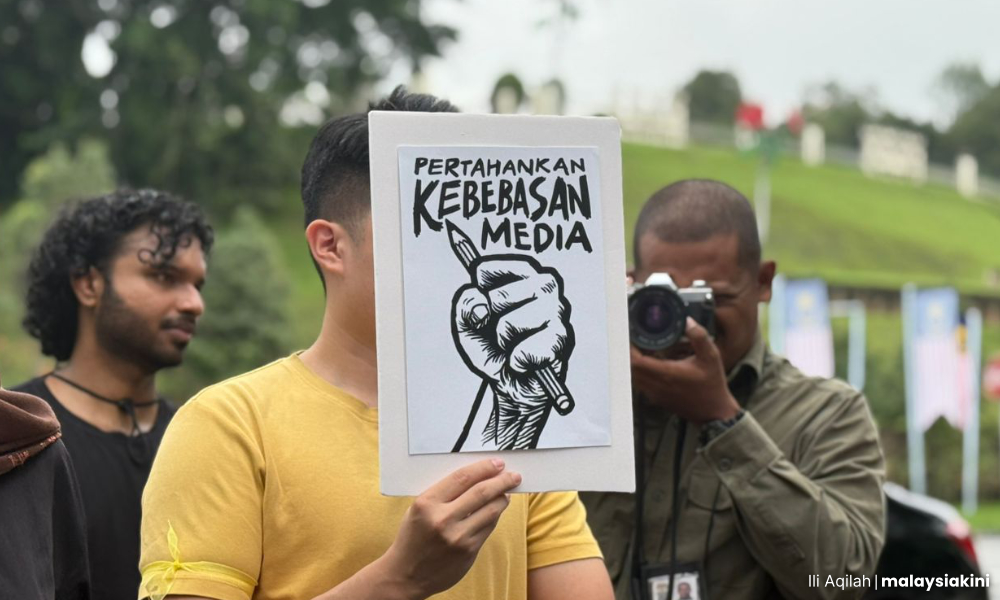
More recently, reports that the government is considering amendments to the PPPA to impose further restrictions on media coverage of race, religion, and royalty only reinforce concerns that the media in Malaysia is not independent.
As such, the Malaysian Bar has long maintained that the PPPA is an affront to Article 10(1)(a) of the Federal Constitution and should be repealed.
2) Critical issues arising
There are several troubling provisions in the bill itself that risk undermining the independence it seeks to establish:
(i) The bill fails to provide clear definitions of critical terms, such as “ethical and responsible journalism”, “media independence”, and “rights of media practitioners”. This vagueness creates significant room for abuse and arbitrary interpretation.
Thus, we would recommend that the media council members address this by providing clarity to these terms in the bill’s code of conduct.
(ii) The code of conduct, which the media council would be empowered to create, could restrict news publishers and journalists from reporting on matters deemed “unethical”. As such, clear guidelines balancing media freedom with ethical considerations are essential for the code of conduct.
(iii) The bill fails to address the rising threats posed by online harms in digital publications, particularly the malicious use of deepfakes and AI (artificial intelligence)-generated disinformation.
A responsible media industry requires laws and guidelines that promote integrity in news reporting and safeguard against the spread of misinformation and disinformation, yet this bill does not provide any framework to tackle these emerging challenges.
(iv) The current provisions restricting political parties from influencing the media are insufficient. While the bill prohibits political party members from serving as a media council chairperson by virtue of Clause 9(2), this restriction must be extended to all board members and key positions to ensure that the council is not used as a tool for political control.
The Malaysian Bar firmly believes in the principle of self-regulation. Just as MPs are expected to uphold integrity and democratic values, we trust the media industry to regulate itself with equal accountability.
However, this requires robust safeguards within the bill to prevent political interference, which is essential for fostering a truly mature democracy.
Going forward
The Malaysian Bar supports this historic self-regulation initiative for the media industry. We hope the council will address our concerns and recommendations at its first annual general meeting, reflecting them in its code of conduct or relevant guidelines and directives.
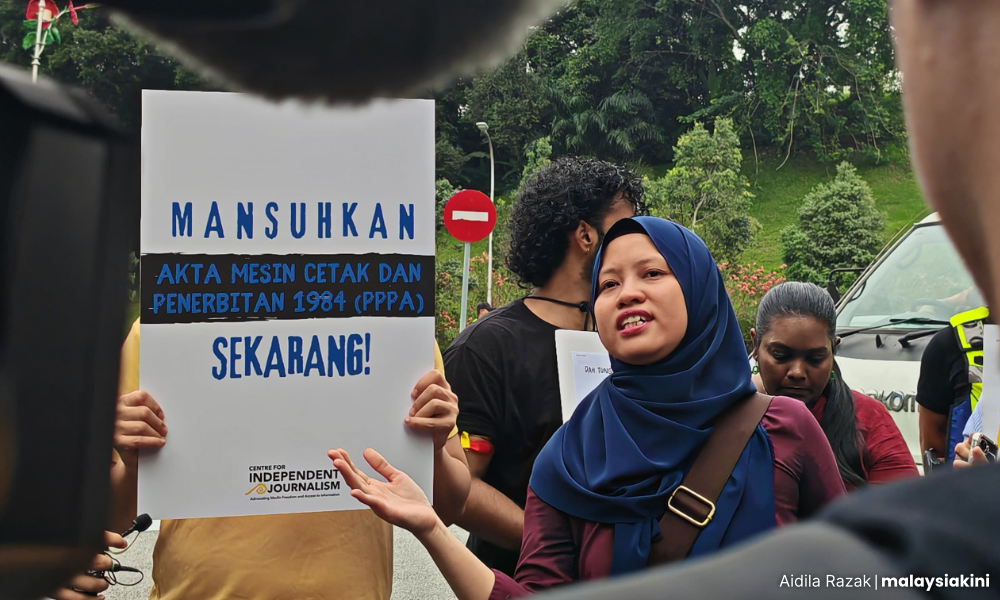
The establishment of the media council should be fully utilised as a golden opportunity to establish an efficient and cohesive framework for the media industry to have complete autonomy and self-governance.
The path forward for the council is clear — engage in efforts to repeal the PPPA, ensure that the council is free from political interference, and guarantee that the council operates with full autonomy. - Mkini
EZRI ABDUL WAHAB is Malaysian Bar president.
The views expressed here are those of the author/contributor and do not necessarily represent the views of MMKtT.

No comments:
Post a Comment
Note: Only a member of this blog may post a comment.