


A student group and an NGO have urged the higher education ministry to announce a timeline for the legislative process.
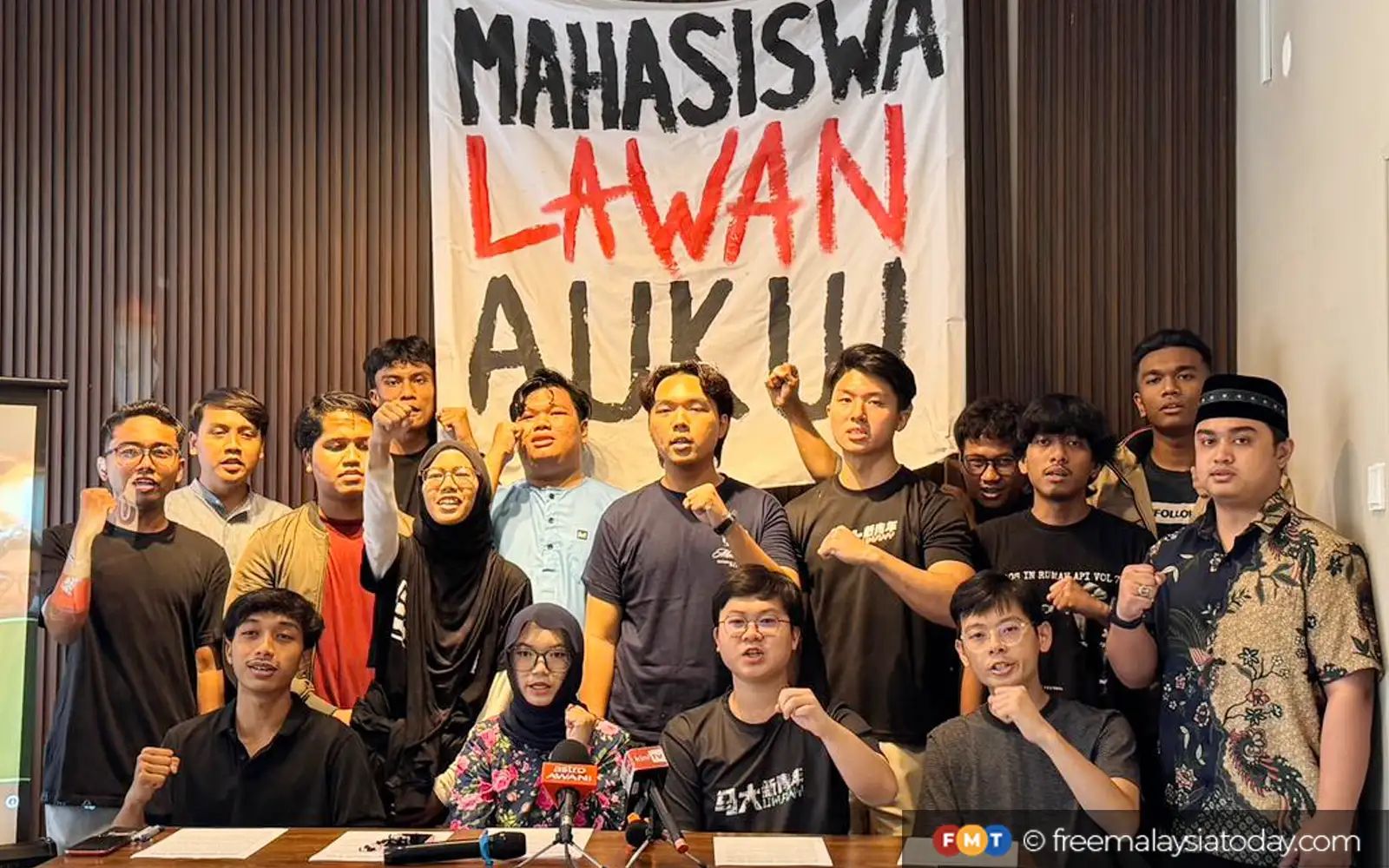
Both groups urged the higher education ministry to announce a timeline, including for the consultation process, preparation of the draft legislation, and its tabling in Parliament.
In a statement, Mandiri coordinator Hamdin Nordin said the NGO did not want the matter to become yet another reform promise that was not followed through.
He also stressed that the new legislative framework should not reintroduce restrictions on student freedom in a different form or through other mechanisms.
Meanwhile, Umany called for all higher learning institutions to immediately review and withdraw all disciplinary actions taken against students for expressing their views, participating in peaceful assemblies, organising activities, and exercising their fundamental rights.
“Since the government has acknowledged that the existing legal framework needs to be abolished, university administrations should no longer continue to treat students through the same outdated culture of control,” it said in a separate statement.
Earlier today, Prime Minister Anwar Ibrahim said although several amendments had been made to Auku, students were still not satisfied with some provisions. Therefore, the government had decided to repeal the Act.
A ‘quick-win’ solution
Ooi Tze Howe of public policy think tank Heya Inc pointed out that introducing replacement legislation for Auku could be a time-consuming process.
He suggested pursuing quick-win policies that could be implemented within the unity government’s remaining year in office while the Act is being replaced.
Such policies include diversifying and decentralising the appointment of public university board members, rather than leaving such appointments solely to the minister.
“Let the respective university senate and alumni society appoint their own representative to sit on the board rather than being handpicked directly by the minister,” he told FMT.
Ooi also called for college deans to be elected entirely by academic staff as this practice is currently only carried out partially or voluntarily in higher education institutions.
Additionally, he called for the implementation of strict financial disclosure for public universities, using the standard of a publicly-listed company to ensure accountability and transparency.
“I think these are even more important than just Auku’s abolition. These are the low-hanging fruits that we need to implement fast,” Ooi said. - FMT

No comments:
Post a Comment
Note: Only a member of this blog may post a comment.