


Cabinet reshuffles are often presented as administrative fine-tuning, the quiet rearrangement of responsibilities meant to improve delivery and preserve political balance.
In reality, they are moments of intense symbolic exposure. They tell the public who is trusted, who is protected, who is seen, and who is expected to endure.
That assumption has repeatedly proven false in societies under economic pressure. When household anxiety is high, people do not assess the government through spreadsheets or coalition arithmetic. They assess it through symbols, moral cues, and perceived order.
The cabinet, fairly or unfairly, becomes the mirror through which they judge whether the system still makes sense.
What is unfolding now is not an explosion of anger but a quieter and more dangerous drift. Narratives are beginning to form around status, hierarchy, and dignity.
Conversations about qualifications, representation, and authority are not really about resumes. They are about whether effort still leads somewhere, whether institutions still matter, and whether ordinary people are still reflected in the centres of power.

When these questions arise, silence from leadership is rarely interpreted as confidence. It is read as indifference.
Perceptions threaten legitimacy
Governments that focus heavily on internal coherence often underestimate how quickly external perception can harden.
In the first month after a reshuffle, critics test language. They probe which stories gain traction. They simplify complex realities into moral tales that can be repeated at speed. In the second month, those tales begin to merge. Economic discomfort blends with cultural unease.
By the third month, a single overarching story takes hold, one that no longer depends on facts but on feeling. At that point, even good policy struggles to breathe.
The current risk lies in how easily the reshuffle can be framed as evidence that effort, expertise, and representation are negotiable, while access and symbolism are not. This framing does not need to be accurate to be effective. It only needs to resonate with lived experience.
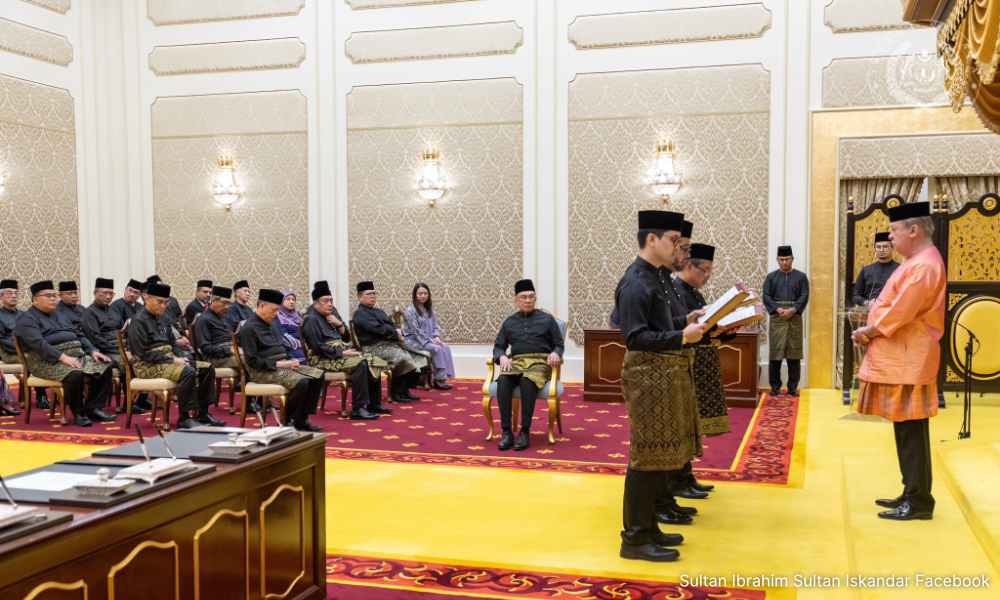
When teachers, civil servants, urban workers, and young people already feel that the ladder is unstable, any signal that hierarchy has inverted will be amplified.
Urban governance is particularly exposed, as cities concentrate both economic stress and political symbolism.
Opponents need only opportunity - inevitable over the next 90 days - for narratives to form that the government did not choose or prepare for.
This trajectory is not irreversible, but it does require an understanding that legitimacy must be actively designed. One of the first corrections must be narrative separation. Economic pain, which is real and unavoidable during reform, should not be personalised to the highest office.
When a single figure embodies moral leadership, coalition management, and fiscal adjustment, every price increase feels personal. It becomes a judgment on character, which is neither fair nor sustainable.
Equally important is the need to restore clarity around the value of knowledge and institutions. Politics and administration are different forms of authority, but they must be shown to respect each other visibly.
When this distinction is left implicit, it is lost. When it is made explicit through structure, language, and conduct, it reassures those who have invested their lives in learning that their sacrifice still holds meaning. Societies that lose this reassurance do not collapse immediately. They hollow out slowly.
Emotions driving political outcomes
Finally, symbolism in urban representation must be handled with sensitivity rather than defensiveness. Representation is not a zero-sum game, but perception often treats it as one.
Balancing that perception does not always require dramatic reshuffles. It can be achieved through visible empowerment, clear mandates, and sustained attention to the anxieties of those who feel squeezed out of the modern city. What matters is not tokenism but recognition.
The deeper issue here is not whether the reshuffle was right or wrong in a technical sense. It is whether it accounted for the emotional economy of a nation under strain. Governments rarely fall because they lack intelligence. They falter because they misread mood. Mood, once it turns, is unforgiving.
If these risks are ignored, the country will not suddenly erupt. Instead, it will slide into a politics where moral shortcuts become attractive, where anger feels like clarity, and where complexity is rejected as elitism. That is how nations are weakened long before they are defeated.
Strategic communication, at its core, is not about spin. It is about foresight. The next 90 days will reveal whether this reshuffle becomes a footnote or a fault line. - Mkini
RAZIZ RASHID is a strategic-communications advisor and chairperson of Pertubuhan Sukarelawan Siber Selamat (CyberSafe). He formerly led corporate communications at the Prime Minister’s Department.
The views expressed here are those of the author/contributor and do not necessarily represent the views of MMKtT.

No comments:
Post a Comment
Note: Only a member of this blog may post a comment.