



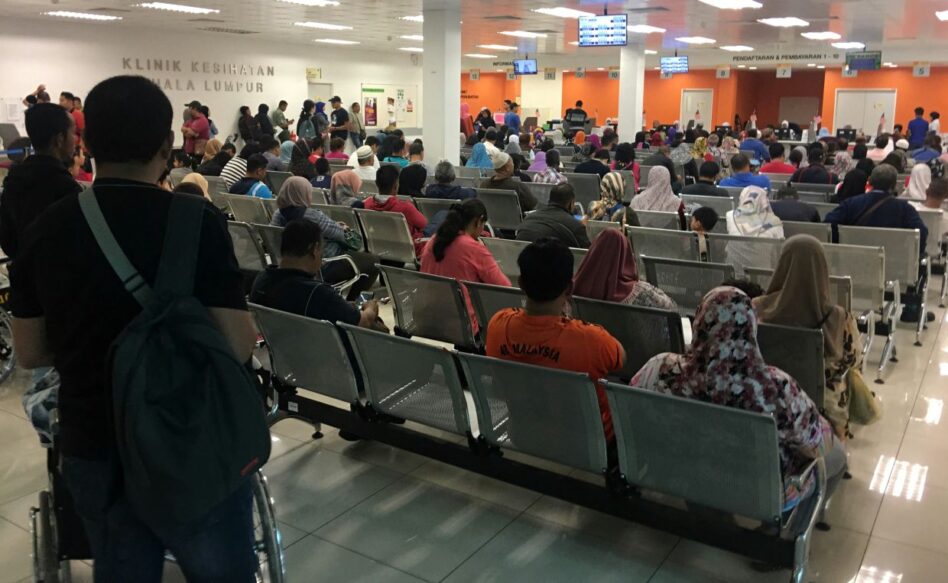
IT’S 10am in the outpatient clinic of a typical government hospital. The air is thick with the scent of sanitiser and quiet resignation. The plastic chairs are full, occupied by elderly uncles and aunties clutching paper queue slips they pulled three hours ago.
If you look closely, you realise that most of these patients aren’t here for trauma or sudden emergencies. They are here for routine maintenance: a diabetes check-up, a hypertension refill, or a wound dressing. They wait for hours for a consultation that might last five minutes.
We are watching a system choke on its own generosity. Malaysia’s public healthcare is affordable and accessible, but it is drowning.
The solution isn’t to build more waiting rooms. The solution is to ensure these patients never have to step inside them in the first place. The reality is simple: the old math simply doesn’t work anymore.
For decades, the standard response to overcrowding has been construction: more hospitals, more beds, more wings. But we are fighting a losing battle against simple mathematics.
According to the National Health and Morbidity Survey (NHMS) 2023, a staggering 2.3 million Malaysians essentially live with three non-communicable diseases (NCDs) simultaneously: diabetes, hypertension, and high cholesterol.
Think about that number. That is nearly 10% of our adult population requiring constant medical supervision. A brick-and-mortar hospital takes five years to plan and build.
In that time, thousands more Malaysians will be diagnosed with these chronic conditions. We cannot pour concrete fast enough to catch up.
The strain is already visible. Health Ministry officials have frankly admitted that public facilities are reaching the “end of capacity”.
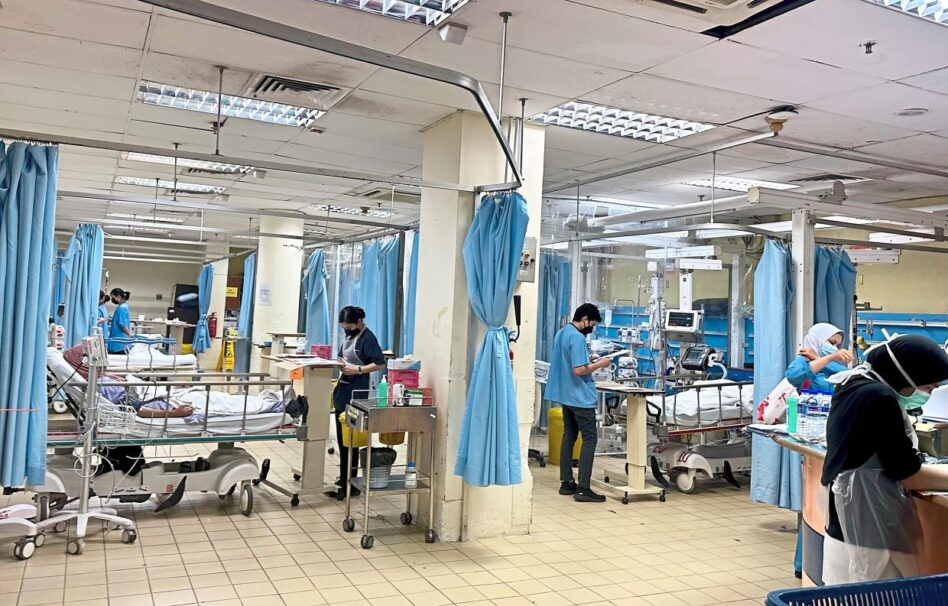
Facilities like Hospital Seberang Jaya frequently report bed occupancy rates exceeding 100%. When we have patients waiting in corridors, it is a clear signal that the physical model of healthcare is broken.
What Malaysia needs is not more buildings. We need a fundamental shift from “Sick Care” that is treating people only once they crash to “Preventative Engineering”.
The first step is utilising the Internet of Things (IoT) to change how we monitor patients. Currently, we practice “Snapshot Medicine”. A diabetic patient comes in every three months, gets their blood sugar checked, and goes home. This provides a single data point, ignoring the 90 days in between.
As engineers, we know that sporadic data leads to poor system control. The alternative is Continuous Monitoring.
Imagine if those high-risk diabetic patients were equipped with Continuous Glucose Monitors (CGMs)—wearable sensors that track blood sugar 24/7. Instead of queuing at the hospital to detect a problem, the device detects a spike while the patient is sitting in their living room.
Critics might argue that equipping thousands of patients with wearable sensors is too expensive. However, we must look at the economics of prevention. A CGM sensor costs a few hundred Ringgit a month.
In contrast, a single day in an ICU, or a lifetime of dialysis for kidney failure caused by unmanaged diabetes, costs the government thousands. We must view these devices not as tech luxuries, but as cost-saving investments that prevent catastrophic expenditure later.
Data is sent to a central server where algorithms flag the anomaly. A nurse calls the patient: “Uncle, your sugar is spiking. Did you take your meds today?”. The intervention happens at home. The crisis is averted. The hospital bed remains empty.
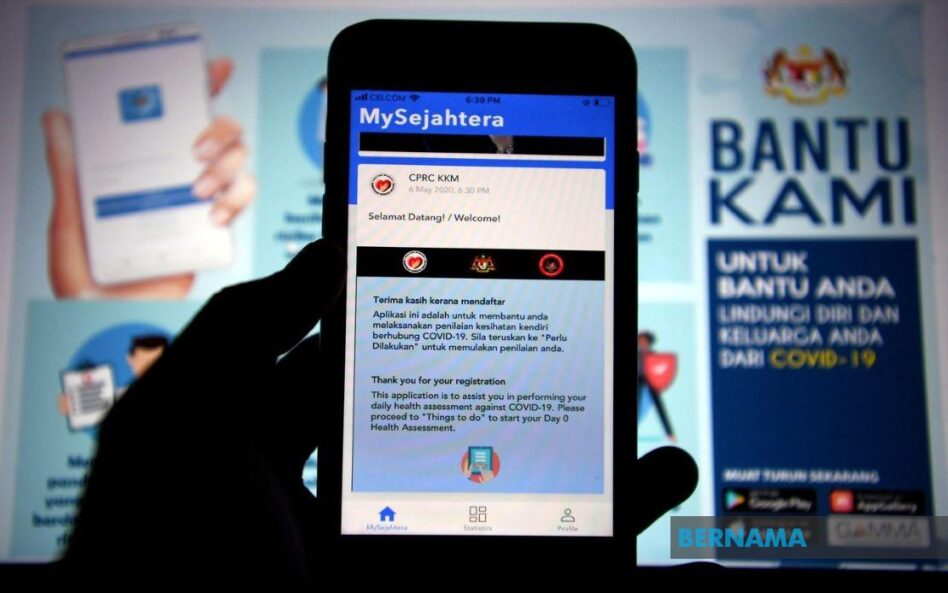
Next, we already have the infrastructure to build a ‘Digital Home Ward’ in every Malaysian home. During the pandemic, Malaysia deployed MySejahtera, one of the most successful digital health onboarding efforts in the region. But since the pandemic ended, the app has largely become dormant.
This is a wasted opportunity. MySejahtera should evolve from a COVID-19 tracker into a National Chronic Disease Manager.
The government’s introduction of the Madani Medical Scheme was a brilliant first step, decanting minor cases to private GPs. But we need to go further. We need to establish “Home Wards”.
By integrating home blood pressure monitors and smart scales with an upgraded MySejahtera, doctors could review a patient’s weekly vitals remotely. Telemedicine shouldn’t just be for the wealthy; it should be the standard operating procedure for chronic management in the public sector.
If an elderly patient in a rural kampung can have a video consultation rather than taking a two-hour bus ride to the nearest specialist hospital, we haven’t just saved time, we have saved hospital capacity for the trauma victims and surgical cases who truly need it.
Finally, we must deploy Artificial Intelligence (AI) as our gatekeeper. In many rural clinics (Klinik Kesihatan), resources are scarce. Patients are often referred to big city hospitals “just to be safe” because the local clinic lacks specialist diagnostics.
AI can bridge this gap. AI-powered screening tools for diabetic retinopathy or heart abnormalities can be deployed on simple smartphones or portable devices in rural clinics. These algorithms can filter out low-risk patients with high accuracy, ensuring that only the high-risk cases clog the referral pipelines to the tertiary hospitals.
Ultimately, the hospitals of the future shouldn’t be judged by the grandeur of their lobbies, but by the emptiness of their wards. Achieving this requires a radical shift in how we measure national progress.
Policymakers must stop tallying success by the number of groundbreakings for new buildings and start measuring it by the number of admissions prevented.
It is time to divert the budget from laying concrete to subsidising silicon, making these life-saving sensors and data plans affordable for every layer of society.
For the public, this shift requires a change in mindset. We must stop viewing “Smart Health” as a technological novelty and embrace it as a necessary safety net for our ageing population. Data is no longer just for tech companies; it is the vital link keeping our parents safe at home.
We possess the engineering talent to build this future. We have the data to prove it works. Now, we simply need the political will to make the leap.
Let us stop waiting for the next crisis to break our system. After all, the most advanced hospital in the world isn’t a building at all—it is the one you never have to visit!
Lee Yen Tian is a final year student at the Department of Biomedical Engineering, Faculty of Engineering, Universiti Malaya, enrolled in an elective course entitled “Healthcare Technology and Clinical Management”.
The views expressed are solely of the author and do not necessarily reflect those of MMKtT.
- Focus Malaysia.

No comments:
Post a Comment
Note: Only a member of this blog may post a comment.