


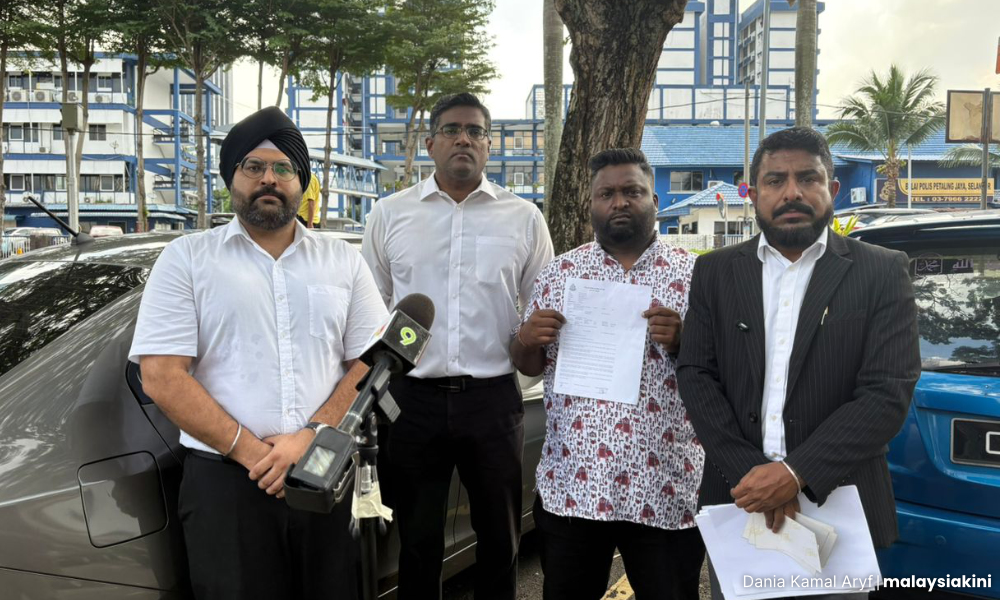
Activist Arun Dorasamy has questioned the authorities’ “double standards” regarding legal enforcement against those who attempt to demolish unauthorised houses of worship, asking if similar measures would also be taken if mosques or suraus were involved.
Arun (above, right) also questioned why self-proclaimed activist Tamim Dahri, who had attempted to demolish a Hindu temple in Rawang Perdana on Feb 11, had “gotten away scot-free” while the temple committee members were instead faced with threats of eviction and charges for trespassing.
“If we reverse the scenario, just think about it… If this issue happened to a surau or masjid, would this be the situation?
“So, we all have the right to be pissed off and frustrated. But we are still calmly waiting for the solution,” Arun told reporters outside the Petaling Jaya district police headquarters today.
Tamim and three others were arrested on Feb 11 after damaging the temple, but were released a day later after a High Court struck down a two-day remand order.
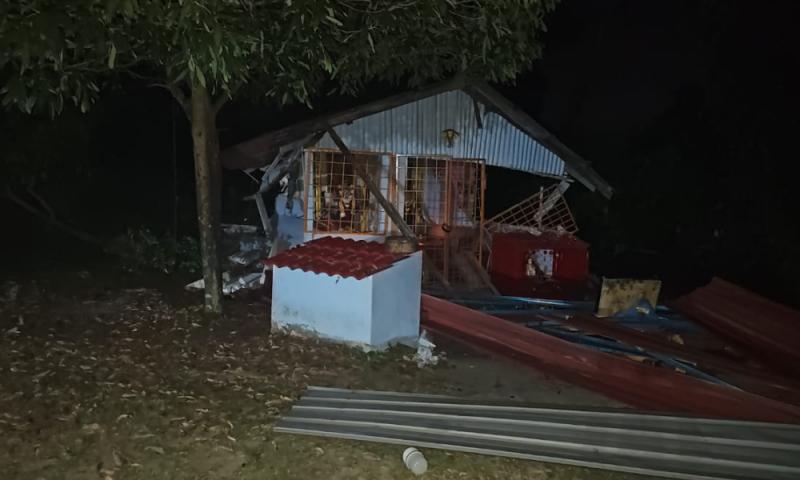
The temple is said to be on private land owned by Yayasan Kubra, and the foundation had allegedly engaged Tamim to demolish the house of worship.
Arun, representing NGO Temple Preservation Action Team (Tepat), was speaking to the media after accompanying R Ahrindran, the committee leader of the temple involved, to lodge a police report against the authorities.
The temple committee leader alleged that a police officer from Gombak had threatened to charge him under Section 447 of the Penal Code for trespassing if the temple failed to vacate the plot by Feb 23.
Under Section 447 of the Penal Code, the penalties for trespassing include a maximum imprisonment of six months, a fine of up to RM3,000, or both.
Arun also described such threats by the police as “completely unacceptable” and said that it set a precedent to further ignite racial tensions in land disputes involving houses of worship.
Arun also stressed that they were hoping to settle matters amicably, but would eventually be willing to go to court if matters escalated.
He reminded that the temple had been around since the 1990s and said that they were prepared to show evidence in court of the temple’s existence before the dispute.
‘Bullying and intimidation’
Separately, on the alleged trespassing threat, lawyer Rajesh Nagarajan also emphasised that from a legal perspective, the issue should be viewed as a dispute between private parties, and that the police did not have the authority to make such threats.
He urged the authorities from the Bukit Aman police headquarters to investigate the matter and said that similar measures had been taken against the chairperson of a Hindu temple in Dengkil last week.
Rajesh reminded that the landowner was legally obliged to obtain a writ of possession if they intended to evict Ahrindran and the temple, describing the police’s tactics as a form of bullying, intimidation, and “completely illegal”.
Further, lawyer Sachpreet Singh had also cautioned politicians against making statements that could potentially ignite racial hatred, describing Tamim’s actions as “a danger to our multiracial society”.
“This is not the way religious issues should be solved in Malaysia. We practise tolerance. We don't take matters into our own hands. Our politicians, and particularly our prime minister, have a role to play in the statements that they make.
“They must be very careful in how they deal with such issues. They should approach this with a mindset of trying to solve the problem, not to create further enmity between the races. Action must be taken against Tamim. He cannot get away scot-free,” he said.
Existing process
On Feb 13, Selangor Menteri Besar Amirudin Shari said that for unauthorised places of worship built on privately owned land, the existing process requires the landowner to appoint a lawyer and obtain a court order before any eviction or demolition can take place.
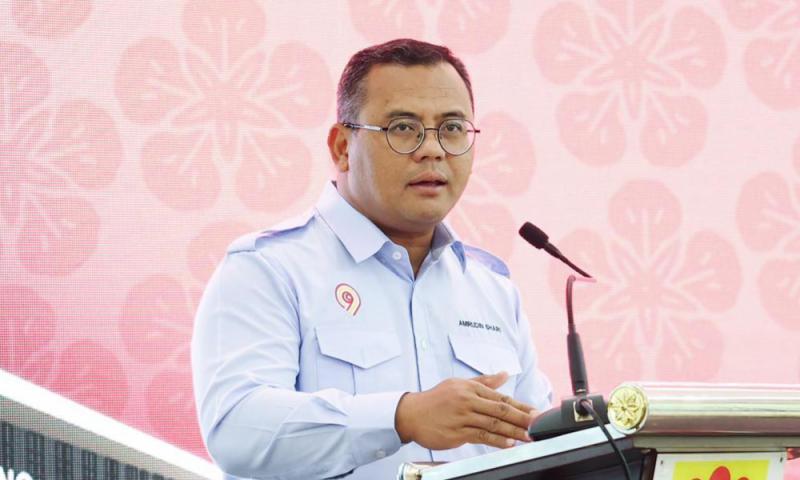
Taking security considerations into account, Amirudin said the Selangor security council decided that landowners who discover encroachment, including the construction of a place of worship without approval, must lodge a police report.
Amirudin said the landowner must also issue a notice to the encroaching party and formally notify the district office.
Last week, Prime Minister Anwar Ibrahim reminded the public that they are free to practise their faiths however they want, as long as it is in accordance with the law.
Anwar cited the case of a surau in Perak which had been demolished due to its failure to follow regulations.
The prime minister had also stressed that vigilantes should not take the law into their own hands and that only authorities can demolish buildings. - Mkini

No comments:
Post a Comment
Note: Only a member of this blog may post a comment.