


Self-styled activist Tamim Dahri Abdul Razak first drew public outrage after a video emerged showing him repeatedly stepping on a Hindu sacred symbol - a trident, or soolam.
The reaction was immediate. Police reports were lodged. Protests were held. Community leaders warned of rising tensions.
Acts involving religious symbols are never contained to the individual. They resonate across entire communities.
At first, such incidents may appear isolated, but what we are witnessing here is not a one-off controversy. This is a clear progression, where the events escalate step by step.
First, the provocation: stepping on a religious symbol.
Second, the amplification: the act is filmed, uploaded on social media, and widely shared.

Third, the justification. After the public backlash, explanations emerged, with claims of ignorance that the object was mistaken for scrap metal, or that the site was not recognised as religious.
Finally, the escalation emerges in the form of demands, most notably a conditional offer to surrender tied to the demolition of temples deemed “illegal.”
Dangerous line
In short: provoke first, justify later.
If this situation is allowed to fester, compliance itself becomes conditional, and that is a dangerous line.
On the “Tanah Malaya” social media account, Tamim said he would return to Malaysia and surrender to the police only if the authorities demolished a list of allegedly “illegal” Hindu temples.
He wrote: “We, the strategists of Tanah Malaya, come from technical backgrounds instead of arts, and thus we are familiar with only one thing: problem solving.”
This framing goes beyond activism. It turns a legal process into a negotiation, where compliance with the law is tied to political demands.
Calling themselves “strategists of Tanah Malaya” and saying they deal only in “problem solving” sounds confident and technical, but there is irony here. You cannot solve a problem if you are the one defining what the problem is in the first place.

When that definition is disputed, it begins to sound less like problem-solving and more like self-praise dressed as expertise.
The attempt is to make compliance with the law conditional. It links a personal legal situation to an ideological demand, introducing a precedent where the law is treated as negotiable under pressure.
Tensions not new
This is not the first time Malaysia has faced such tensions.
In the case involving convert and controversial preacher, Zamri Vinoth, public perception was that early inaction allowed tensions to build, with enforcement only coming later when the risk of escalation had grown.
Whether that perception was entirely fair is secondary. What matters is the lesson it offers: delays in acting on sensitive, provocative incidents do not calm situations. They often inflame them.
Hesitation creates space for anger to grow, for narratives to harden, and for communities to feel unprotected.
If there is one lesson to be drawn, it is this: timely, consistent enforcement is essential.
When provocative acts are seen to gain attention or receive delayed responses, others may feel emboldened to act.

They do so not necessarily out of malice, but from the belief that they are defending legality, identity, or justice. This is how vigilantism begins, not as defiance, but as misguided justification.
Once individuals begin to take matters into their own hands, believing the law will bend or delay, the consequences become harder to contain. Recent incidents involving religious desecration have already set a public expectation: that action must be swift, enforcement must be firm, and standards must be equal.
If one case is handled decisively while another drifts, the issue is no longer about law.
It becomes about whose sensitivities are protected, and whose are not.
That perception alone is enough to fracture trust.
Rule of law cannot be conditional
Malaysia’s Federal Constitution, under Article 11, guarantees freedom of religion. It requires the state to:
protect all religious communities
act fairly and impartially
prevent acts that inflame tensions
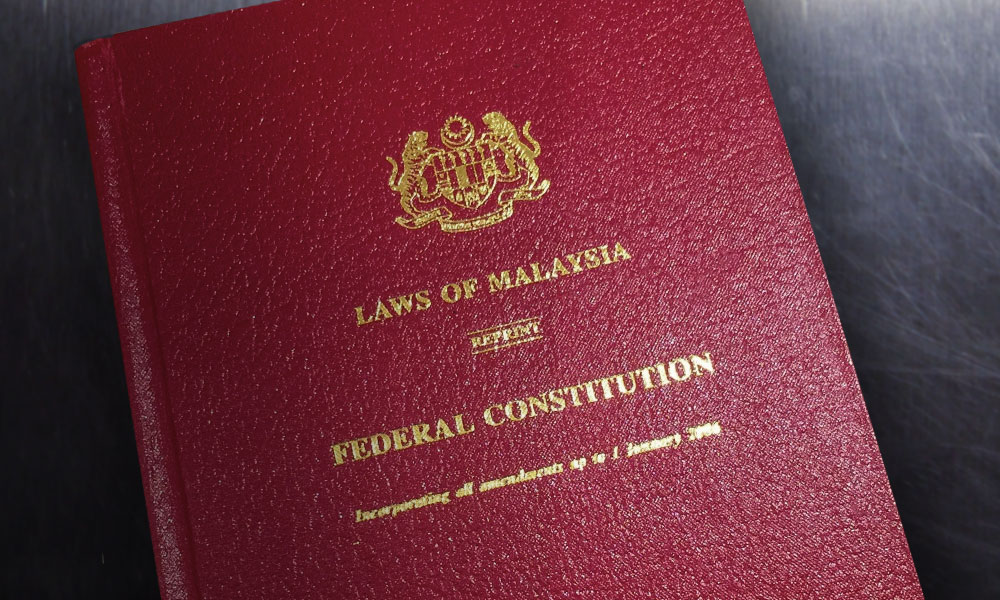
Enforcement cannot bend to the pressure of any kind. Once it does, constitutional protections begin to feel conditional.
At its core, this issue is simple. No person alleged to have broken the law can be allowed to set conditions for compliance or hold enforcement hostage to demands.
The balance of authority must remain with institutions, not individuals negotiating with the law.
That is a line a functioning state cannot blur.
This is where leadership is tested. There will be pressure to manage sentiment, to avoid backlash, to respond tactically, but leadership is not about managing outrage. It is about upholding principles.
Politicians must act in accordance with the Constitution, which guarantees equal protection to all Malaysians.
This moment demands clarity. Not rhetoric. Not delay. Not negotiation.
The rule of law cannot be conditional. Provocation cannot be rewarded, and no individual can be allowed to hold the nation to pressure or make demands. We should draw the line now, clearly and firmly, because if it is not held here, it will be tested again.
Next time, containment may not hold. - Mkini
MARIAM MOKHTAR is a defender of the truth, the admiral-general of the Green Bean Army, and the president of the Perak Liberation Organisation (PLO). Blog, X.
The views expressed here are those of the author/contributor and do not necessarily represent the views of MMKtT.

No comments:
Post a Comment
Note: Only a member of this blog may post a comment.