


When I was a teenager, Hari Raya was not my favourite time of the year. It felt messy.
The house would be crowded with relatives I barely recognised, people whose names I struggled to remember but who somehow knew exactly who I was.
Someone was always sleeping on the floor. The kitchen was unbearably hot, with aunties moving between large pots of “kuah” (gravy) and trays of kuih while the fan spun lazily above.
At my maternal aunt’s house in Penang, the smell was unmistakable: nasi tomato, acar buah, and trays of sweet treats that seemed to appear endlessly on the table.
Every surface felt sticky with syrup or gravy. Children ran everywhere while the adults talked loudly over one another in that familiar Penang rhythm that only relatives seemed to understand.
As a teenager, I remember thinking it was chaotic. All I wanted was a quiet corner, some space, perhaps even an excuse to step outside for a while.
The heat, noise, and the crowd made Hari Raya feel less like a celebration and more like a logistical challenge.
‘A meaningful time’
Time, however, has a way of rearranging memory. Looking back now, I realise what I experienced was something far more meaningful than chaos.
It was a “village”. Not the romanticised kampung of travel brochures, but the real “village” - the extended family network that gathers without formal invitations, eats together in large numbers, tells the same stories every year, and somehow manages to hold everyone together.
Hari Raya was the one time of the year when that “village” fully assembled, filling the house in a way that felt overwhelming then but precious now.
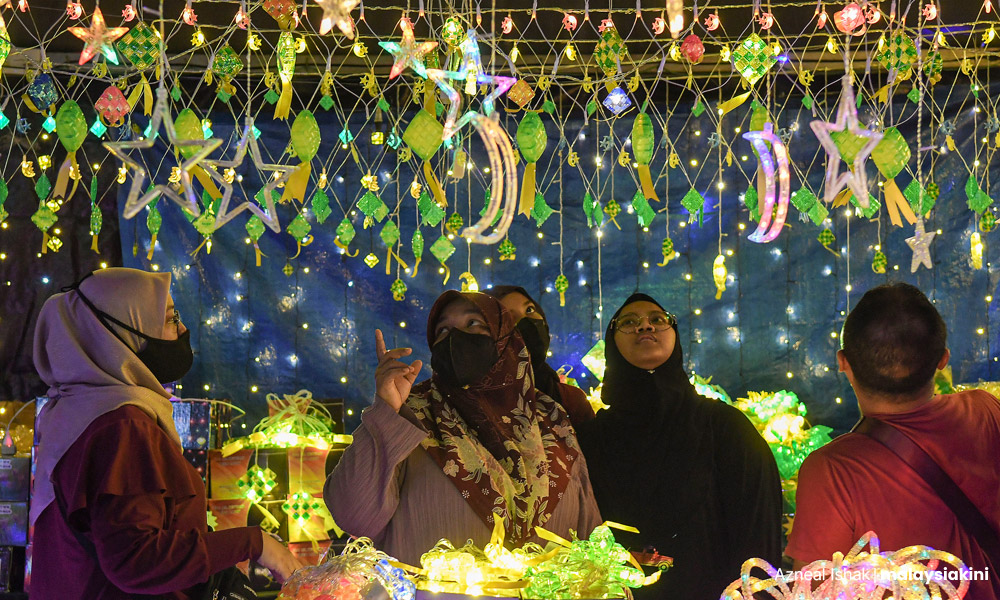
Today, many years later, the difference is noticeable. The house is quieter. My aunt, together with some relatives, is no longer around.
Some families celebrate in different cities. The once endless stream of cars outside the house has thinned. The uncles and the aunties who dominated the living room conversations and were still able to run the entire kitchen operation while at it are slowly disappearing from the scene.
It is only when the crowd begins to shrink that we realise how much it once meant.
Time of togetherness
Hari Raya is often described as a time of forgiveness and gratitude, but it is also something deeper. It reminds us that life was never meant to be lived entirely on our own.
The extended family, what we might loosely call our “village”, has long been one of the most important forms of social support. This reflection feels especially relevant today because Malaysia itself is changing.
According to the Statistics Department, the country became an ageing society in 2021 when the share of people aged 65 and above surpassed seven percent of the population.
That proportion will continue to rise steadily in the decades ahead, with projections suggesting Malaysia will become an aged nation when at least 14 percent of the population is 65 or older.

At the same time, fertility rates have declined significantly, households are becoming smaller, and many families now live far from where they grew up.
The result is a quiet but important shift: the “village” is slowly thinning.
For most of human history, however, people did not navigate life alone. Individuals existed within a web of relationships.
Cousins, aunties, uncles, grandparents, and neighbours provided companionship, advice and support. These networks were rarely formal, but they formed the social infrastructure of everyday life.
Hari Raya gatherings are one of the few moments when we still see this system come alive. When dozens of relatives gather under one roof, generations mix naturally.
Stories move across age groups, cousins reconnect, and responsibilities are shared almost instinctively: someone cooks, someone cleans, someone entertains the children.
Social institution
What appears noisy, crowded and inefficient is actually a functioning social institution.
When conversations turn to the challenges of an ageing society, the focus often falls on pensions, healthcare financing, and long-term care systems.
These are undoubtedly important, and Malaysia will need stronger formal institutions to support its changing demographics.
Yet informal networks remain just as crucial. Extended families and communities provide something institutions struggle to replicate: belonging.
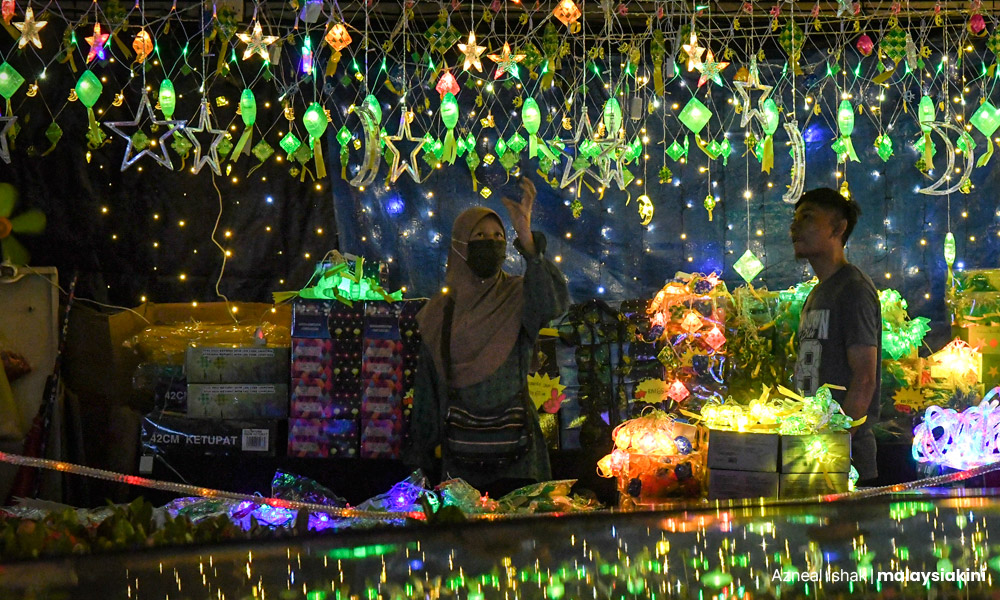
They reduce loneliness, distribute responsibilities and remind individuals that they remain part of something larger than themselves.
In that sense, Hari Raya does more than mark a religious celebration. It briefly rebuilds the “village”. For a few days each year, scattered families return to the same living rooms and dining tables.
Old relationships are refreshed, family stories are repeated, and multiple generations share the same space.
Perhaps this is why Hari Raya feels different as we grow older. As teenagers, the crowd felt suffocating, and the house felt too small for the number of people inside it.
Now, when the crowd becomes smaller, the silence feels heavier. The noise we once complained about was actually a sign of abundance, of relationships, connections, and a community that gathered simply because it was bound by family and shared history.
Memories of those Hari Raya mornings in Penang linger for this reason. My aunt’s house, which somehow expanded to accommodate everyone, the steady stream of relatives arriving at the gate, and the kitchen that never seemed to close were not just festive scenes. They were quiet demonstrations of what it meant to belong to a “village”.
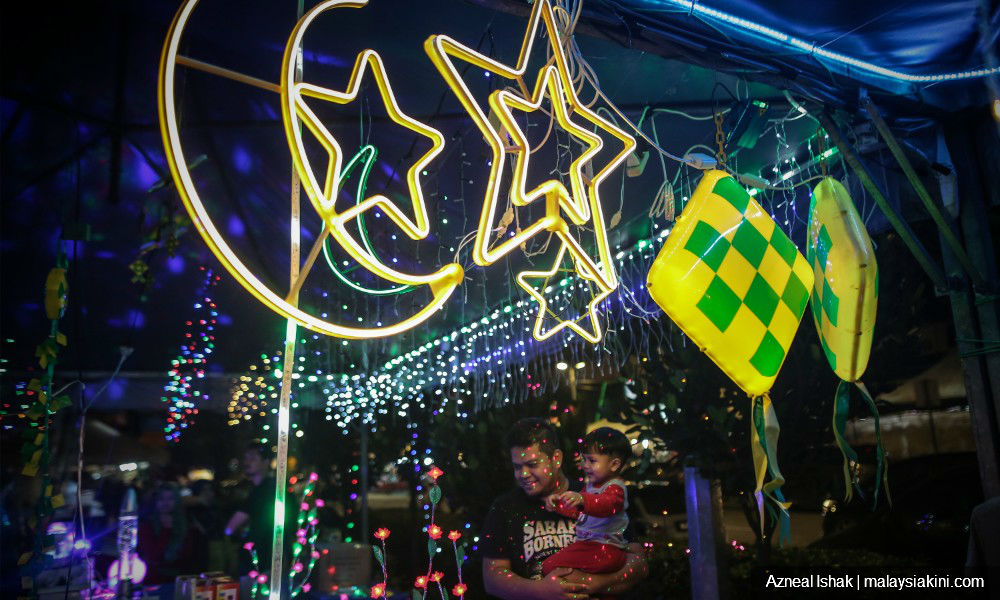
As Malaysia moves into a different demographic future, the challenge is not to recreate the past exactly as it was.
Life has changed, families are smaller, and people are more mobile. However, the spirit of the “village”: the instinct to remain connected, to show up and gather, remains something worth protecting.
In the end, those crowded houses remind us of something simple but enduring: societies are strongest when people do not have to live life entirely on their own. - Mkini
AIZAT ZAINAL ALAM is an academic from Universiti Malaya.
The views expressed here are those of the author/contributor and do not necessarily represent the views of MMKtT.

No comments:
Post a Comment
Note: Only a member of this blog may post a comment.