


A group calling for action over alleged land encroachment and “illegal” religious structures said it was painted in a bad light due to the actions of “immature and irresponsible third parties”.
Without naming the other parties, Gerakan Rakyat Anti Haram (Garah) interim chief Haniff Khatri Abdulla said this led to a misunderstanding of the group’s objectives, with claims that Garah intended to demolish all houses of worship.
“Strangely, the third parties who are the masterminds of inciting incitement and slander until they raise tension in society, are the ones who do not dare to show themselves! Shame!” the senior lawyer said in a statement yesterday.
He was referring to a meeting held between Muslim and Hindu activists in Putrajaya on Wednesday (March 18). It was organised as part of the Madani Harmony programme, although it was not clear who called for the meeting.
The programme nonetheless appeared to carry government backing, with the police facilitating the discussions and Prime Minister Anwar Ibrahim praising the effort in an official statement.
Haniff also claimed that the incitement by third parties resulted in the police halting last month’s Garah rally, and had allegedly caused attacks against independent preacher Zamri Vinoth and social media personality S Chandrasegaran, better known as Cikgu Chandra.
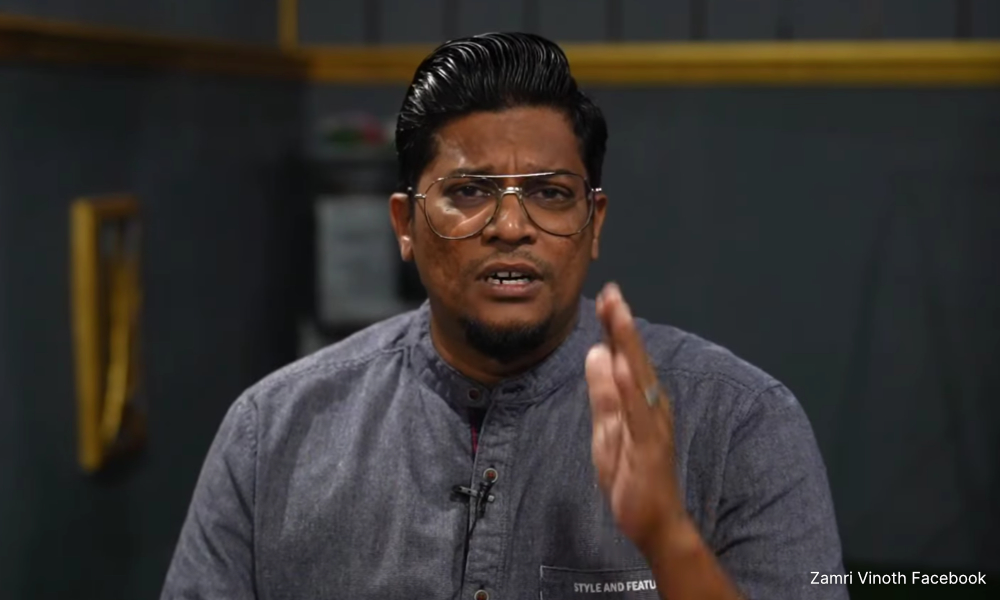
However, his statement did not address the issue of self-styled “land activist” Tamim Dahri Abdul Razak, who faces court action for stepping on a holy Hindu trident, or soolam, nor the remarks deemed to have incited racial and religious sensitivities made by Zamri, both of whom are affiliated with Garah.
He said Garah was set up to tackle issues of land encroachment and the growing number of unauthorised places of worship - a cause which the Hindu NGOs were said to have expressed understanding of during the meeting.
“It is very sad how the struggle to uphold the rule of law is being made to appear as a crime!” Haniff said.
According to reports, the meeting was attended by 20 Muslim and 10 Hindu representatives, who proposed that the Prime Minister’s Department set up a special committee on the issue, and for there to be a land audit on temples.
Malaysia Muslim Lawyers Association president Zainul Rijal Abu Bakar and Malaysian Hindu and Temples Association (Mahima) president N Sivakumar both spoke positively of the meeting at a press conference after, with Zainul saying there will be further discussions.
Haniff added that discussions at the meeting resulted in an agreement in principle on the need to form a committee comprising relevant experts to conduct a comprehensive survey of all disputed structures.
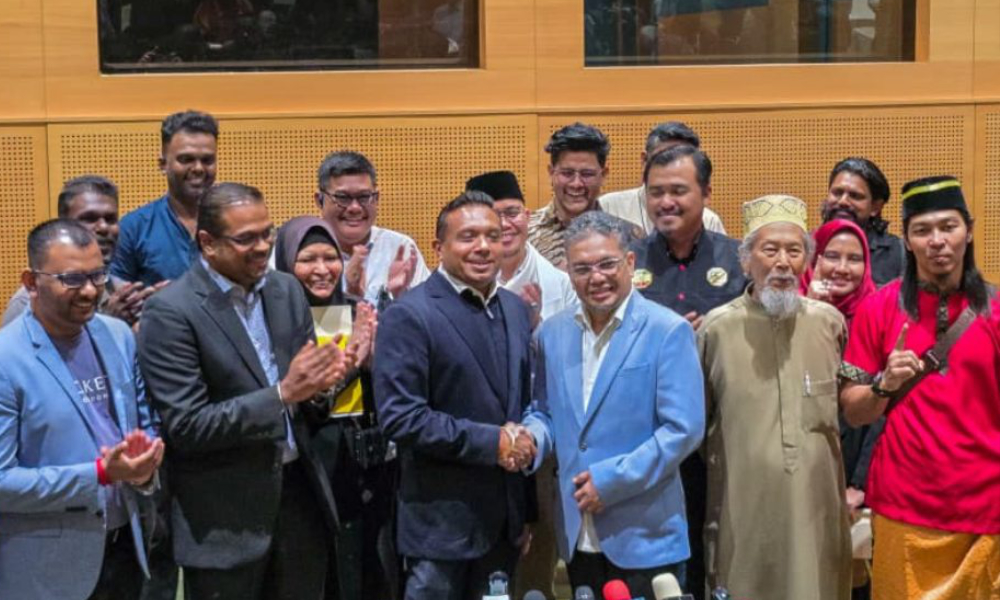
He said the proposed committee would then include its recommendations in a report to the federal government for further action.
Haniff also expressed confidence that further engagement with Hindu NGOs would take place to improve understanding of Garah’s objectives and to work towards resolving long-standing issues that he said had persisted since independence.
“This is only the beginning. Further steps will follow,” he added.
The issue of “illegal” temples arose last year with the controversial relocation of the century-old Dewi Sri Pathrakaliamman temple along Jalan Masjid India in Kuala Lumpur for a mosque.
This sparked a polarising debate on the legal status of Hindu temples.
The meeting in Putrajaya involving the 30 NGOs also did not start on a good note. While it reportedly moved in a positive direction, tensions brewed with prominent Hindu politicians and one firebrand Muslim figure, who were not present, dampening the reconciliation efforts.
MHS questions legitimacy of peace talk
In a strongly worded statement on the same day of the meeting, the Malaysia Hindu Sangam (MHS) and National Hindu Temples Steering Committee (NHTSC) rejected the peace talk.
MHS and NHTSC president Ganesan Thangavellu said the meeting had no mandate, no legitimacy, and no authority to speak on behalf of the Hindu community in Malaysia.
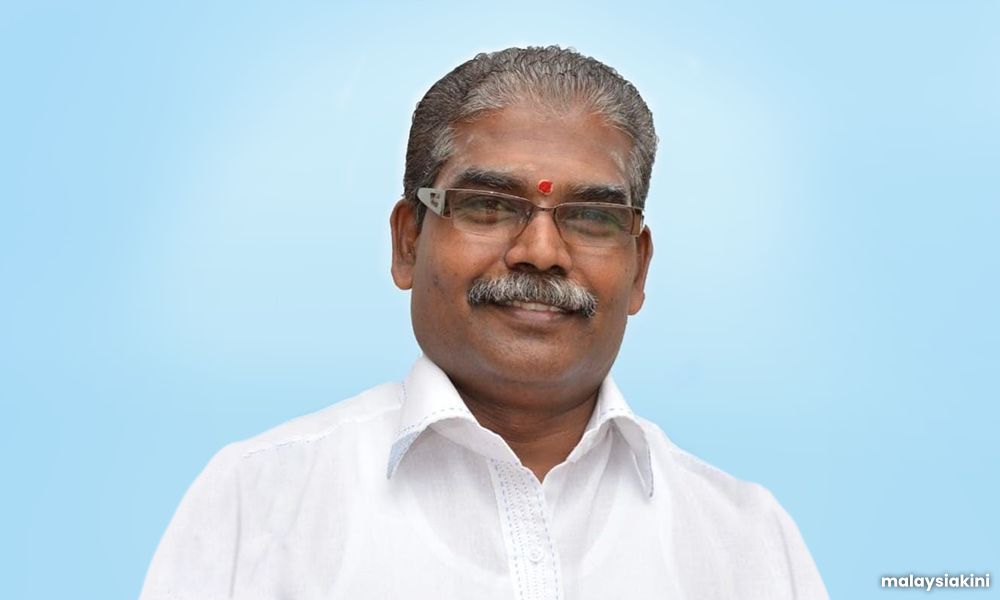
“The absence of the overwhelming majority of Hindu NGOs, temple committees, and national-level leadership, including MHS and NHTSC, renders any outcome from such a meeting fundamentally unrepresentative.
“MHS represents a nationwide network of over 1,800 temples and more than 200 Hindu organisations, while NHTSC is the only structured platform currently working at a national level to address temple issues through legal, policy, and stakeholder engagement frameworks.
“Any attempt to sideline these institutions is not only irresponsible but undermines genuine efforts to resolve longstanding temple issues,” he said.
Ganesan also posed three questions for the NGOs and the government to answer:
Will there be an immediate moratorium on all enforcement actions against Hindu temples pending the implementation of NHTSC’s structured national plan?
Will all existing notices of eviction, relocation, and related actions be reviewed, suspended, or revoked in good faith?
What binding assurances are being put in place to ensure that temples will not continue to be subjected to recurring threats and uncertainty?
“Let us be clear - the core issue is not dialogue. The core issue is the failure to resolve longstanding legal, historical, and policy deficiencies surrounding temple land status, recognition, and protection.
“Unless these are addressed decisively through a structured national framework such as that being undertaken by NHTSC, these issues will continue to be exploited, creating avoidable tension, and risking broader public stability,” Ganesan added. - Mkini

No comments:
Post a Comment
Note: Only a member of this blog may post a comment.